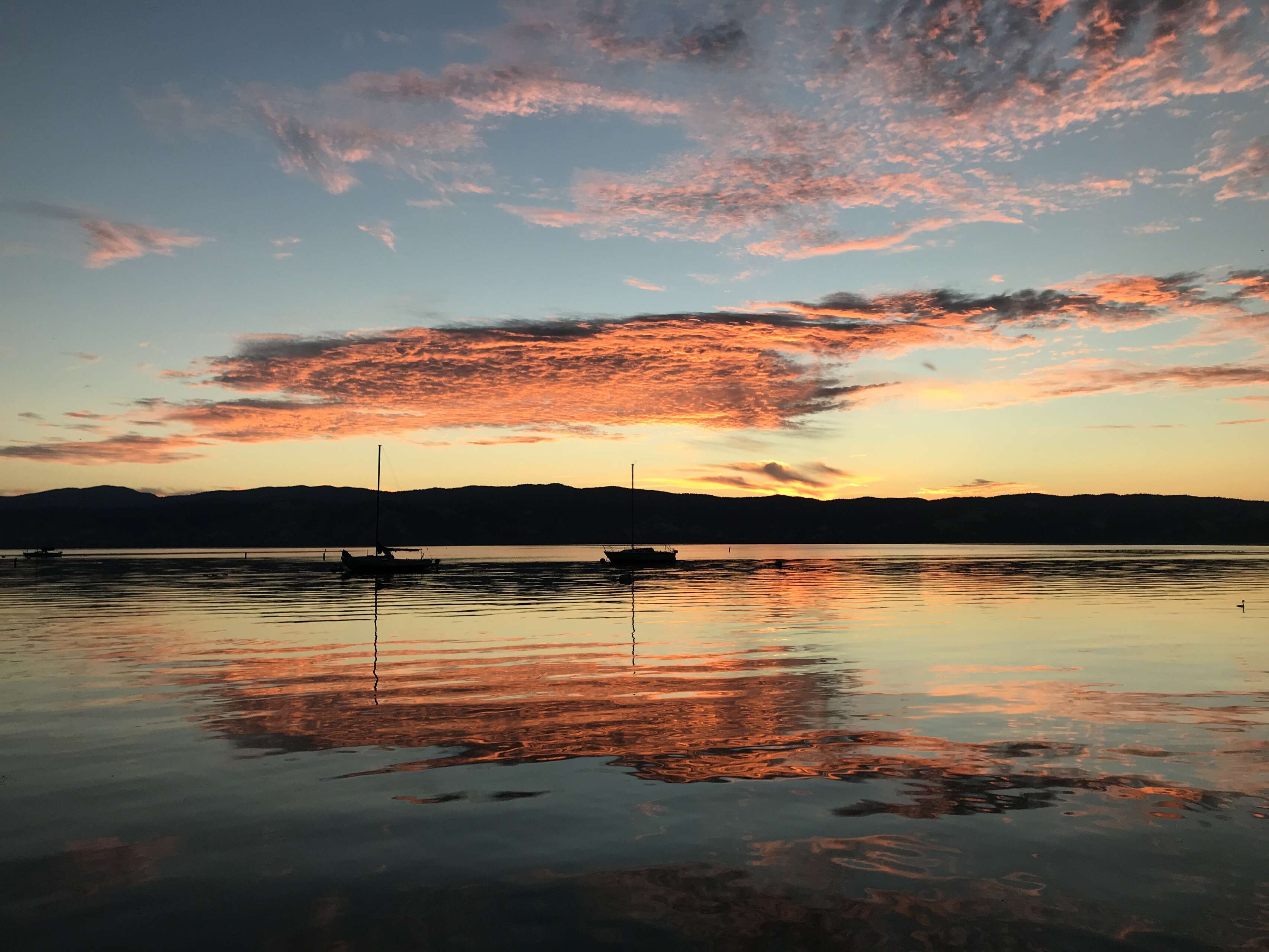
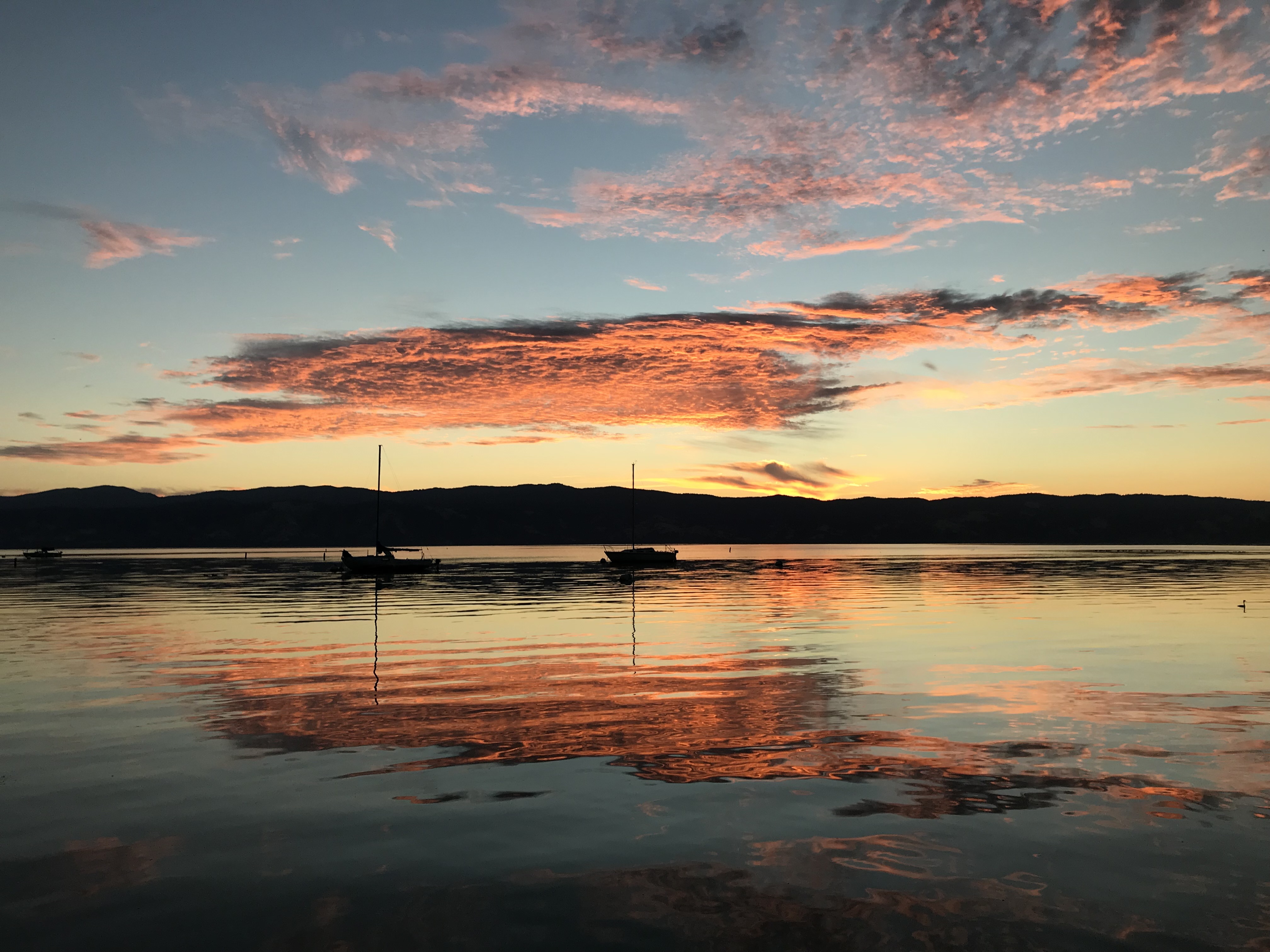
If you set your feet on the path that leaves the Shire in The Fellowship of the Ring and follow it through Middle-earth all the way to it’s end in The Return of the King, you would find yourself standing at the Grey Havens with Sam, Merry, and Pippin looking over the waves and into the West. This is where the ship carrying their dear Frodo has sailed, taking him, Bilbo, Gandalf, Elrond, and Galadriel to the Undying Lands.
If you boarded the Dawn Treader in Narnia and rode with King Caspian X all the way to the Utter East, you would eventually find the voyage could go no further in the shallows of the Silver Sea. There, a farewell would be given to Reepicheep, Edmund, Lucy, and Eustace as they continued east in a row boat to the World’s End. Eventually Reepicheep, in his coracle, would cross into Aslan’s Country while the children would land at the End of the World, meet Aslan, and return home.
An Intriguing Juxtaposition
It is a difficult task to juxtapose Middle-earth and Narnia: one that is not entirely fair. These are unique worlds with specific purposes. Comparing the two is, as they say, like comparing apples to oranges.
But when the tale is told and the end has come, there is an interesting comparison to be made: Tolkien looks to the West while Lewis looks to the East.
This is intriguing. Tolkien and Lewis were close friends who shared a robust Christian worldview and a deep understanding of fairy stories. Why do they come to different conclusions on which cardinal direction to face when the end is upon them?
Maybe it doesn’t matter. Maybe it’s arbitrary. But I don’t think so.
But I also don’t think there’s some elaborate theory behind it either. Others may make the case that the geography of Middle-earth was influenced by the geopolitical tensions of World War II, but judging by how much Tolkien disliked allegory, that argument is far from satisfactory.
What if there’s a simpler answer? An answer that isn’t meaningless but also doesn’t grasp for meaning beyond its reach?
What if it’s as simple as the sun sets in the west and rises in the east?
Looking West
The end of one age and the beginning of another is a recurring theme in The Lord of the Rings, but Tolkien places the emphasis on endings. This theme is summed up in the last pages of The Return of the King:
Then Elrond and Galadriel rode on; for the Third Age was over, and the Days of the Rings were passed, and an end was come of the story and song of those times.
Tolkien’s humble heroes have journeyed east and, against all odds, have defeated the great evil that lay there. Their work complete, Tolkien now sends them west. West beyond Middle-earth. West to the Undying Lands. West into the sunset.
Middle-earth continues on, but it is in decline. It is not as glorious as it once was. It is fading like the day at dusk. While it has entered the Fourth Age, the Age of Men, it stands in the ruins of the greater ages that came before it. The Dwarves are diminished, the Elves are leaving, and the remaining rings are going with them. The sun is setting on Middle-earth even as it rises on the Undying Lands.
Then Frodo kissed Merry and Pippin, and last of all Sam, and went aboard; and the sails were drawn up, and the wind blew, and slowly the ship slipped away down the long grey firth; and the light of the glass of Galadriel that Frodo bore glimmered and was lost. And the ship went out into the High Sea and passed on into the West, until at last on a night of rain Frodo smelled a sweet fragrance on the air and heard the sound of singing that came over the water. And then it seemed to him that as in his dream in the house of Bombadil, the grey rain-curtain turned all to silver glass and was rolled back, and he beheld white shores and beyond them a far green country under a swift sunrise.
But to Sam the evening deepened to darkness as he stood at the Haven; and as he looked at the grey sea he saw only a shadow on the waters that was soon lost in the West. There still he stood far into the night, hearing only the sigh and murmur of the waves on the shores of Middle-earth, and the sound of them sank deep into his heart. Beside him stood Merry and Pippin, and they were silent.
The Ring-bearers fade into the sunset. Their story is over, and it is the beginning of the end of Middle-earth. But this epic doesn’t end with Frodo’s sunrise in Valinor; it ends with Sam’s sunset in the Shire. This is because Tolkien isn’t interested in the excitement of beginning again; he cares about ending well. He knows the satisfaction that comes with traveling there and back again.
Tolkien teaches us that the End need not be dissatisfying. Instead, endings should be gratifying and fulfilling. After the characters have been developed and the climax has peaked, endings should provide catharsis. This doesn’t mean endings aren’t sorrowful, but they ought not be disconsolate.
We also learn that no matter our proximity to the End, we still have an opportunity, even a duty, to live with faithful excellence. As Frodo makes clear to Sam before they part, there’s still life left to live for those who remain:
But you are my heir: all that I had and might have had I leave to you. And also you have Rose, and Elanor; and Frodo-lad will come, and Rosie-lass, and Merry, and Goldilocks, and Pippin; and perhaps more that I cannot see. Your hands and your wits will be needed everywhere. You will be the Mayor, of course, as long as you want to be, and the most famous gardener in history; and you will read things out of the Red Book, and keep alive the memory of the age that is gone, so that people will remember the Great Danger and so love their beloved land all the more. And that will keep you as busy and as happy as anyone can be, as long as your part of the Story goes on.
Someone has to live in the days after the story is over. Even at the end of an age, there’s still beauty to behold and an obligation to build. It's not too late for a life well lived. After all, there’s a new age before them—even the last age.
Looking East
Lewis, on the other hand, takes a step beyond the End and points to the Beginning. This is why he looks east. In Narnia, that is the direction of the sunrise, and it is the direction of Aslan’s Country.
But now they could look at the rising sun and see it clearly and see things beyond it. What they saw—eastward, beyond the sun—was a range of mountains. It was so high that either they never saw the top of it or they forgot it. None of them remembers seeing any sky in that direction. And the mountains must really have been outside the world. For any mountains even a quarter or a twentieth of that height ought to have had ice and snow on them. But these were warm and green and full of forests and waterfalls however high you looked. And suddenly there came a breeze from the east, tossing the top of the wave into foamy shapes and ruffling the smooth water all round them. It lasted only a second or so but what it brought them in that second none of those three children will ever forget. It brought both a smell and a sound, a musical sound. Edmund and Eustace would never talk about it afterward. Lucy could only say, “It would break your heart.” Why,” said I, “was it so sad?” “Sad!! No,” said Lucy.
No one in that boat doubted that they were seeing beyond the End of the World into Aslan’s country.
While rare, a few characters in the Chronicles do venture east to that great Country. But overall, the Chronicles are not about the Narnians coming upon Aslan’s Country; they are about Aslan’s Country coming upon Narnia. Nowhere is this more clear than in The Last Battle, when the door to Aslan’s Country opens in Narnia, swallowing whole everything that mattered and shutting out everything that didn’t.
The old Narnia had a beginning and an end. The real Narnia, which was always there and always will be, has come like the sun at daybreak. As Aslan tells Lucy, “The term is over: the holidays have begun. The dream is ended: this is the morning.” It is the morning of a day that will know no end, and it came from the East. The Shadowlands cannot persist.
Lewis draws on this imagery again in The Great Divorce. Throughout, there are hints of something imminent on the horizon: the sunrise. When it dawns, it is something terrible to behold for any remaining ghosts. They are so insubstantial that walking on the heavenly blades of grass feels like they are walking on blades of steel. Yet that is nothing compared to light glorified. It comes over the eastern horizon with smashing effect. For those without substance, it is light too substantive to bear.
I stood at that moment with my back to the East and the mountains, and he, facing me, looked towards them. His face flushed with a new light. A fern, thirty yards behind him, turned golden. The eastern side of every tree-trunk grew bright. Shadows deepened. All the time there had been bird noises, trillings, chatterings, and the like; but now suddenly the full chorus was poured from every branch; cocks were crowing, there was music of hounds, and horns; above all this ten thousand tongues of men and woodland angels and the wood itself sang. ‘It comes, it comes!’ they sang. ‘Sleepers awake! It comes, it comes, it comes.’ One dreadful glance over my shoulder I essayed—not long enough to see (or did I see?) the rim of the sunrise that shoots Time dead with golden arrows and puts to flight all phantasmal shapes. Screaming, I buried my face in the fold of my Teacher’s robe. ‘The morning! The morning!’ I cried, ‘I am caught by the morning and I am a ghost.’ But it was too late. The light, like solid bricks, intolerable of edge and weight, came thundering down upon my head.
Lewis looked east because he knew that one day Glory will crash upon our world with awful and awe-inspiring finality. Like the sunrise, it’s coming to meet us, and like the sunrise, there isn't any stopping it. It will be a new beginning—one that knows no ending.
If Tolkien teaches us to live in light of the End, Lewis teaches us to live in light of the Beginning—the last beginning any of us will ever know. But instead of detracting from what we learned from Tolkien, Lewis builds on it.
With the Beginning in mind—no less than the greatest beginning of all time—we are to stay awake and alert. We ask God to equip us, and we prepare ourselves. We appreciate what is true, good, and beautiful now so that we can recognize it then. We practice dominion now so that we can reign well then. We are characters in the Story, and we will become who we were made to be then more than we ever were now. This should give us great anticipation and much hope.
The real and the solid are coming—for us and everything else. When the Beginning comes, and it is coming soon in the train of the Rider on the White Horse, true catharsis will be finally and fully realized. But only those found in Christ can face it without fear and dread. We will experience it with utmost awe and endless worship.
The final words of The Last Battle are telling. What more could the End say about the Beginning?
And for us this is the end of all the stories, and we can most truly say that they all lived happily ever after. But for them it was only the beginning of the real story. All their life in this world and all their adventures in Narnia had only been the cover and the title page: now at last they were beginning Chapter One of the Great Story which no one on earth has read: which goes on forever: in which every chapter is better than the one before.
In Conclusion
When the tale is told and the end has come, Tolkien emphasizes the End while Lewis points to the Beginning. While the glories of Middle-earth were coming to their end, the glories of the real Narnia were just beginning. To represent this, Tolkien looked to the West and the sunset found there, while Lewis looked to the East and the coming sunrise.
But this doesn’t put these two great men at odds. Rather, they complement each other. They are looking at different aspects of the same reality.
We live in an epic. It is the Epic, and it was written by the Author of Life. He is the Alpha and the Omega, the first and the last, the beginning and the end (Rev. 22:13). He is the glory of, “It is finished” (Jn. 19:30), and He is the glory of, “I am making all things new” (Rev. 21:5).
Both Tolkien and Lewis knew that in this age of men, there are wonders to behold and sub-creations to make, all while looking forward to what is yet to come, which is more real and magnificent than anything we can imagine. We are to make the most of the Sunset while we anticipate the Sunrise.
About Avery V Johnson
I ascribe to the Lord as a scribe to the Lord.
Thanks for reading! If you're encouraged, you can encourage me, as the Lord leads you, by buying me a coffee. Your support spurs on my writing. No expectation, no obligation. Cheers!