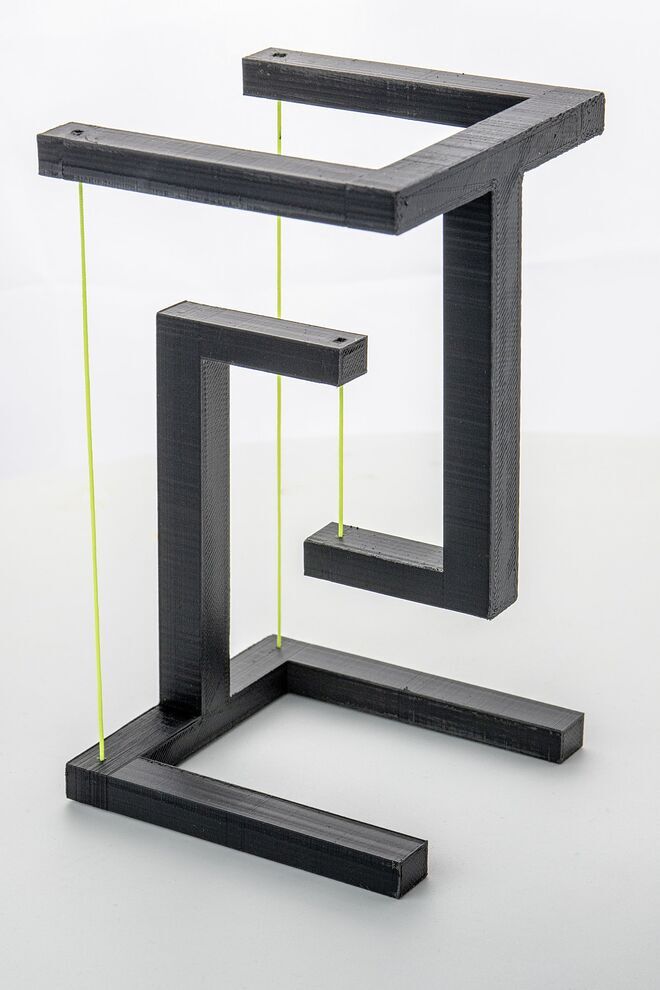
Tensegrity as a social structure.
I’m finding the word “Tensegrity” quite intriguing, tensional integrity or floating compression. Especially in its social and interpersonal aspects. It’s not just about physical architecture, but how we connect and support each other.
The idea that these structures depend on tension is shown when we look at compression members like individuals, families, groups, neighborhoods, communities, and institutions. We see how they bond through various factors that affect the tension lines (commitment) they experience throughout their lives. The node is a useful concept here, representing the key cognitive and emotional connection point within each person. Tension lines determine the direction, strength, or stability and integrity, of the structure. Changes in tension can affect how relationships flow, which in turn impacts the compression members and, ultimately, the integrity of the structure as a whole.
It seems we might be moving away from societies built on large, centralized compressive social structures, historical institutions. Instead, we’re entering a phase where tensional integrity as a stabilizing force is distributed. Where the lines of commitment form and change, shaping the structure of society. Instead of a reciprocal commitment to a solid centralized state or religion, we have a more flexible and fluid arrangement of floating compression based on voluntary shared tensions at all levels. This is a significant shift in how a civil society is built.
What this sideways look at social structure could mean is letting go of the idea that we need to prop up, or reinforce the old centralized compression institutions. Coming under attack as they are from authoritarianism. To string new lines of tensional commitment between the nodes. Distributing the load-bearing force away from concrete established authorities, and into a more fluid, flexible, robust structure. A floating support network under the tension of commitments.
Architecture might be a poor analog for social structures, yet it has some utility. As it is dependent on engineering and physics, well-understood disciplines. Where as the social sciences have been criticized for a lack of empirical foundations. This is a debate for a different time. What I want to offer here is a way to look at changing social dynamics in a new light. The architecture of Tensegrity. Stability through the tension of commitment, rather than the massive centralized institution.
When first looked at, Tensegrity structures seem somehow odd, counterintuitive. What holds up this form? Where is the solid base? Why does it hold together? We are given the physics of tension as explanations. But that does not appease the senses. It still looks somewhat miraculous. So too might the abandonment of the social foundations of church and state. Or the foundation of law enforcement and retribution. How do we build anything without these foundational constructions? Yet we see today that these foundational edifices are being used against the individual, family, group, and community.
What the Tensegrity metaphor brings is a new physical reality based on mutual support rather than centralized authority.