A homily for the Solemnity of Christ the King of the Universe based on Luke 23:35-43. Once again I build my reflection on the notion of the weakness of God developed by John D. Caputo in order to show why it is necessary for God the Son to remain on the Cross rather than to come down with power and might.
The leaders scoffed at Jesus saying, “He saved others; let him save himself if he is the Christ of God, his chosen one!” The soldiers also mocked Jesus, coming up and offering him sour wine, and saying, “If you are the King of the Jews, save yourself!” There was also an inscription over him, “This is the King of the Jews.”
One of the criminals who were hanged there kept deriding him and saying, “Are you not the Christ? Save yourself and us!”
But the other rebuked him, saying, “Do you not fear God, since you are under the same sentence of condemnation? And we indeed have been condemned justly, for we are getting what we deserve for our deeds, but this man has done nothing wrong.” Then he said, “Jesus, remember me when you come into your kingdom.” Jesus replied, “Truly I tell you, today you will be with me in Paradise.” ― Luke 23:35-43
They stood and watched. Some out of curiosity. Some out of habit. Some, perhaps, because suffering draws the human eye like a flame draws a moth— even when we know it will burn us. The leaders stood there, too, with their murmured judgments and careful posturing. They looked up at Jesus as if they had finally, definitively, proven something. “He saved others; let him save himself if he is the Christ of God, his chosen one!”
It is strange how mockery can sound so much like logic. How scorn can masquerade as wisdom. How the old formulas— strength equals power, power equals victory, victory equals God—can seem so obvious, so convincing. The soldiers joined in. “If you are the King of the Jews, save yourself!” The first criminal, with the last breaths of his own life, sneered the same: “Are you not the Christ? Save yourself and us!”
It is a chorus of demands. A litany of expectations. If you are who you say you are, then prove it. Come down from the cross. Show us your power. Be the God we want, the God who interrupts pain, the God who sweeps in with force and ends all the hurt. And maybe, maybe if we are honest with ourselves, we have prayed that very same prayer. Maybe we have lifted our eyes to the heavens — or buried our face in a pillow — and whispered through tears, “If you are God, then fix this. End this. Do something.”
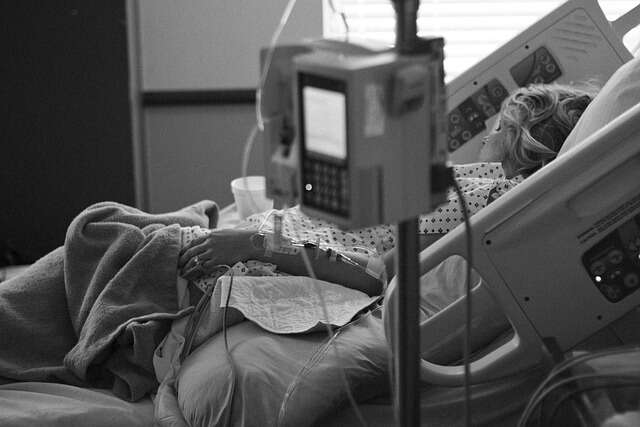
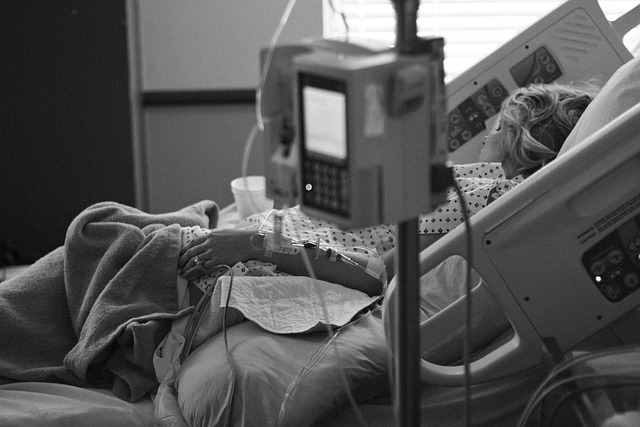
I remember sitting in a dim hospital room beside the bed of my fiancé as she lay dying — the kind of moment when time feels heavy, like it has forgotten how to move. Machines hummed softly. Nurses came and went with their quiet efficiency. And I sat there, utterly powerless, I whispered prayers that were not so different from the jeers shouted at Jesus on Calvary: “God, if you can do something… then do it. Help Louise she needs the help that only you can give. Heal her.” But nothing dramatic happened. There was no sudden turn. No miracle I could point to and say, “There — God showed up.” What did happen was smaller, and stranger, and somehow deeper. I remember my Louise waking for a moment, turning her face toward me with a look that was tired, but full of a kind of quiet peace.
She didn’t say anything profound. She just reached out her hand — a small, trembling gesture — and I took it. And in that simple act, in that fragile, human connection, something in me shifted. I realized God had not abandoned us. God had not come down in power — but God was there, staying with us, holding the space with a tenderness that did not erase the pain but refused to leave us alone in it.
It wasn’t the answer I had begged for. It wasn’t rescue. It wasn’t victory. It was presence, and it was enough to get through that day. Enough to make me whisper my own small prayer, of longing: “Remember us. Stay with us.” And I think of that moment every time I hear the thief’s desperate plea on the cross. Because sometimes all we can offer God is the same trembling hand and the same fragile hope that the One beside us — exhausted, bleeding, suffering, staying — really is a King.
We want a God who comes down. But Jesus does not come down. Not because the nails hold him, but because love does. John Caputo speaks of this as the weakness of God — the unarmed, un-coercive, unprotected love that will not force itself on us, not storm the world with domination, not overwhelm our freedom or our pain with miraculous displays. A God who calls rather than controls, who invites rather than imposes, who is vulnerable enough to be rejected, ignored, and finally crucified.
This is not the god of empire, not the god of winning, not the god of getting one’s way. This is the God who stays. Stays in the suffering. Stays in the abandonment. Stays in the God-forsakenness. Stays with us even when we cannot stay with ourselves.
St. John Chrysostom once preached: “Do you see how he is not ashamed to be with the guilty? He is crucified among thieves, and yet he draws one of them into Paradise.” He meant it as astonishment, wonder — that the Holy One would plant himself in the very midst of human shame, not above it. Not above us. A king between criminals. A Messiah between mockers.
A God between our broken, desperate attempts at survival. Everything about this scene tells us that the kingdom of God does not look like we expect. It does not ascend in glory; it descends into the human condition, into your life and mine. It does not avoid the places that frighten us; it moves straight into them. It does not conquer by force; it heals by presence. And in that presence, something astonishing happens.
One of the criminals — a man with no righteousness of his own, no pride left to protect, no future left to barter — turns his head toward Jesus. He is looking at a man no different in appearance from himself: bleeding, suffocating, failing. A dying man sees a dying man — and somehow sees a king, and says “Jesus, remember me when you come into your kingdom.”
It is not a polished prayer, refined rhetoric, it is not a doctrinally precise confession, or even a request for rescue. Just a whisper: “remember me”. Just a hope: that this dying one has a kingdom. Just a longing: to not be forgotten. And Jesus — this Christ who will not come down, this God who refuses to use power to escape suffering — answers as a king, without judgement, without conditions, but with the most extraordinary generosity: “Truly I tell you, today you will be with me in Paradise.”
Not tomorrow. Not someday. Not after you’ve repented properly, or repaired your life, or cleaned up the mess you made. Today. Because salvation is not a transaction. It is a communion. It begins wherever Christ and a human heart meet. And there it is — the reign of God revealed. Not in force. Not in spectacle. Not in descending from the cross. But in staying on it. In loving from it. In opening Paradise from it. That is why Jesus does not come down.
Not because he must stay, but because we need him to. We need a God who remains in the places we cannot escape. A God who enters the suffering we cannot avoid. A God who takes on the isolation we cannot break. A God who shares the death we cannot conquer. We need a God who stays until every last wound is gathered up in the vast, open arms of mercy.
This is the strange, subversive, tender power of divine weakness: A God who does not fix the world from above but heals it from within. A God who changes everything not by coming down but by being lifted up.
A God who reigns not from a throne but from a tree. Maybe that is why Paradise begins today —not because we escape the world’s suffering, but because Christ enters it with us. Paradise is the presence of the One who stays. Who remembers us. Who refuses to let our brokenness be the end of the story.
The world says, “If you are a king, come down.” But the gospel whispers, “Because he is a king, he stays.” And maybe the invitation for us is to stay with him — just a little longer — in the places where love feels impossible, where hope feels foolish, where God feels absent. To stay, because he stayed. To love, because he loves. To trust, because Paradise is closer than we think. And in that staying — our own small echo of his — the doors of Paradise open again.
Amen.
About Fr. Graham Hill C.Ss.R.
Redemptorist priest living and working in Toronto, Ontario. Who proudly practices eccentric activities with strings under tension — from musical instruments to recurve bows.