A homily for the Twenty-Ninth Sunday of Ordinary Time (Year C) on Luke 18:1-8. This homily seeks to address a common concern many of us share, about prayer. Here I seek to use Thomas Jay Oord's concept of the Relational Love of God, and John Caputo's Weak Theology to offer some insight into prayer, persistence, and the communal dimension of prayer.
Jesus told the disciples a parable about their need to pray always and not to lose heart.
He said, “In a certain city there was a judge who neither feared God nor had respect for any human being. In that city there was a widow who kept coming to him and saying, ‘Grant me justice against my opponent.’
“For a while the judge refused; but later he said to himself, ‘Though I have no fear of God and no respect for any human being, yet because this widow keeps bothering me, I will grant her justice, so that she may not wear me out by continually coming.’”
And the Lord said, “Listen to what the unjust judge says. Will not God grant justice to his chosen ones who cry to him day and night? Will he delay long in helping them? I tell you, God will quickly grant justice to them. And yet, when the Son of Man comes, will he find faith on earth?” ― Luke 18.1-8
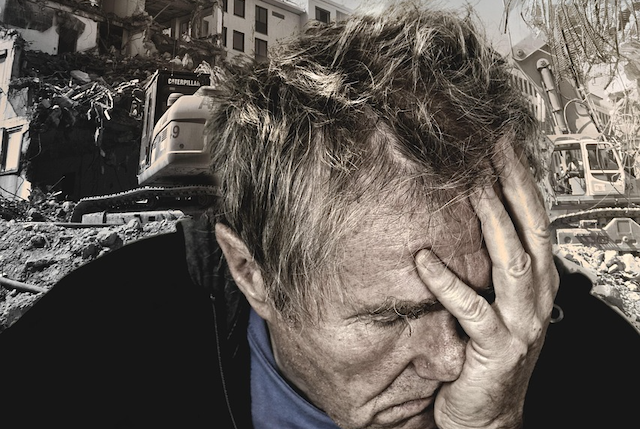
When I prepare a homily, such as this, I begin by reading the gospel, as if for the first time, paying special attention to the emotions that surface. When I re-read this parable last week, the dominant emotion that surfaced was anger.
Anger — because I’m tired of parables about waiting. Tired of being told to pray harder while the world burns. Tired of watching injustice stretch on while good people are buried under its weight. There are children starving, refugees drowning, civilians being murdered by hostile regimes, families broken by systems that do not care. The sick are priced out of healing, and the lonely die in silence. And Jesus tells a story about a widow banging on the door of a corrupt judge? It sounds too much like what we already know.
She has to scream to be heard. She has to wear him down. She has to become a problem for him — because that’s the only language power seems to understand. And I want to scream: Why should she have to beg for justice at all?
We know this widow. She is every person whose rights are delayed, whose truth is dismissed, whose dignity is treated like an inconvenience. She is the voice in the immigration line, the protest on the street, the adolescent reporting abuse and not being believed. She is the one whose pain makes others uncomfortable — so they turn away. And if I’m honest — I’ve been her. And maybe you have too. I’ve prayed. I’ve pleaded for healing, for reconciliation, for clarity. And all I have heard is the sound of silence.
And so when Jesus says we “ought always to pray and not lose heart,” I hear a challenge that cuts. Because sometimes I do lose heart. And I suspect I am not alone in that. Sometimes prayer feels like shouting into the wind. And persistence sounds like a cruel joke.
But then — the parable shifts. Because this woman, with nothing but her voice, refuses to disappear. She will not let injustice be the final word. She becomes holy resistance in motion. And here, I begin to see what Jesus might be doing.
He does not say God is like the judge. In fact, it’s the opposite. The judge gives in only because he’s annoyed — but Jesus insists: God is not indifferent. God listens. God responds. God is nothing like the powers that delay and dismiss. But — and this matters — God doesn’t crush injustice with a divine sledgehammer. God calls. God stirs. God invites. God works through love — not control. Through relationship — not force.
This is not the God of instant gratification. This is the God who honours our freedom, who acts through partnership, who waits for us to join the work. In a world drunk on domination, this kind of divine love seems too slow — even foolish. But it is real. It is steady. It is the only kind of love that transforms, not just outcomes, but hearts.
And so the widow is not just an example of personal grit — she is a parable of divine persistence too. God’s love echoes in her voice — a love that does not give up on us, even when we’ve given up on ourselves. And the question comes again, piercing and clear: “When the Son of Man comes, will he find faith on earth?” Not passive belief. But the kind of faith that keeps knocking. The kind that stays in the story. The kind that refuses to let go. Not because we are strong. But because love is.
We live in a world where justice feels rigged. Where the systems don’t just fail — they function exactly as they were designed: to silence, to sort, to survive off the suffering of others. We are told to be patient. To be polite. To wait our turn. To believe that someday, somehow, things will get better.
But the Gospel does not call us to passive waiting. It calls us to holy unrest. It calls us to the persistence of love. The widow does not pray as a last resort — her prayer is resistance. Her plea is not weakness — it is defiance. She keeps the door to justice rattling on its hinges. And perhaps what Jesus is showing us is not a lesson in endurance, but a revelation of who God is. Because here’s the twist: The judge acts only when he’s worn down. But God is already leaning in. Already listening. Already aching with us. God is not like the judge.
The scandal of divine love is that it is relational to the core. It is affected by us. Moved by our cries. Changed by our pain. But God will not act alone. Because love — real love — never forces. It collaborates. It waits for our “yes.” You see God would rather wait with us than win without us. And so prayer is not about convincing God to care. It’s about staying in relationship with God long enough for love to have its way — **in us**, **through us**, **among us**.
Because sometimes, the miracle is not that justice comes quickly — but that we don’t stop believing it still can. Sometimes, the miracle is that we keep knocking at all. That we hold each other when the system fails. That we show up — tired, trembling — and still speak truth to power.
This is the kind of faith Jesus is asking about. Not agreement on doctrine, not certainty, but as refusal to walk away. Faith as the courage to persist even when all you hear is silence. Faith as a protest against despair. And this faith must be held in community. Because some days, one of us will falter — and the others must carry the prayer.
Some days, someone in this very church will lose heart. Will give up. Will feel like it’s all for nothing. And on that day, someone else must speak. Must cry out. Must stand in the gap. Because together we are the widow. Together, we keep the door shaking.
So what are we to do with all this? This week? Well First — Refuse to lose heart. Even when you’re tired. Even when you feel invisible. Even when it would be easier to turn numb. Your voice matters. Your ache matters. Your prayer is not wasted. Speak it anyway. Even through tears. Even through clenched teeth.
Second — Don’t let your prayer stop at folded hands. Take your prayer to the street, to the school board, to the hospital room, to the food pantry, to the polling station. to the lonely person you’ve been avoiding. Wherever justice is deferred, let your prayer move your body.
Third — Risk hope. Hope is not optimism. Hope is not naïve. Hope is radical. It dares to believe that love still has power in a world ruled by fear. Hope plants seeds in concrete. It sings under rubble. It whispers “yes” into silence.
Finally — Do this together. We were never meant to carry justice alone. We pray together. We weep together. We rise together. Let someone else knock with you when you’re too tired. Let someone else believe for you when your hope has run dry.
And so, the question still lingers: “When the Son of Man comes, will he find faith on earth?” Let your life be the answer. Let your persistence be your protest. Let your prayer be your resistance. Let your love be louder than despair.
Because the God we follow does not ignore the cries of the world. The God we follow is not unmoved. The God we follow weeps with us, waits with us, and acts — not in crushing force, but in unexpected, burning flashes of justice that break in like dawn. And when that dawn comes — it will be sudden, and it will be holy, and it will not simply vindicate the widow — it will raise her up. And us with her. So until that day, may we pray always, not lose heart, love relentlessly, and never stop knocking.