A homily on Luke 18.9-14 given on the 30th Sunday of Ordinary Time (Year C), the Archdiocesan Day for Palliative Care, here in Toronto. It draws on Thomas Jay Oord's relational theology of Love, and John Caputo's notion of the weakness of God.
Jesus told this parable to some who trusted in themselves that they were righteous, and regarded others with contempt:
“Two men went up to the temple to pray, one a Pharisee and the other a tax collector. The Pharisee, standing by himself, was praying thus, ‘God, I thank you that I am not like other people: thieves, rogues, adulterers, or even like this tax collector. I fast twice a week; I give a tenth of all my income.’
“But the tax collector, standing far off, would not even look up to heaven, but was beating his breast and saying, ‘God, be merciful to me, a sinner!’
“I tell you, this man went down to his home justified rather than the other; for whoever exalts himself will be humbled, but whoever humbles himself will be exalted.” ― Luke 18:9-14
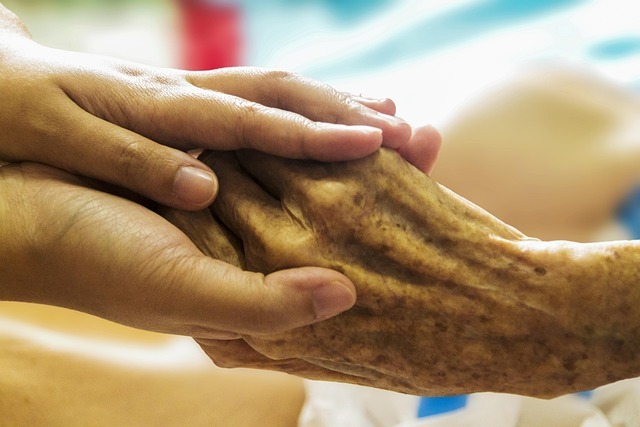
Every life, sooner or later, brings us to a place we cannot manage. A diagnosis. A loss. A goodbye we can’t postpone. Moments when our strength runs out, and control slips through our hands. In those moments, we find two postures within us. One wants to stay in charge — to manage, to fix, to rise above weakness. The other simply kneels — asking for mercy, longing to be seen, to be held, to be loved. Jesus names those two postures in today’s Gospel.
Two men go up to the temple to pray. One stands tall — the Pharisee, confident, composed, in control. The other, the tax collector, cannot even lift his eyes. And yet Jesus tells us: only one goes home justified.
That parable isn’t just about how we pray. It’s about how we live — and how we face the mysteries we cannot control. It’s about the distance we keep from God, from one another, and even from our own weakness. It’s about how love — and only love — can close that distance. We live in a world that measures worth by strength and independence. We admire self-sufficiency, autonomy, control. But when we lose those things — through illness, aging, or dying — we often feel like we’ve lost our dignity.
Our culture doesn’t know what to do with weakness. And so, we look for ways to manage it — sometimes even through the growing acceptance of Medical Assistance in Dying, or MAID — a way to take control where surrender feels unbearable.
But the Gospel invites us to something different: a deeper kind of dignity — not the dignity of mastery, but of mercy; not the dignity of control, but of communion. Because there is a holiness in the space we cannot control — a holiness that only love can enter.
I was reminded of this recently when I spoke with a mother I had been journeying with — let’s call her Susan — her eighteen-year-old son, Antonio, was dying in hospice care. As we spoke, she told me about those final days. How, in that small room, something unexpected unfolded. Antonio was reconciled with his father — old wounds softened, old words forgiven. He spoke gently with his sister, helping her and his mother prepare for what was coming. And Susan told me, with quiet strength, that he was at peace. There, surrounded by the people who loved him most, love was doing its deepest work — not by fixing or prolonging, but by reconciling, by preparing, by bringing peace.
That little hospice room became holy ground — a threshold between this life and the next — where love met them in surrender. I’ve seen it again and again in palliative care. That sacred, thin space where life and death brush against one another; where the dying and those who love them begin to live in two worlds at once — this one and the next. It’s a liminal space — a threshold. And in that threshold, love becomes more than a feeling; it becomes presence. There, words fall away. Touch, breath, and silence become prayer. We stop trying to fix or win. We simply love — and in that loving, we glimpse God.
The theologian Thomas Jay Oord writes that “love is acting intentionally, in relational response to God and others, to promote overall well-being.” That’s what happens at the bedside: when families listen, forgive, and stay. Love becomes intentional. It responds. It promotes communion — not cure, but connection. That is divine love.
The theologian John Caputo takes this a step further. He speaks of the weakness of God — not weakness as failure, but as love’s refusal to dominate. God does not control the world from above, God calls from within it — gently, persistently — as what he names the insistence of love. And that’s exactly what we witness at the bedside of the dying. Not a God who fixes or forces, but a God who insists — who beckons us toward tenderness, forgiveness, and communion. In that space, God’s love is not power over death, but presence within it. It is what Caputo calls the event of God — love breaking open our hearts, insisting that even here, especially here, we are not alone.
This is the heart of palliative care. It is not about managing the mystery, but meeting it — allowing love’s insistence to have the last word. And it stands in contrast to a world that seeks control.cAt its core, MAID is about control — about mastery over mystery. But real love is about relationship — presence within the mystery.
The Pharisee sought control through perfection. The tax collector found life through surrender. That is the pattern of all real love. When we stop trying to control, we finally make room to relate. We begin to see one another not as problems to fix, but as persons to encounter — sacred presences in whom God dwells. And in that encounter, God is there — in the gaze between a mother and her son, a husband and his wife, a caregiver and a patient.
In that space of tenderness and tears, God is the third presence in the room. If we could see dying not as failure, but as a sacred threshold — if we could see palliative care not as giving up, but as entering deeper relationship — then perhaps we would hear Jesus’ parable anew. The Pharisee wants to rise above weakness. The tax collector kneels within it. And love meets him there. Maybe humility, then, is not about shame or smallness, but the courage to stand in that liminal space where control no longer works and only love remains.
That’s what the family bedside can become — a little temple, a sacred space of mutual surrender. There, the dying are not objects of pity, but partners in love. Their vulnerability teaches us what matters most: that we, too, are dependent — on God, on one another, on love itself. And when we stay — when we don’t flee the mystery — we begin to glimpse the kind of wholeness Jesus calls justification. We go home justified not because we are strong, but because we have been real — with one another and with God.
So perhaps the question for us is this: Where are we being invited into that liminal space of love? Maybe it’s at a bedside, where control fades and presence becomes everything. Maybe it’s in our own fear of weakness or death — to trust that love is still enough there. Maybe it’s an invitation to learn more about end-of-life care, to choose communion over control. Because the Gospel does not call us to manage life, but to accompany one another through it — to love through every breath, and to honour every moment as sacred.
“All who exalt themselves will be humbled,” Jesus says, “and all who humble themselves will be exalted.”That is not a threat, but a promise — a promise that love will always bring us home. It is the gravity of grace pulling us from control to communion, from distance to presence. And maybe the holiest moment of all is when we discover that even death cannot break that communion — because God’s love always closes the distance.