A homily prepared for the Mass at Dawn on Christmas Day, based on Luke 2:15-20.
When the angels had left them and gone into heaven, the shepherds said to one another, “Let us go now to Bethlehem and see this thing that has taken place, which the Lord has made known to us.”So they went with haste and found Mary and Joseph and the child lying in the manger.When they saw this, they made known what had been told them about this child,and all who heard it were amazed at what the shepherds told them,and Mary treasured all these words and pondered them in her heart. The shepherds returned, glorifying and praising God for all they had heard and seen, just as it had been told them. ―Luke 2:15-20.
Our Gospel, picks up from where we left off last night, with the Shepherds… and angels and that’s where we pick up this morning. As we closed our Mass in the Night, our thanksgiving hymn last night was that almost obligatory carol: Silent Night… but anyone who comes from an agricultural stock will tell you that the night was not silent. It only sounds that way to people who are not listening.
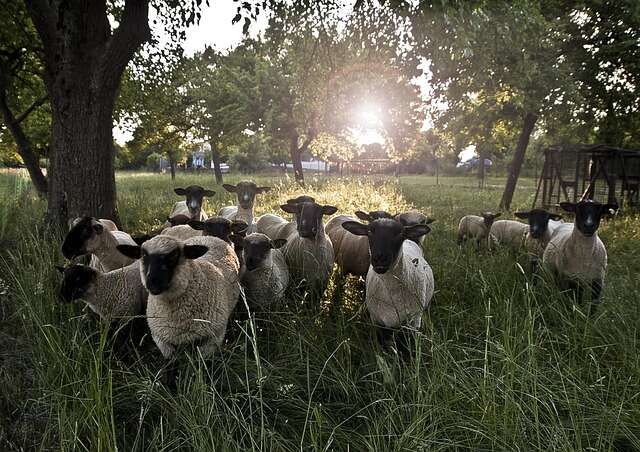
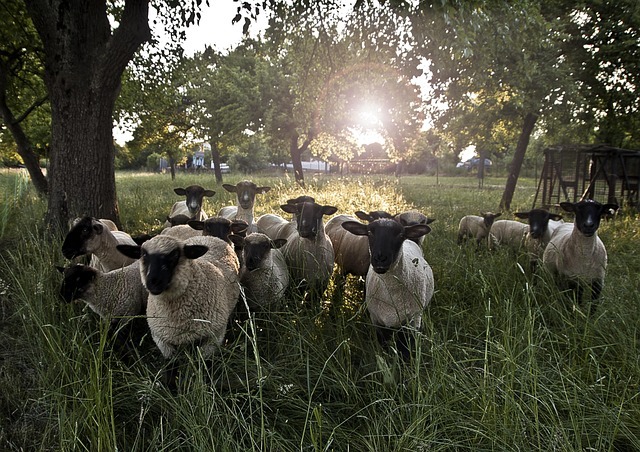
Out in the fields, the shepherds know this. They know the low, steady breathing of the flock, the shuffle of hooves against packed earth, wool brushing wool. They know the way a single bleat can cut through the dark and how quickly the night settles again afterward. Insects hum their thin, restless song. The wind moves unevenly, catching on scrub grass and stone. A staff presses into the ground. Leather creaks. Someone coughs to stay awake. This is the music of watchfulness. A night tuned for listening. Nothing fully asleep. Nothing entirely still.
It is into this living night that the angels appear. Not into silence, but into sound. Not into peace, but into vigilance. The glory of the Lord does not replace the night — it interrupts it. Fear rushes in, because that is what happens when the familiar sounds are suddenly rearranged.
And then the angels leave. The sky closes back up. The night returns. The sheep still breathe. The insects keep singing. The wind does what it was doing before. Nothing outward has changed. But something has been set in motion. The shepherds say to one another,
“Let us go now.”
Not when the night calms down. Not when dawn breaks. Not Later, Now.
Christmas begins there — not with certainty, not with understanding, but with movement. With people willing to leave the sounds they know because they have heard something they cannot ignore.
They walk toward Bethlehem carrying the night with them. Cold air in their lungs. Dust on their feet. The echo of wings. The memory of a voice that spoke into fear instead of eliminating it.
When they arrive, the sound changes. The wide night narrows into a small space. Animals shift in close quarters. Straw rustles. Breath is louder here. And then — a baby cries. A cry of need. What they find is not an explanation. It is a child. Wrapped in cloth. Placed where animals feed. A life dependent on the care of others. This is how love enters the world.
Not as control. Not as force. But as presence — vulnerable, breathing, touchable. God does not arrive above the noise of human life. God arrives within it.
Luke gives us so many physical details because faith here is not abstract. It is sensory. You can hear it. You can smell it. You can feel it in the chill of the air and the warmth of bodies pressed close. This is not a God kept at a distance. This is a God who trusts the world enough to be born into it.
The shepherds kneel. They do not analyze what they see. They listen. They have spent their lives listening for small changes in the dark — a sheep in trouble, a threat moving closer, a shift in the wind. Now they listen to a different kind of sound: a God who does not overwhelm, a holiness that does not protect itself, a love that can be held. And then Luke tells us they leave.
They return to their fields.To the same sounds. The same breathing flock. The same restless insects. The same uneven wind. This matters. Because Christmas does not remove them from their lives. It returns them to those lives changed.
The sheep still need tending. The night will still be cold. The work will still be hard. Nothing has been fixed. And yet everything is different.
Because now the shepherds hear the night differently. Every ordinary sound carries memory. Every familiar rhythm is edged with wonder. Love has entered the world quietly, and it has tuned their ears. This is where Christmas meets us. Not in an escape from our lives, but in a deepening of them.
Most of us come to this season tired. Carrying grief that did not pause for the holidays. Holding worry about health, money, relationships, the future. The world keeps making noise — news, notifications and alerts; obligations, unfinished conversations, unending task lists — and it can feel overwhelming. Christmas does not silence that noise. It enters it.
God does not wait for your life to calm down. God comes now — into crowded rooms, into strained relationships, into routines that feel worn thin.
Mary understands this. Luke says she treasures these things and ponders them in her heart. She does not rush to make sense of what has happened. She holds it the way you hold a child — carefully, attentively, without control. She lets the sounds and moments settle into her body.
Faith is not always clarity. Often it is attention. It is learning to listen differently to the life we already have.
So the questions of Christmas are not abstract. They are gentle and close. Where is love trying to meet you now? What part of your ordinary life — your work, your care for others, your weariness — is being asked to carry something holy?
The shepherds are not heroes. They are awake. They are willing. They respond to a nudge they cannot fully explain. And when they return to their fields, Luke tells us they glorify and praise God.
Not because everything is easy. But because they have heard love cry in the night. And once you hear that, you cannot unhear it, or hear anything else the same way again.
This is the gift of Christmas. Not certainty. Not control. But presence that stays. Love that risks relationship. A God who trusts ordinary lives to carry divine life back into ordinary places.
Christmas does not end at the manger. It begins there. And it continues every time we listen more carefully, every time we return to our days carrying grace we did not earn, every time we let love shape how we hear the world.
Glory to God in the highest. And peace — not the peace of silence, but the deep, living peace of love dwelling with us — here and now.
About Fr. Graham Hill C.Ss.R.
Redemptorist priest living and working in Toronto, Ontario. Who proudly practices eccentric activities with strings under tension — from musical instruments to recurve bows.