In Titanium Court, the choice you make is not the one you think you're making.
Please, for the love of God, play Titanium Court before you read this. It's cheap, it's short, and it will bring more joy to your life than spoiling it for yourself ever could.
Near the end of AP Thomson's Titanium Court—a game, in short, about faerie courts, loving baseball, insurance fraud, and overcoming the terrible burden of being yourself—you are presented with an upgrade tree. You know what upgrade trees are, right? Tools for slowly improving your character, making the game you're playing easier to play, until that unbeatable challenge finally becomes beatable, and then easy-to-beat, and then completely arbitrary, as the game you're playing slowly loses its flavor, like overchewed gum? Until, like gum, it's less a source of pleasure than a pure mechanical habit?
Well, you get one of those upgrade trees. And you get it well past the point where Thomson has already offered you a tool, fittingly called Comfort—likened in-game to turning up the thermostat to a real cozy place—that makes most of the challenges you face a breeze. (There remain several optional challenges that remain tricky until the end, but "tricky" is a relative term.) It's clearly offered, not as a helpful aide, but as a way to further the illusion of progress: it's Yet Another Thing To Do, so you can keep playing the game, because you want to keep playing the game, because... well, what else are you going to do with this gum, spit it out?
It's obviously intended as a silly bit. The game acknowledges as much. Just a silly joke about silly games. And here's another silly bit: choosing your first upgrade kills one of your closest friends.
Well, not killed exactly. Faeries are immortal, didn't you know? They go to war day after day, cheerfully dying en masse on the battlefield, then meeting up at night to drink and frolic. (You are allowed to attempt a war in which nobody dies on either side of the conflict; if you succeed, you are informed that your efforts have been deemed the 22nd most boring war of all time.) But faeries do go stale, which is another way of saying that they run out of new things to talk about, and start repeating their dialogue over and over again, until their friends drag them away to an unending feast where they can repeat themselves to their heart's content.
You're familiar with staleness in video games too, aren't you? Every game reaches that point, no matter how clever it may be. Your favorite character exhausts their final line of dialogue. The game might as well be over for them. Their story has played itself out, even if you've chosen to stick around.
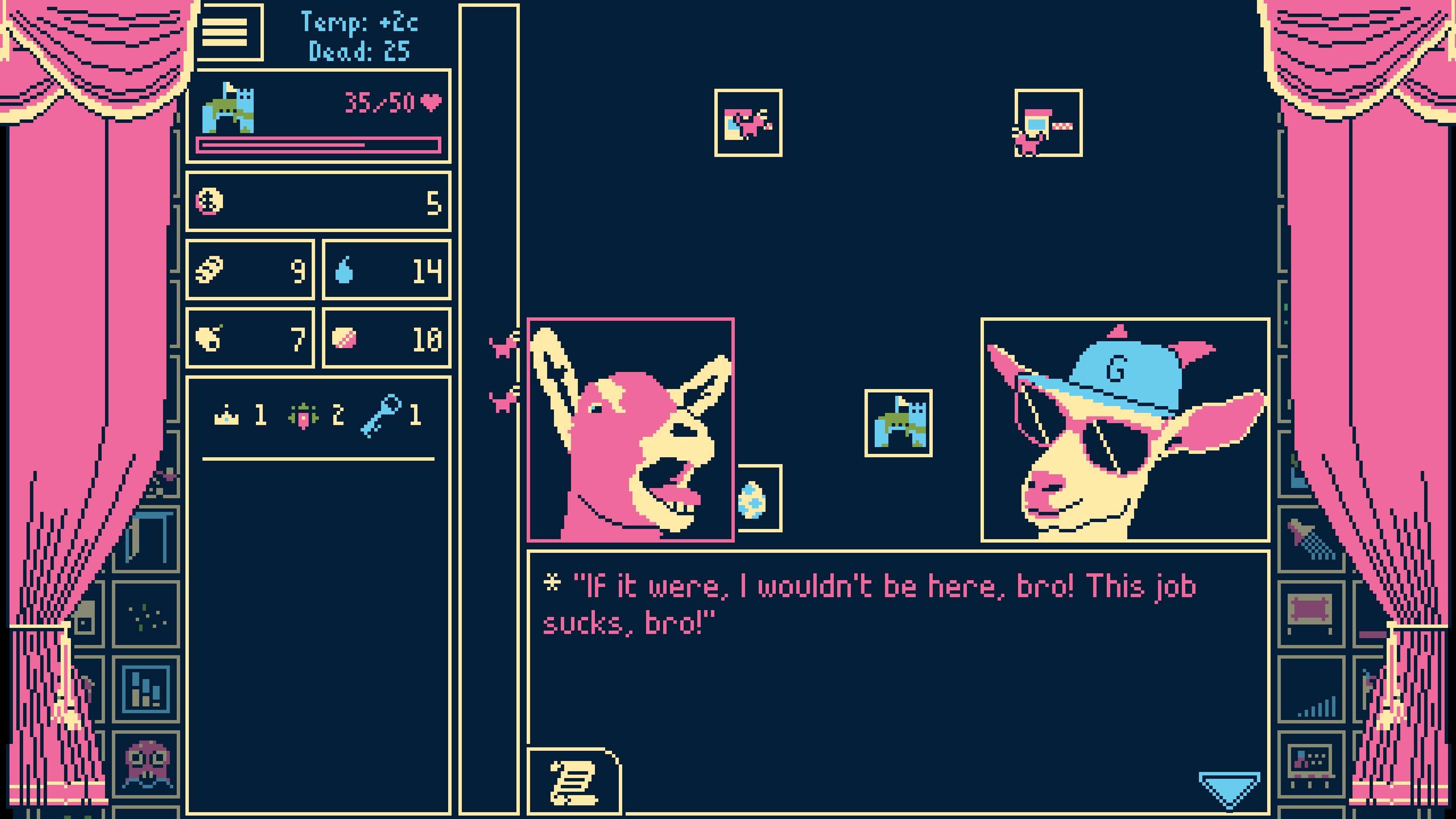
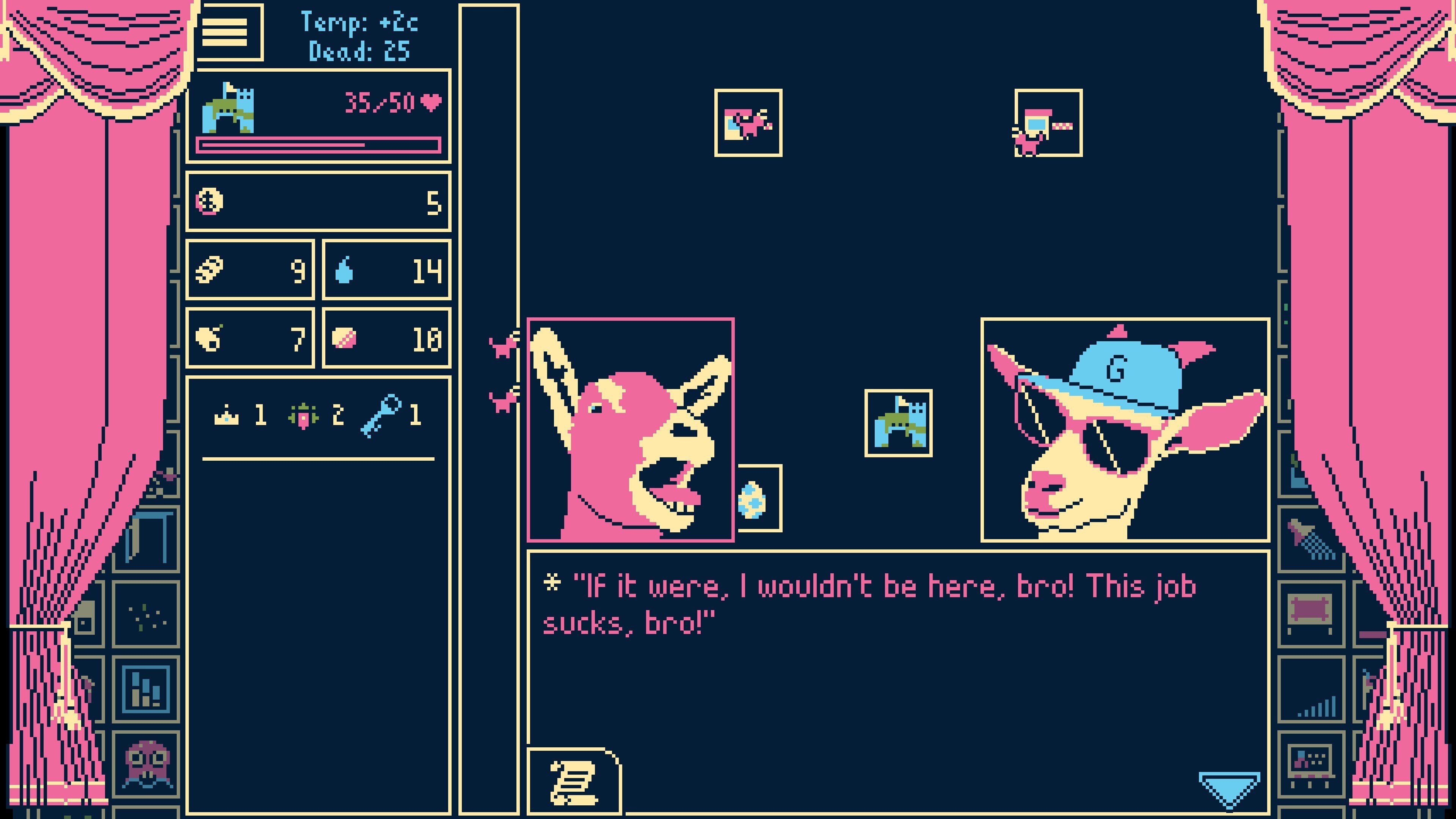
Titanium Court just takes that concept and makes it literal. At first, it's the least-important faeries who go stale: the NPCs who exist only to flesh out the faerie court, offer you a single line of exposition, and scatter themselves around your surroundings. A woman petitions you for a weekly feast (AKA Pizza Friday). A librarian offers you useless suggestions. The faeries are concerned, but to you, this is the expected Plot Contrivance: every story needs a conflict, after all. And you, the hero, are expected to solve it—and in this case the solution is simple.
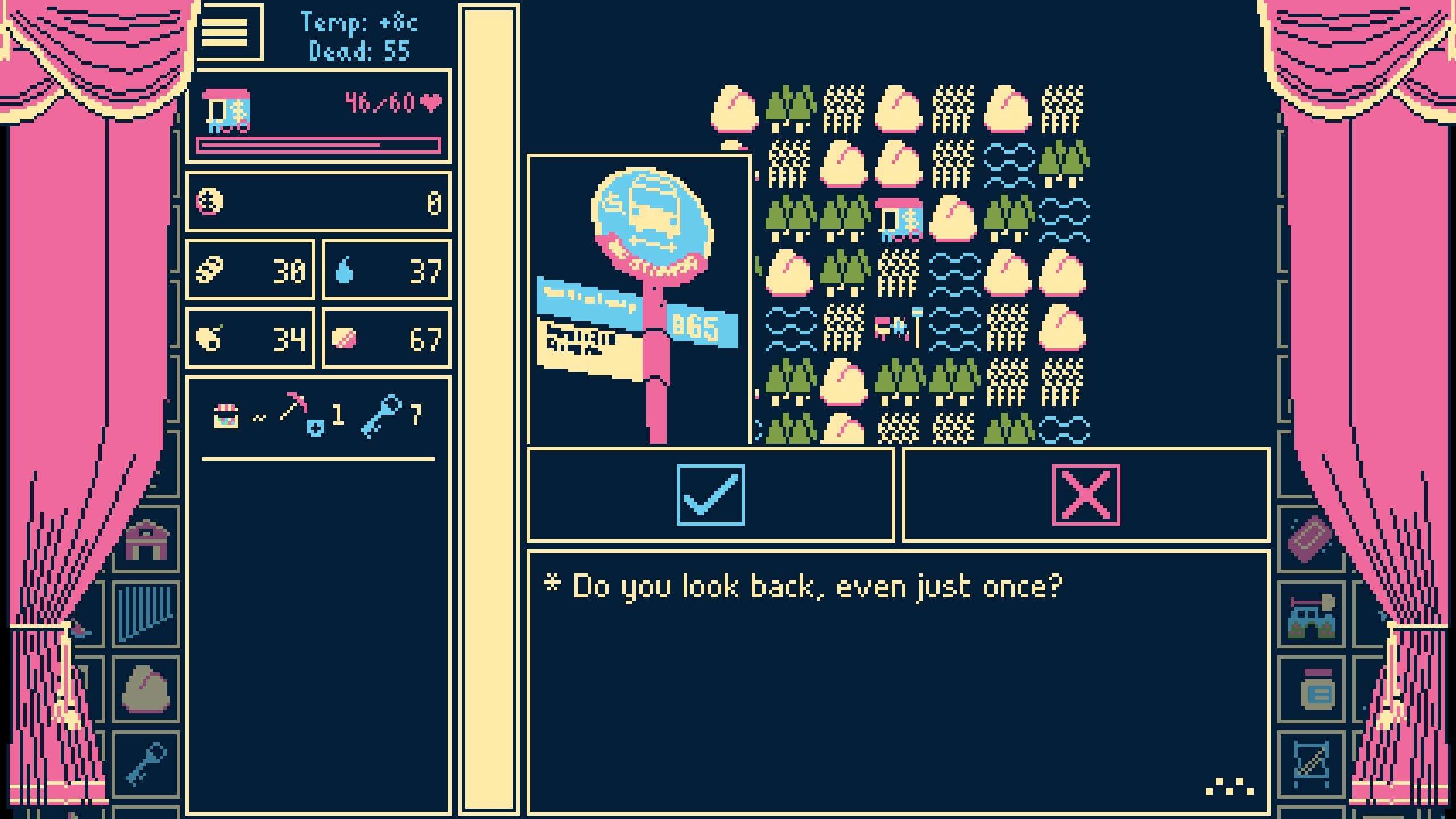
You simply need to leave the court. End the game now, and everyone will be saved.
Besides, your character wants to leave, doesn't she? That's the whole plot: she got trapped in this faerie realm, and she's trying to escape. Sure, you need to find four keys first, and then you have to deal with your Enemy—that's his name—trying to keep you here forever. But the time comes when you're fully able to leave, and your character talks about leaving, and your friends are all ready to cheer you on as you depart. Yet here you are, still playing, even as it gets clearer that you're destroying everyone around you.
Because that's what you do! That's what a player does. You consume. In Titanium Court, it's referred to as magic: that joy, that sense of discovery and wonder, that's the hallmark of every worthwhile game. You want it—and you want as much of it as possible. Every last bit of it that you can get, until it's devoured and consumed, and everything that's left is stale. You want to play until you feel listless and anhedonic, and then you'll find something new to consume, something to counteract whatever it is within you that doesn't feel content without a momentary diversion.
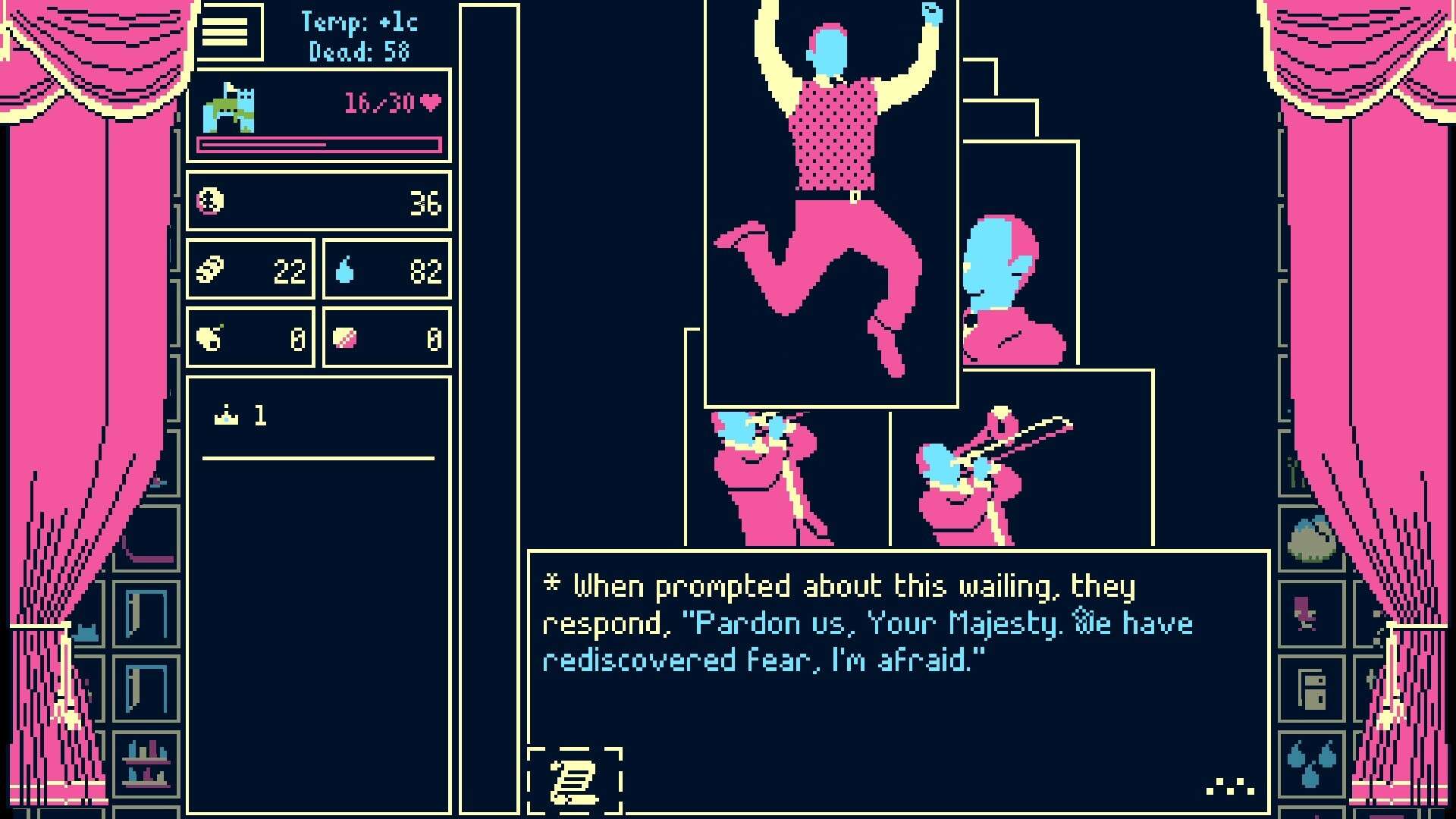
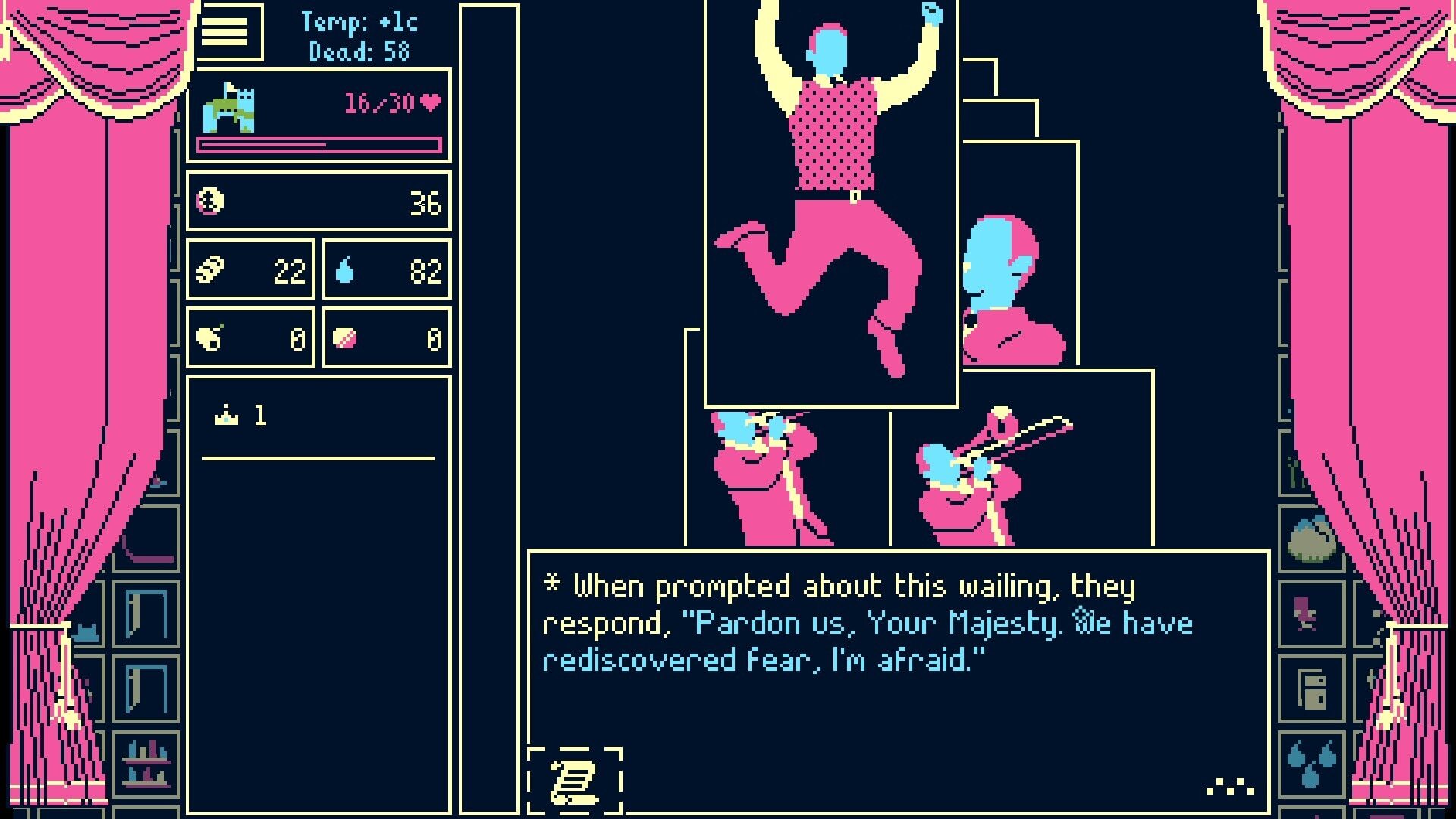
The genius of Titanium Court is that it's silly and fun until it abruptly isn't. At first, everything is genuinely whimsical and delightful! Your subjects all adore you, they do everything you say, they misinterpret mortal culture endlessly, they celebrate your great deeds. Even the concept of staleness is appropriately silly: what a goofy little threat for a goofy little game! But literalizing the concept lets the game tell a story about itself, and about you. This world is going stale, after all, because of you—and before long, everybody knows it. They know that, every time you talk to them, you're putting their lives at risk. They know that you could leave, and are choosing not to. They know that you don't care about them, and that you won't rest until they're totally consumed.
Before long, the story becomes: everyone you know is afraid of you. They all resent you. Then they openly despise you. Because—within the logic of the game world—you are despicable. You didn't have to be! You could have left a long time ago, a beloved hero, a celebrated queen. They helped you leave, and then they asked you to leave, and then they begged you to. And then they fled from you. And then they cursed your name.
Titanium Court is brilliantly good at offering you a rich, unpredictable story early on. The mechanics that it uses to advance your narrative, and to intertwine your in-game choices with the unfolding plot, are innovative and delightful, occasionally even astonishing. Even as things collapse around you, there are always more options, more stories, more secrets to uncover, more challenges to overcome. And that's the narrative tension: the conflict between the game's own mechanics and your desire to keep going. Your in-game choices matter, but so too does your choice to continue playing. And at some point, the latter overwhelms the former, and every choice you make brings this world closer to its doom.
If any of this felt like a scold, it would be insufferable. There's a certain flavor of "highbrow" game designer who seems to resent the fact that people like playing games: they hold gamers in contempt, treat them like addicts, and design their "games" to show scorn for their players or shame them for playing. And it's some hot nonsense. If you hate that people enjoy entertainment, if you hate that they seek out pleasure for its own sake, don't dedicate your life to creating works of entertainment, maybe. And while you're at it, have a few words with William Shakespeare, whose Midsummer Night's Dream ever-so-loosely inspires Titanium Court's mythology, and who never seemed to feel there was any conflict between entertaining diversion and meaningful work of art.
But Titanium Court is really, really, really, really fun. Its gameplay is lovingly well-crafted; its challenges are clever, playful, and inspired. (AP Thomson himself makes an appearance, singing several totally-optional songs about such varied subjects as salmon fornication and ballerina rivalries.) It just has a story to tell, and it wants that story to be determined by its player. Is this a comedy or a tragedy? Is it lighthearted or dark? Is this a story of hope and change, or a story about despair unceasing? That depends, because you get to write it. And the question at the heart of everything—as the story itself makes clear—is: are you willing to believe in better things? Do you want to let yourself believe in magic? Can you overcome your own listlessness, your own tendency to lock yourself into bad habits, your anxiety about the world and yourself? This is a story about you, after all. The game merely exists to reflect your decisions: it is a mirror designed to show you your own face.
Baseball is a recurring motif throughout the game. Early on, you drink a Potion of Loving Baseball in the hope that it will somehow hold the key to your eventual escape. A little while later, you narrowly avoid an existential crisis by dwelling on the beauty of the game, your dread mutating into appreciation, your pains and sorrows transformed into the aches and sorenesses of a day spent playing. Baseball serves as a gateway too, of sorts: a reminder that this world can be what we want it to be, and that you can be what you want you to be too.
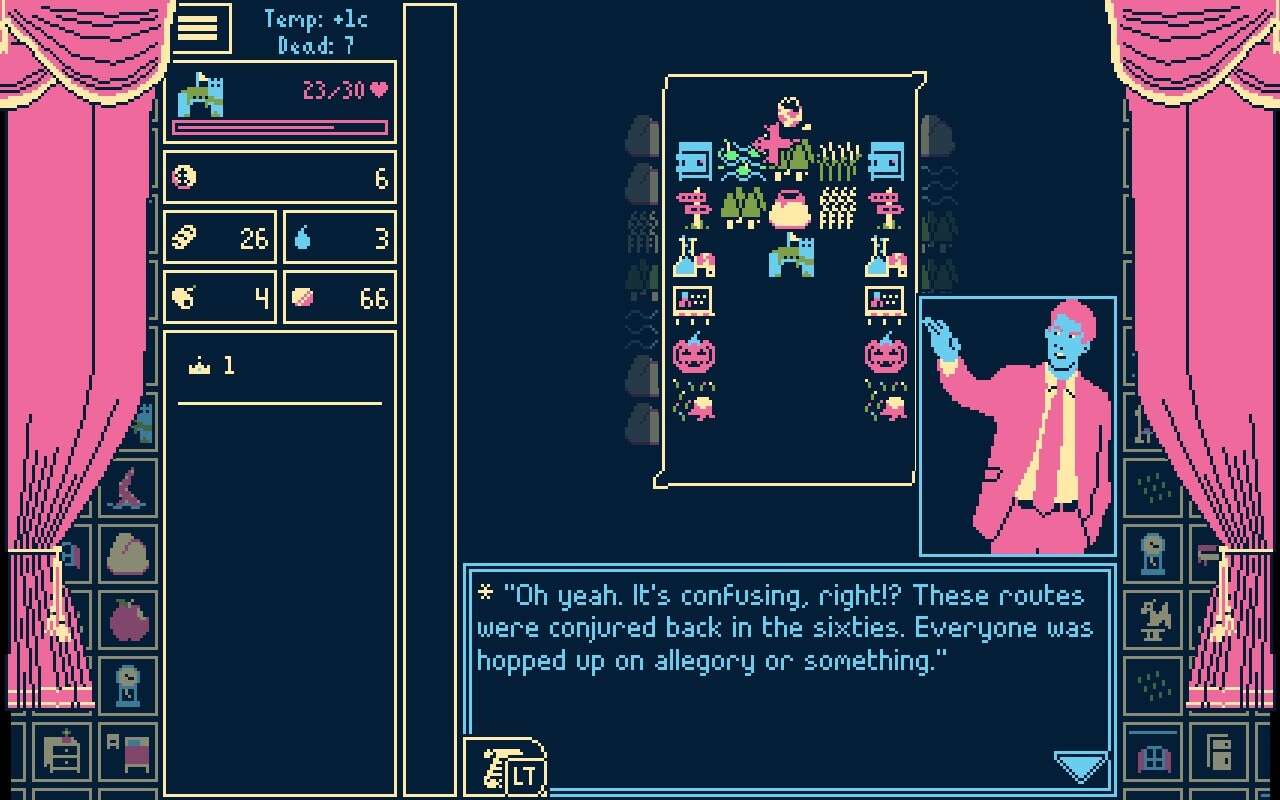
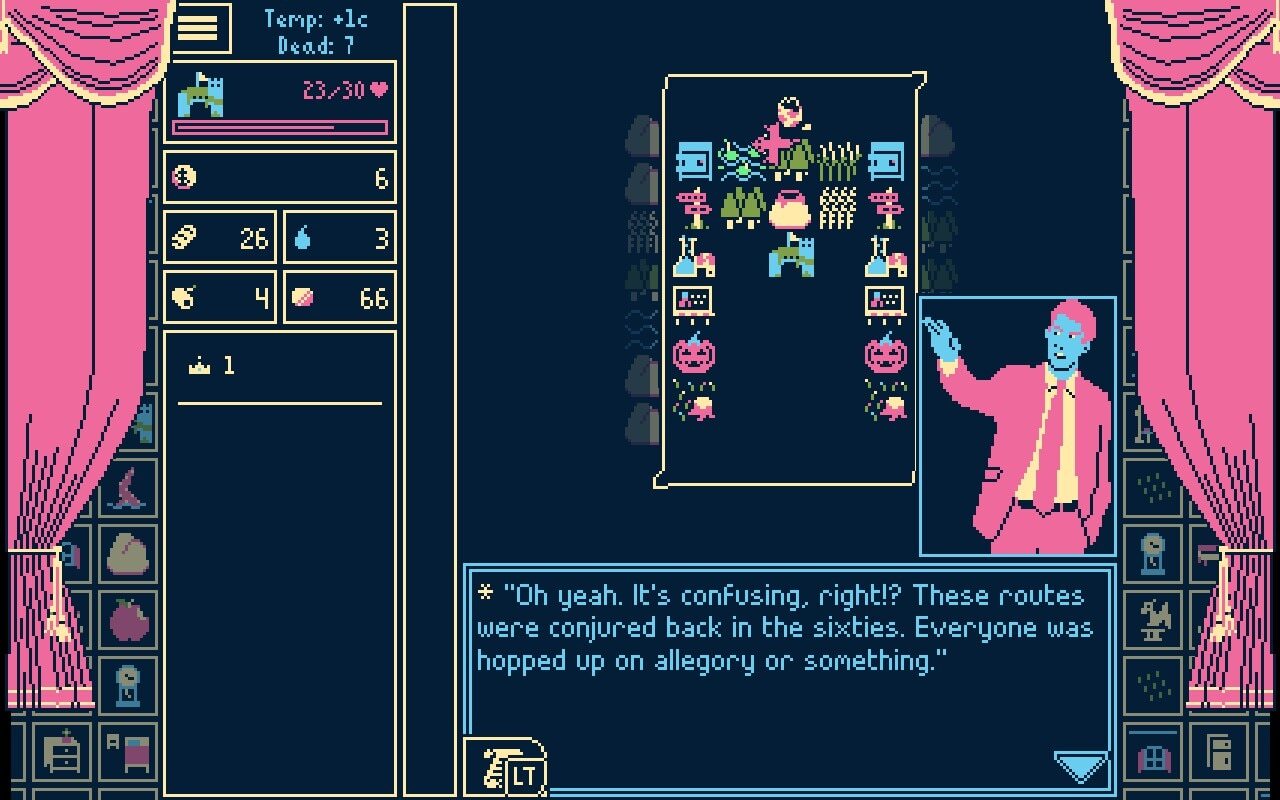
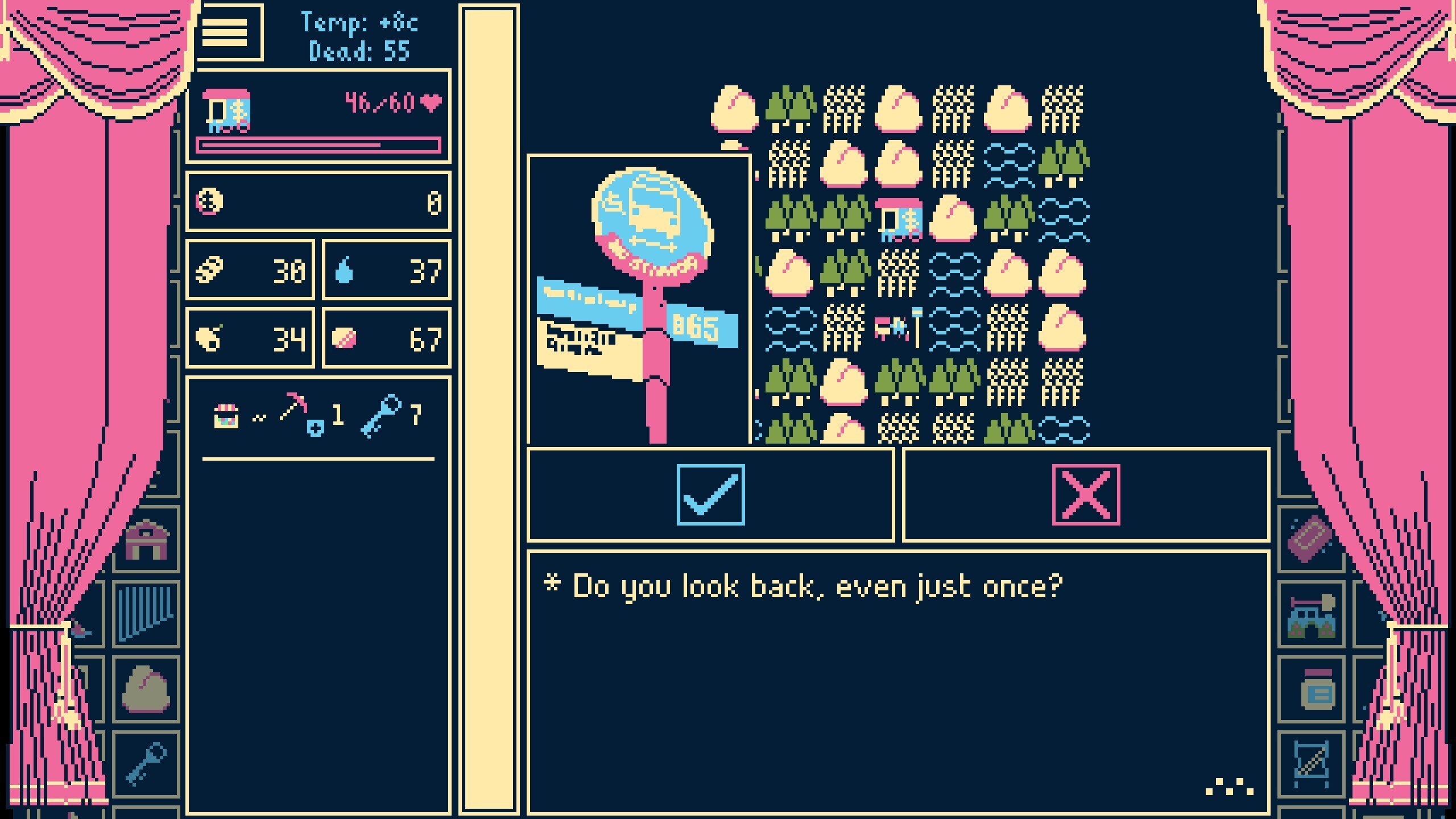
Your faerie courtiers fall in love with baseball too, but wholly fail to understand its rules, and are mostly convinced that the insurance commercials between innings are more important to the game than the game itself is. And who are you to tell them they're wrong? Their failure to comprehend the mundane world around us turns the world magical: their inability to interpret basic road signs, their belief that the dumbest uses of the written word hold a terrible arcane power, suggests that we too have the power to turn the world into something worth living in. Conversely, we have the power to rid the world of all its wonder, to insist on futility and despair, and to treat life as something to be consumed rather than experienced—and if we're uncomfortable with how the world reflects our choices, perhaps a part of our discomfort is that we're afraid to look too closely at ourselves.
Are games diversions or just distractions? Do they stir joy in our souls and wonder in our hearts, or are they just there to keep us from being alone with our own thoughts, until we can escape again into the oblivion of sleep? That, too, is up to us. It's a choice we make, consciously or otherwise—and once we are conscious of it, what does our choice say about who we are, and who we've chosen to be, what we want the world to mean to us, and who we want to be in the world?