A friend of mine once said that Martin Scorsese has a gift for finding every last possible nuance in the scripts he works with. He understands everything that a film could be, and works to unearth its best possible version.
To me, that's the appeal of Scorsese's movies—not his themes or his ideas or his subject matter, but the relentless, peerless craftsmanship that he puts into his work. When Scorsese once called a young Wes Anderson the future of cinema, I thought: Of course he'd think that. Scorsese is every bit as meticulous a craftsman as Anderson is. It's just easy to overlook that, because with Anderson, the craftsmanship is always the point; with Scorsese, the painstaking eye for detail is usually sublimated, a means to a more selfless end.
And nothing demonstrates that more than an early, brief shot in Taxi Driver, which might still be the best movie he's ever made. I remember being floored by this shot, the first time I watched the movie. I was convinced it must be famous—something about it was just electric. Instead, I've never seen it discussed. Even critics who discuss the scene focus on the way it establishes broader character details, or its narrative structure as a whole. This one shot seems to go overlooked.
Which makes sense! It doesn't call attention to itself. It's a mostly-static fourteen-second shot in the middle of a conversation that's mostly structured as shot-reaction shot. Conventional filmmaking language. But that's just why it amazed me that Scorsese packed as much into this quiet sequence as he did.
It starts with this:
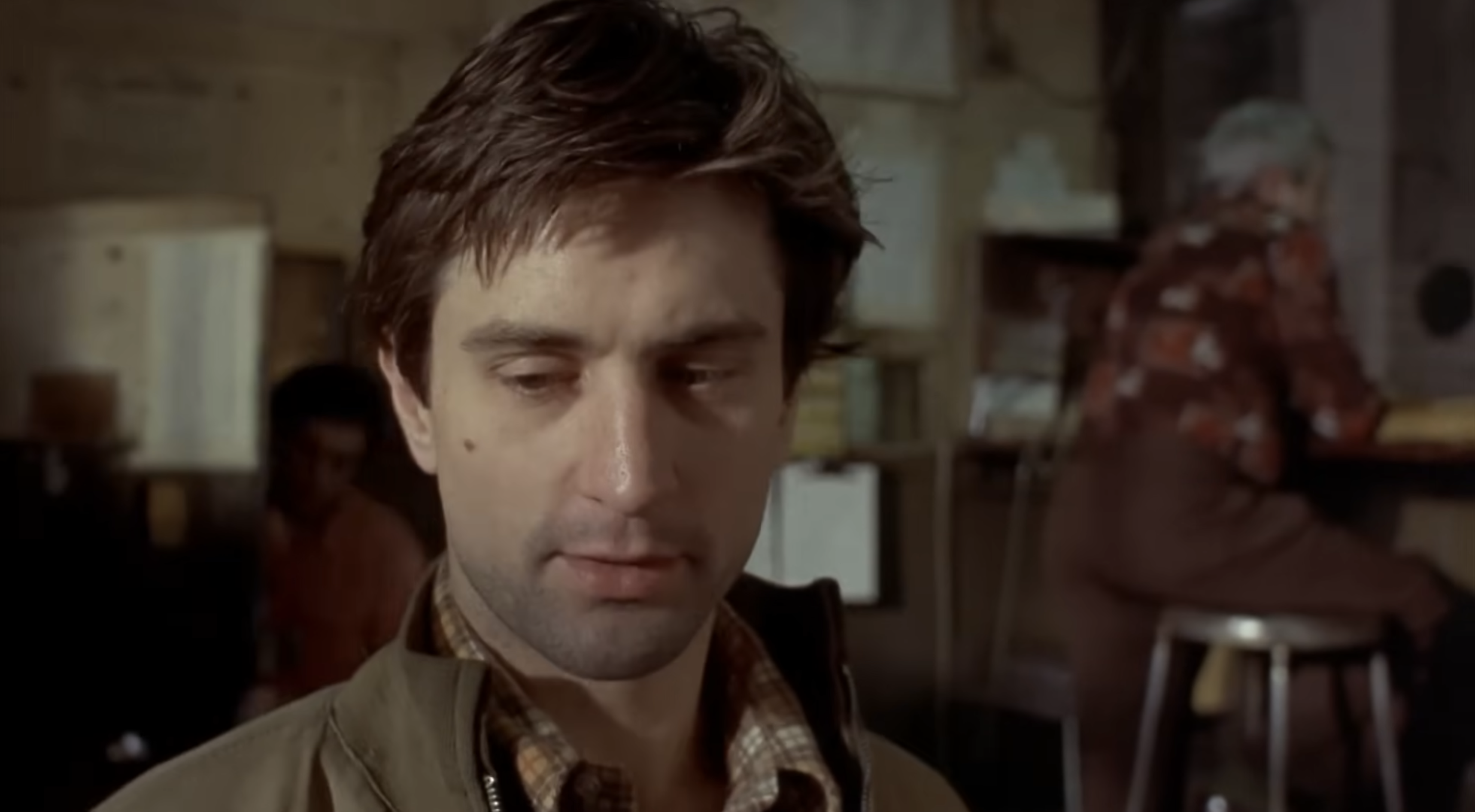
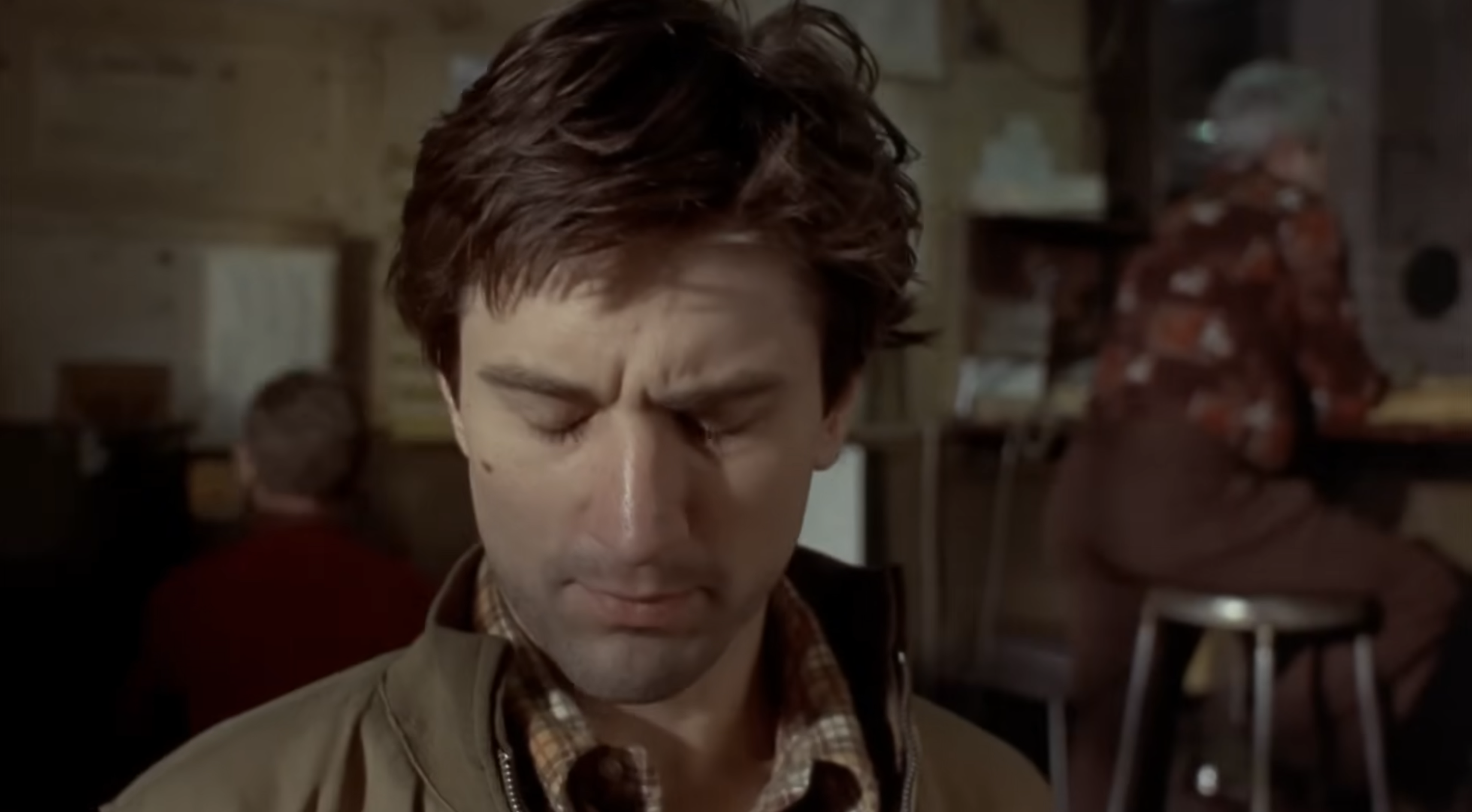
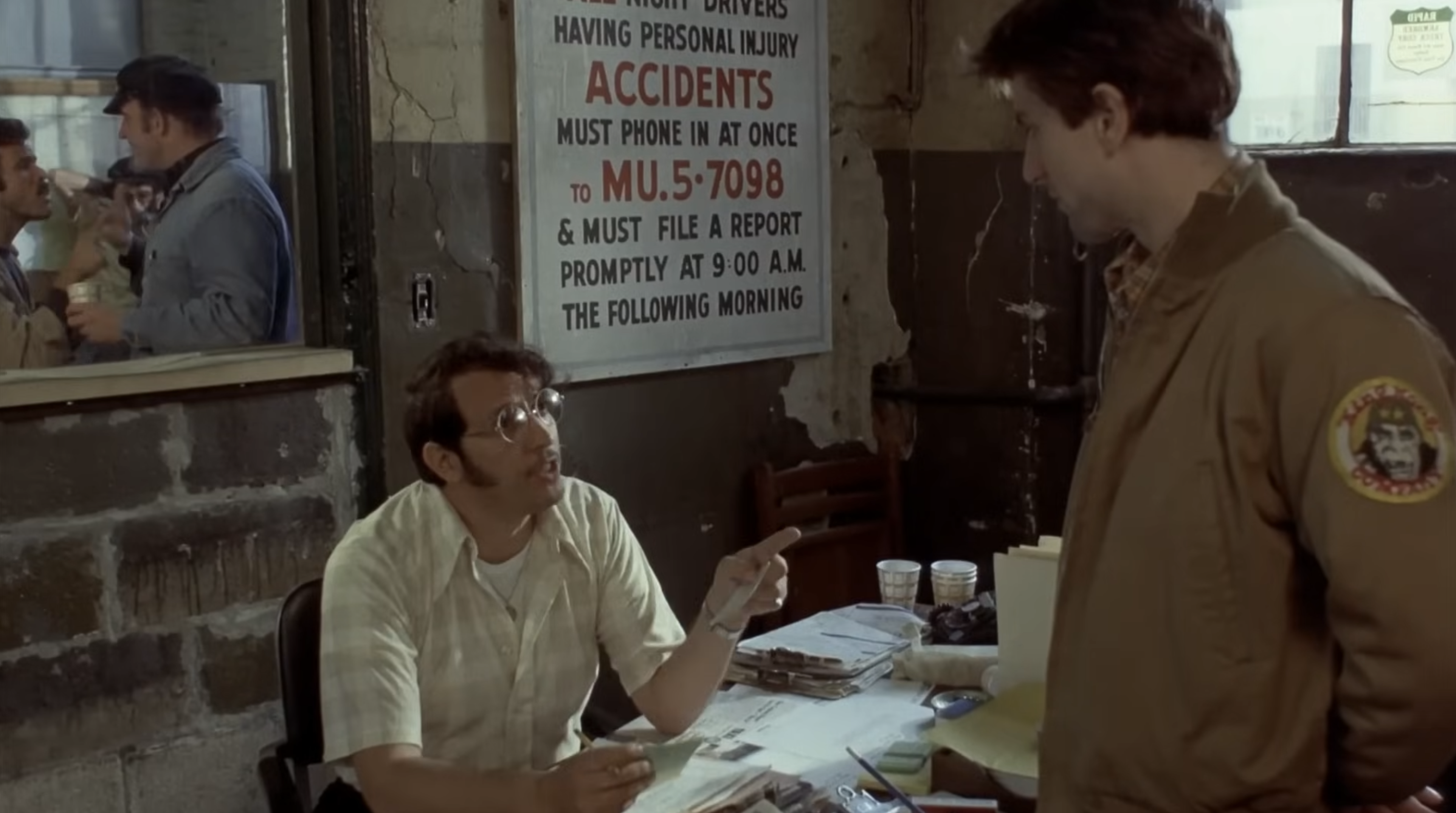
Travis Bickle is interviewing for a job—though calling it an "interview" might be a little overblown. It's the first time we see him in full, after the title sequence gives us shots of his eyes, dark, tense, flitting about. This is the moment that teaches us who he is.
In Paul Schrader's script for Taxi Driver, Bickle is described as follows:
On the surface he appears good-looking, even handsome; he has a quiet steady look and a disarming smile which flashes from nowhere, lighting up his whole face. But behind that smile, around his dark eyes, in his gaunt cheeks, one can see the ominous stains caused by a life of private fear, emptiness and loneliness. He seems to have wandered in from a land where it is always cold, a country where the inhabitants seldom speak. The head moves, the expression changes, but the eyes remain ever-fixed, unblinking, piercing empty space. [...] Not noticed, no reason to be noticed, Travis is one with his surroundings.
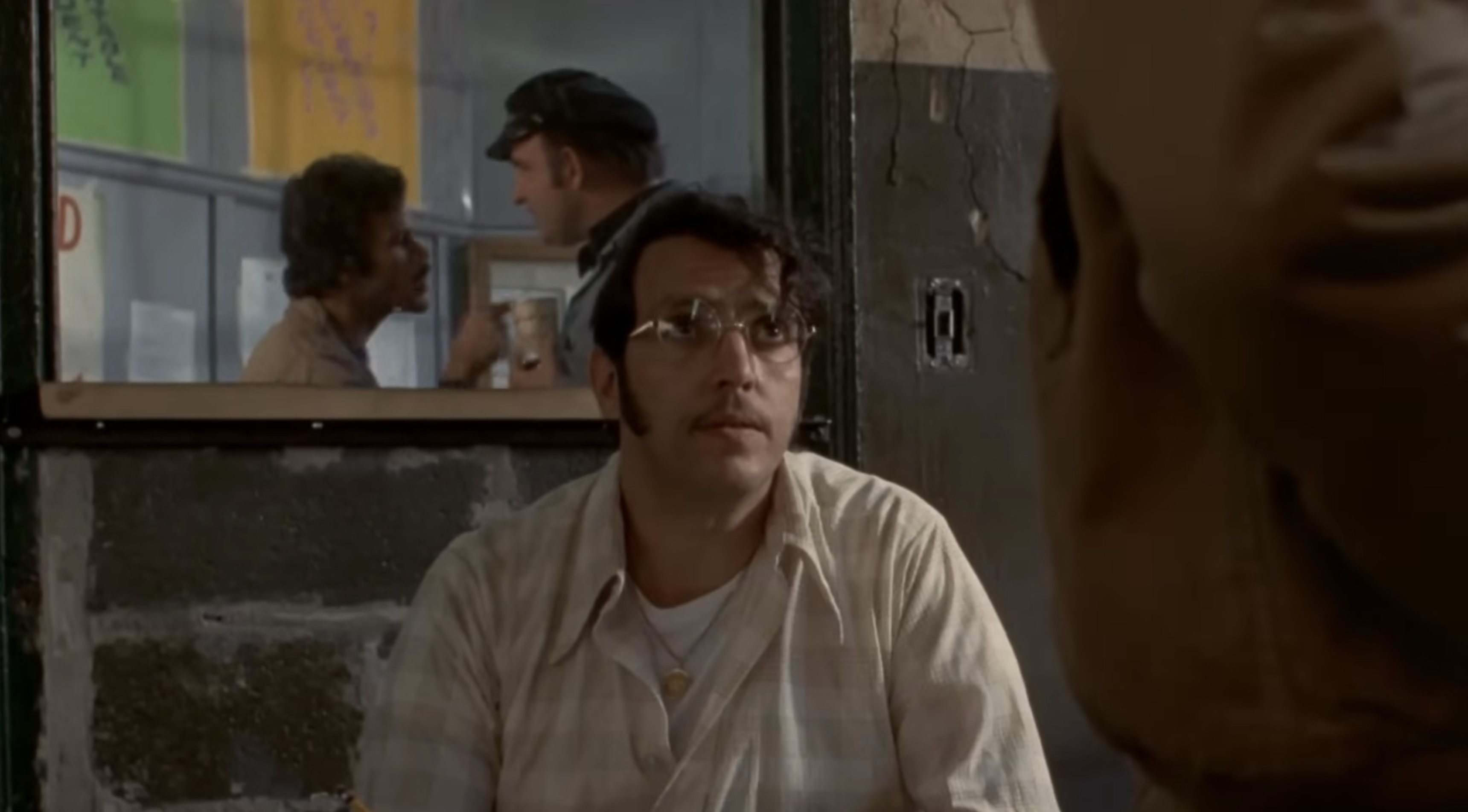
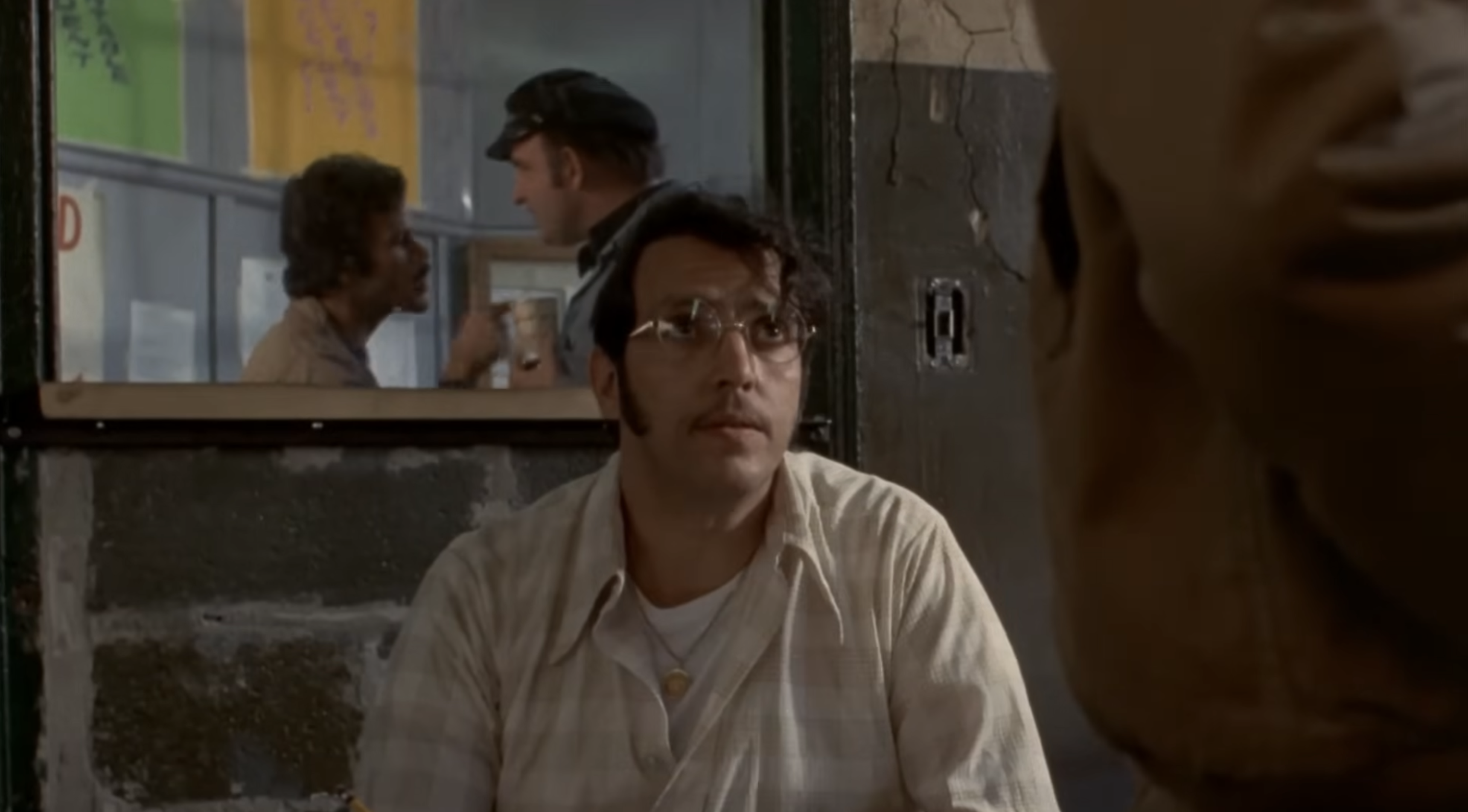
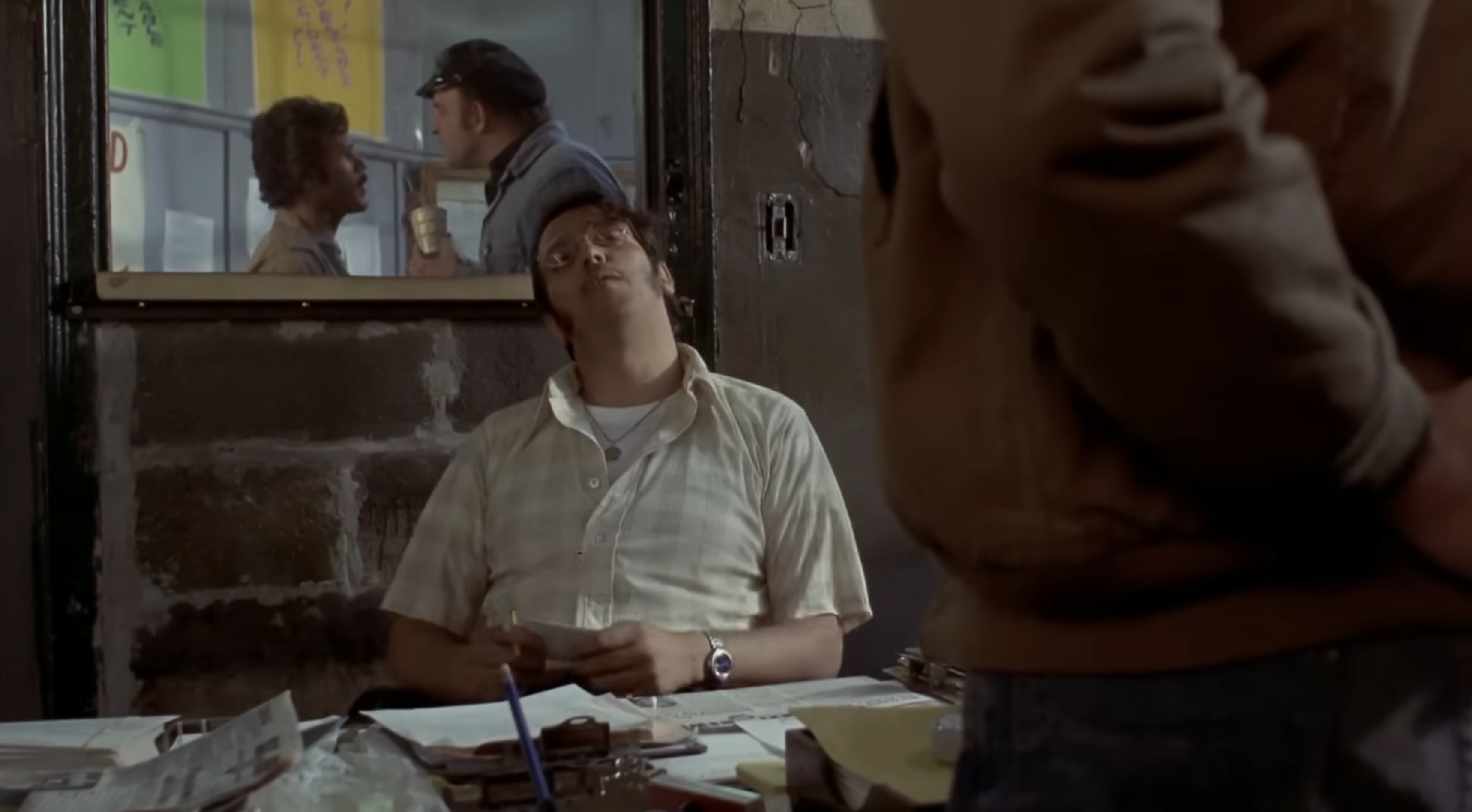
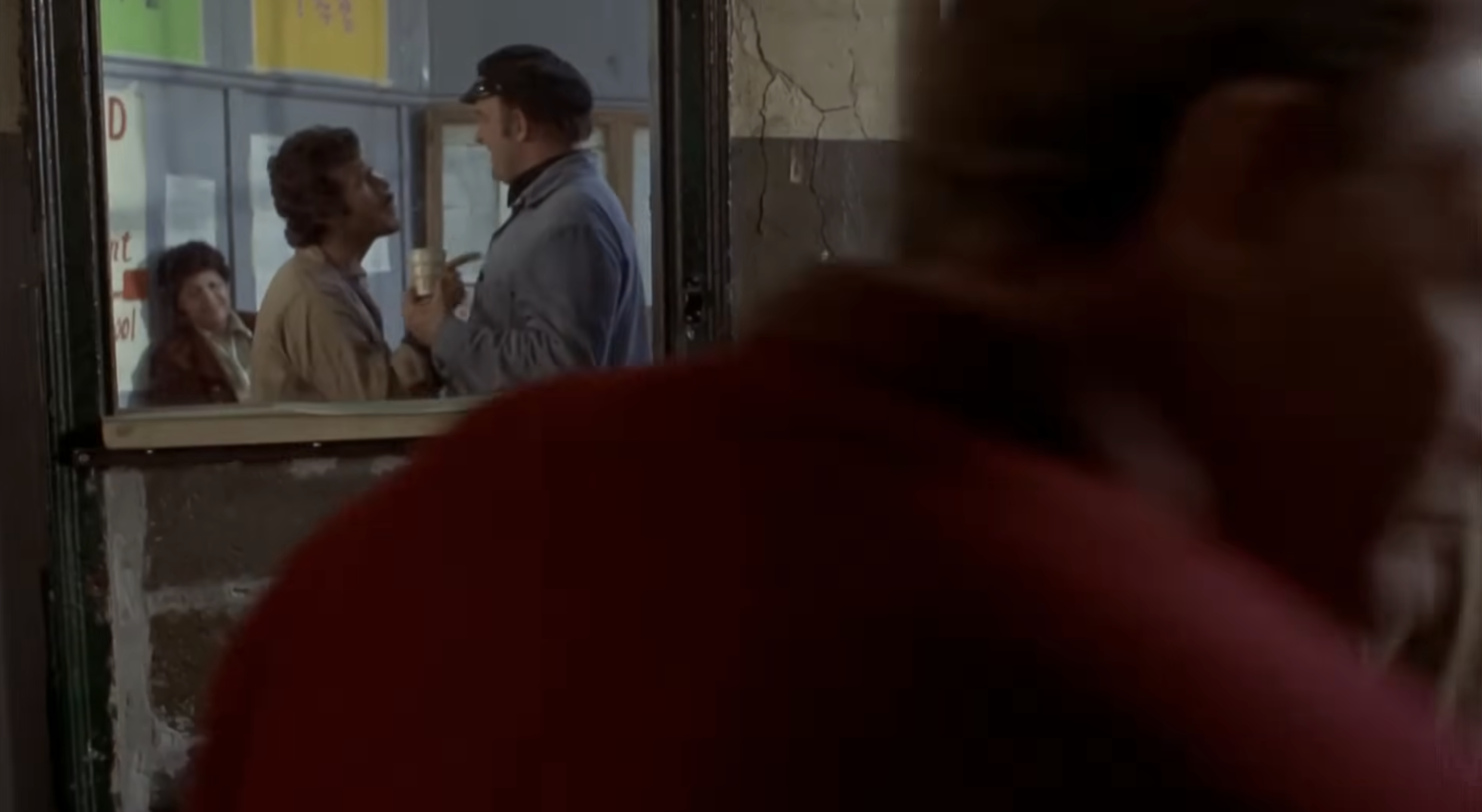
Schrader describes the taxi service's office as a "cluttered disarray;" it was Scorsese's choice to frame the personnel officer in front of a window, which itself serves as a frame in which two other men are having a heated, silent conversation. Throughout the personnel officer's conversation with Bickle, these men escalate their intensity: their faces come close together, they jab fingers in each other's faces. It's unclear whether they're fighting or just rude and a bit passionate—a pretty common New York City ambiguity.
And throughout Bickle's conversation, this taxi office is packed with people. A man sits behind Bickle as he speaks; after several shots of this, a door opens and another man enters the room.
(Fun fact: the door opens twice, actually, in two separate shots. Not the kind of thing you'd notice if you weren't busy screenshotting the sequence to write about it!)
Shortly after—and remember, this is not a long scene!—a different man leaves through the same door.
Every shot is packed with people—deliberately, unnervingly, intentionally so. It's obvious in the one alternate shot we get of the personnel officer, whose only purpose is seemingly to introduce another man into the shot, crammed between the two men we've already seen beyond the windowframe:
Bickle says very little about himself, but what he does say is telling. He wants a nighttime job because he can't sleep. Asked whether he's moonlighting, Bickle replies that he just wants a job with long hours—something that will eat up as much time as possible. His voice, his presence, is lost amidst the human clutter of the office. Two men shout loud greetings at one another. The voices of unseen men burble beneath the personnel officer's largely uninterested questions.
It's telling that nearly everyone we see—with one exception—is male. And it's also telling that, in a short span of time, Scorsese establishes that most of these men have connections with one another: everyone watching the two guys in the window frame seems to know them and be familiar with them, which suggests that those two men are also familiar with one another. The men entering and leaving the scene seem to be the ones shouting greetings at each other. There's a sense of camaraderie, however chaotic and abrasive, while Travis Bickle is here alone and unknown. The first time the personnel officer seems invested in what Bickle has to say, it's because he thinks Bickle's bullshitting him; his tone grows immediately antagonistic.
The only moment that suggests even the possibility of connection comes when the officer asks Bickle about his military service, and Bickle replies that he was in the Marines. The personnel officer says that he was in the Marines too. There's a momentary spark of recognition, and of possible affinity... and that's when we get the shot that so amazed me, the first time that I saw it.
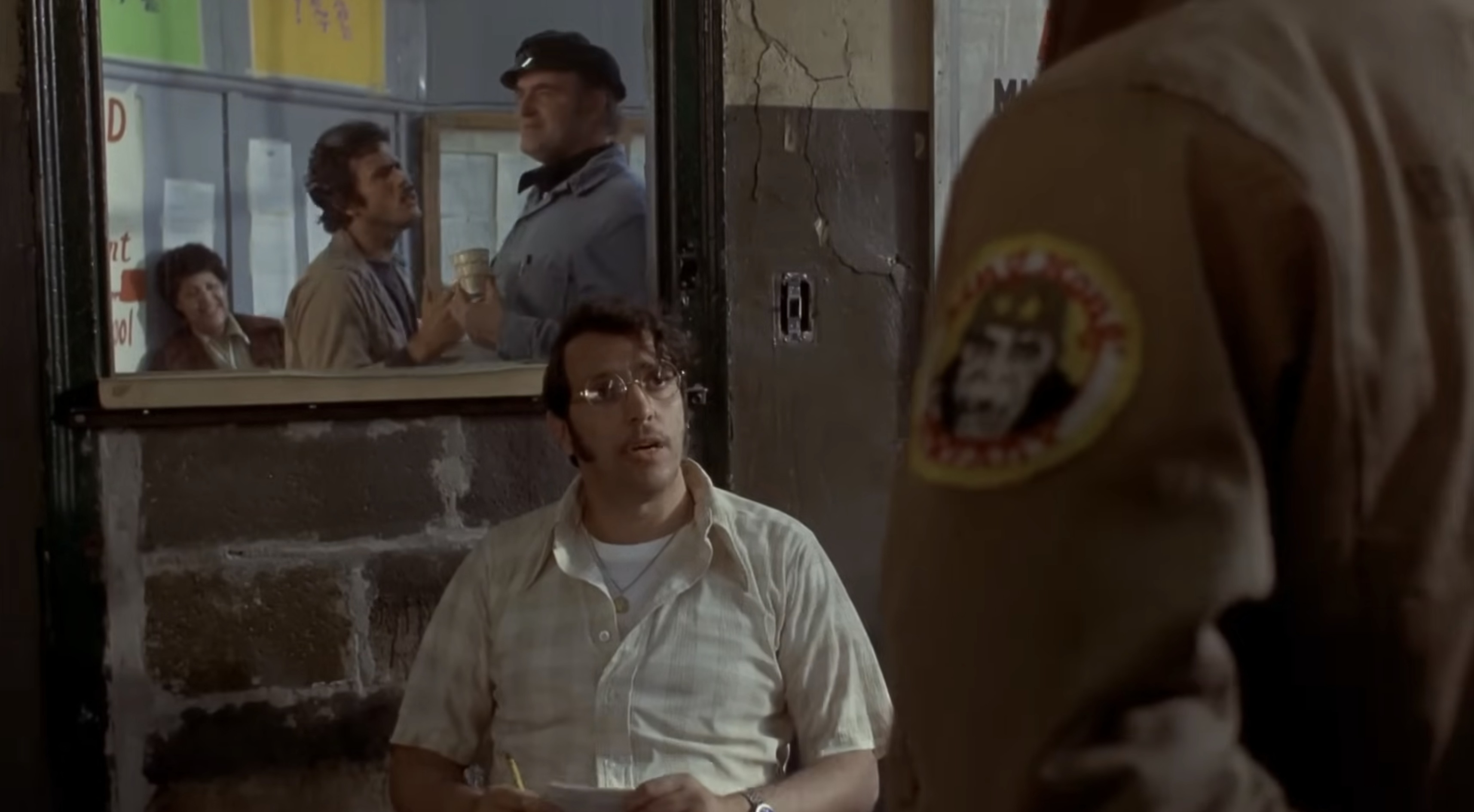
It starts from the same static position as all-but-one of the officer's other shots. The two men are still heatedly talking behind him. From the officer's body language alone, you can see that brief shift in recognition: Travis has said something that means something to him, for a change.
But the moment passes, and the rote questioning resumes. And as it does, Scorsese moves the camera for one of only two times in this sequence:
The pan up reveals another heretofore-unseen person in the frame behind the officer, packing the frame. The man we see in the alternate shot is completely missing; the woman we see here was missing from that alternate shot. Scorsese has established a frame-within-the-frame, and that window frame is so packed with individuals that we never see them all in a single place. Here, with the pan, he establishes a perspective that completely fills the frame. And unlike the alternate shot, here the shot as a whole leaves no empty space: every person's body overlaps, with the personnel officer's head intersecting with the man in the window frame and his arm overlapping with Bickle's (which wasn't true before the camera moved).
The effect is claustrophobic: there is a visual tension that parallels the tension between every person—even the background figures—in this moment. There isn't even room in the frame for Bickle's head: everyone else is clearly visible, but Bickle is effectively decapitated. (His face wouldn't be visible even if we could see it.) There is no empty space; there is no quiet, no silence.
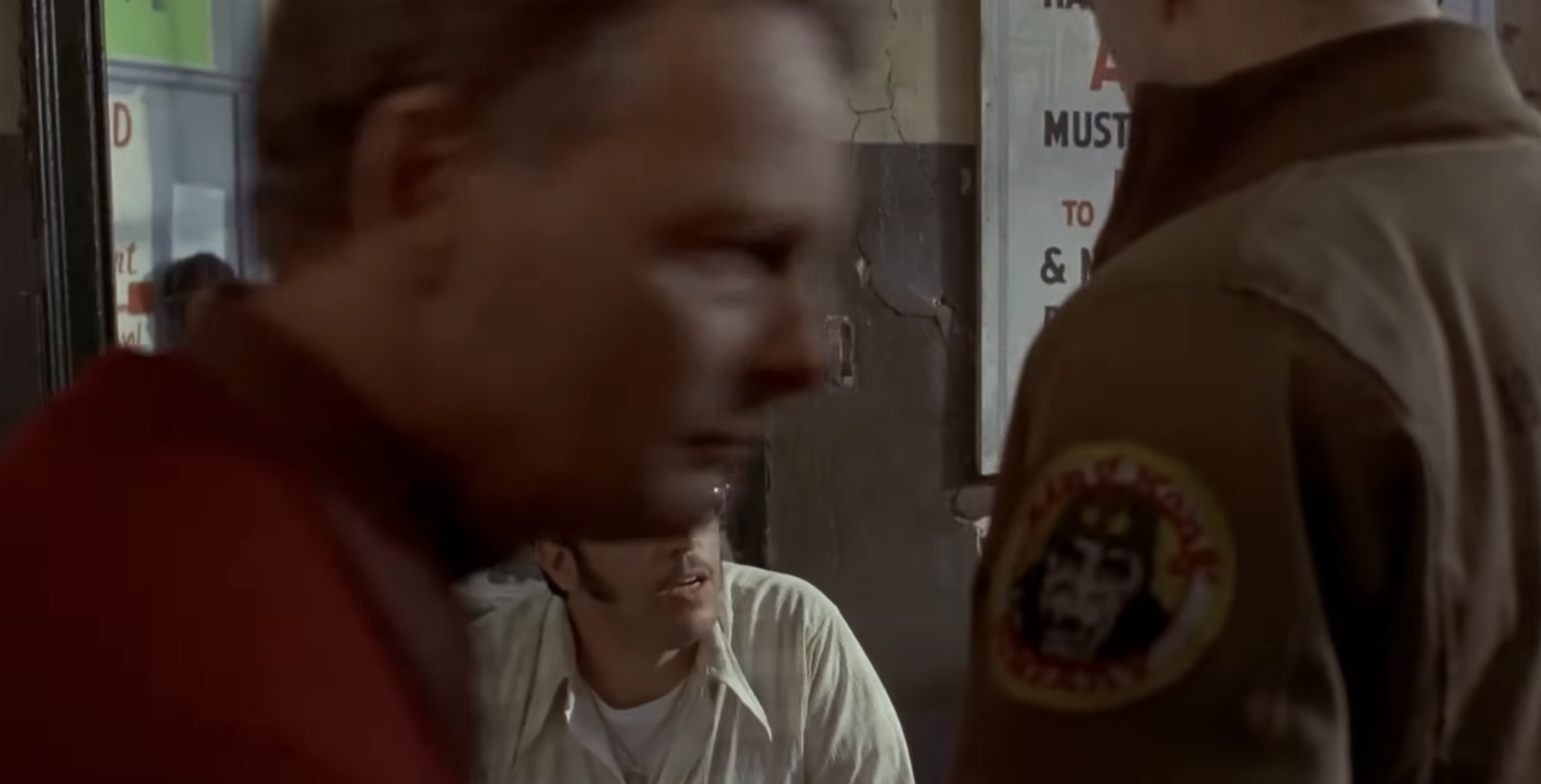
And then a man cuts into frame.
The cleanliness of the shot is completely broken. The man is out-of-focus, blurry, so close to the camera lens that we don't get a good sense of his features. He breaks the rules of the shot, so to speak: the sense that we're viewing a moment and a space clearly, pristinely, is broken by him moving so close to the lens that he might as well be jostling past us as he does. In a sense, we go from invisible, bodiness onlookers to physically present in the scene ourselves: we, too, become a presence, the camera's eye not just in space but taking up space.
All at once, the shot becomes a frame within a frame within a frame. There's the window frame in the background; there's the frame where Bickle talks to the nameless officer; and there's the frame that includes us, with this unknown man splitting the space between us and Bickle, a third claustrophobic portrait of three individuals: Bickle, this man, and the camera.
With a single, subtle pan, and a clever character movement, Scorsese introduces an unbelievable amount of tension. A shot of four characters, all of whom have plenty of space between one another, becomes a shot of six—seven counting the onlooker—that's so crammed that it suddenly leaves no room for anybody. Bickle, already bland to the point of invisibility, is momentarily lost. His brief moment of connection returns to the impersonality of the job interview. There is no room for him, no interest to him, no attention paid to him, in the shuffle.
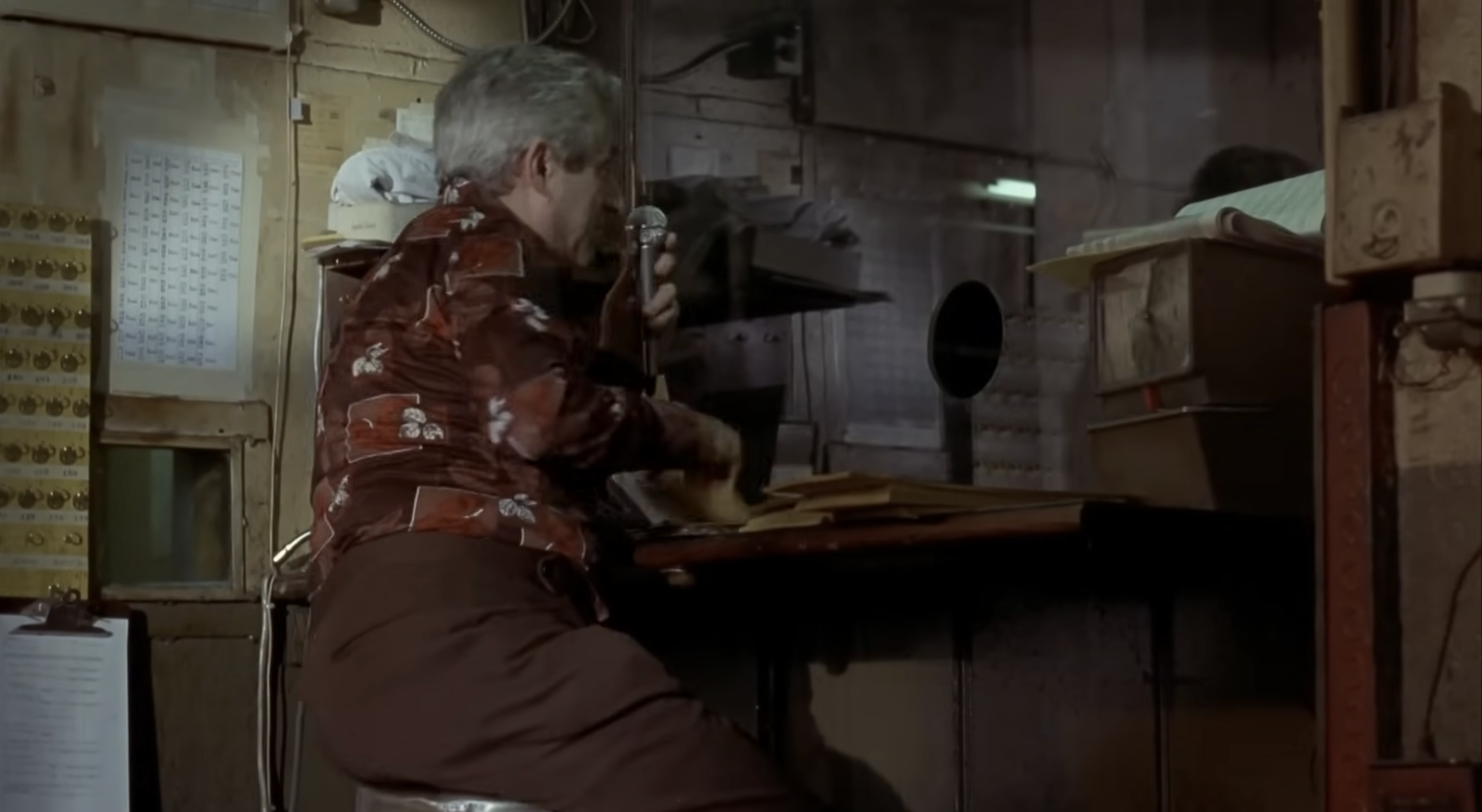
Even the man sitting behind him—the only other solitary figure in the scene—begins yelling at whoever's in line beyond his window. The guy whose connection to other people is severed by a pane of (presumably-bulletproof) glass is still more connected to everybody else than Travis Bickle is.
The entire scene, start-to-finish, lasts less than two minutes. The panning shot that ends with the jostling sixth man lasts about fourteen seconds, all-in-all; that man cuts into frame for maybe a second and a half.
In that brief time, Scorsese establishes seven other individuals, the majority of whom are in constant motion. He establishes that they have connections with one another that Travis lacks. He creates a sense of jarring cacophony, of people in constant states of conflict with one another, abrasive from every angle. And it all comes to a head in that brief moment where the claustrophobia builds and builds, until it seems to spill all the way out of the screen.
This is the first real scene of the film. It's the first scene in the screenplay, too, which Schrader intended to place before the title credits. Bickle says very little about himself, because there is very little to Travis Bickle: he can't sleep, he doesn't have a job, he was discharged from the Marines, and he doesn't know a single soul. But the world around Bickle tells us everything we need to know about him.
This taxi office is New York City, as Travis Bickle experiences it. It's life as he understands it: antagonistic, uncaring, overwhelmingly masculine, and above all violent—and while there's no explicit violence in this scene, there's an overt violence to the way Scorsese disrupts his own frame, on top of the hints of violence in how all the character in this scene behave. This is the world that begat Travis Bickle, and it's also the inside of Bickle's own head.
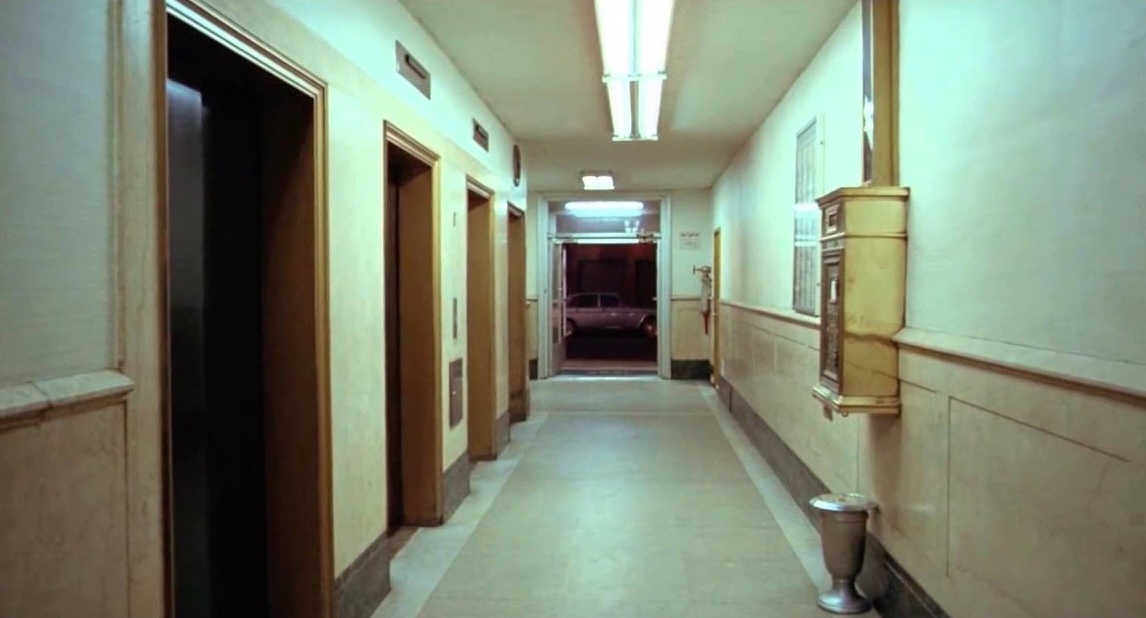
In many ways, it's the antithesis of the famous hallway shot, which we get as Bickle calls a woman to ask for a second date and gets rejected. The hallway is Bickle at his most vulnerable, Bickle at his emptiest, Bickle when he tries to make a connection with the femininity he endlessly lusts for: the leaking hole at the bottom of his soul. The taxi office is Bickle at his most superficial, his most present, his most straightforwardly masculine—and even here, we can see how he is casually rejected by the world around him, just as we can see that, beneath the softness and the blandness, there is something very off. Something dangerous lurks beneath his eyes.
Scorsese doesn't call attention to what he's doing, unless you want to call a slow camera pan showy. The clutter, the noise, the teeming people of the office, are offered up as background noise, mere atmosphere. But there is a meticulousness to the detail—a precision to the way that Scorsese packs this scene with so much action without calling attention to it at all.
The intent of his filmmaking becomes obvious when you see how carefully he builds to the moment that so electrified me. The quick alternate shot, and the man we only see from that angle. The panning reveal to the other woman behind the window. The two separate men who enter the room behind Travis as he's speaking. And then the frame-breaking shot that so electrifies me, layered into both the composition of the shot itself and the composition of the scene as a whole.
It's funny to call this shot Wes Andersonesque, given how unlike Anderson it is aesthetically. But its obsessively-layered mise-en-scène is no different than Anderson's carefully composed shots. There's just as much attention to detail paid to each character's look and clothing, just as much careful colorwork. Just look at how the blue of the window frame, and its pops of green and yellow, makes the brown of the personnel office that much browner, or the way that the officer's creamier shirt and white undershirt contrasts with the brown of the office. Meanwhile, Bickle's jacket is just light enough to contrast his surroundings in the better-lit shots, but the moment we see him in any shadow, its tones are almost identical to the brown of the building's walls.
If we don't notice Scorsese doing this, I think it's because he has so much else going on. His movies aren't specifically remembered for their compositions because they're notable in so many other ways as well: his use of camera motion, the way he handles sound, his pioneering use of needle drops, and of course the indelible performances he coaxes out of his actors, time and again. He works with fantastic scripts and he does them unbelievable justice. Because that's Scorsese's gift, as my friend suggested: he has a phenomenal knack for deeply considering every aspect of a film's production, its composition, and for packing every moment of his films with flourishes and choices that are all-too-easy to overlook.
Who else could have inspired both Anderson's prim, pristine dollhouse aesthetic and the aggressive fluidity of the Safdies brothers' filmmaking technique? Who else is acclaimed equally for how brash and bold he can be and for how soft and subtle is is capable of getting? Who else could both pioneer the modern Mafia movie and deconstruct it as brutally as he did with The Irishman, and direct an Edith Wharton adaptation in between?
Taxi Driver moved me like few movies have ever moved me. It disturbed me when I watched it as a lonely, alienated twenty-three-year-old; it remains one of my favorite movies to this day. This one, brief shot isn't why it moved me, or why it means so much to me. But it struck me instantly, and shocked me more than such a seemingly modest shot should have been able to; it was an early indicator, for me, that I was watching a movie by a director whose talents are singular even compared to his peers', and I think that holds true: even among geniuses, Scorsese stands out, and with shocking consistency across a shocking variety of work.
If this sequence is rarely talked about, that's because in Taxi Driver alone there are a few dozen other sequences that merit this level of attention, this level of appreciation. But this one deserves to be appreciated too.