Agentic development is the pair-programming model I actually wanted.
I always understood the theory of pair programming. In practice, it often felt like two people doing work one strong engineer could do alone.
AI changed that for me.
I always got the value on paper: two brains, shared context, faster feedback, fewer blind spots, better knowledge transfer.
But especially in startup and scale-up environments, human pair programming often felt hard to justify. Too synchronous. Too expensive. Too much of both people sitting inside the same task at the same time.
Agentic development feels different.
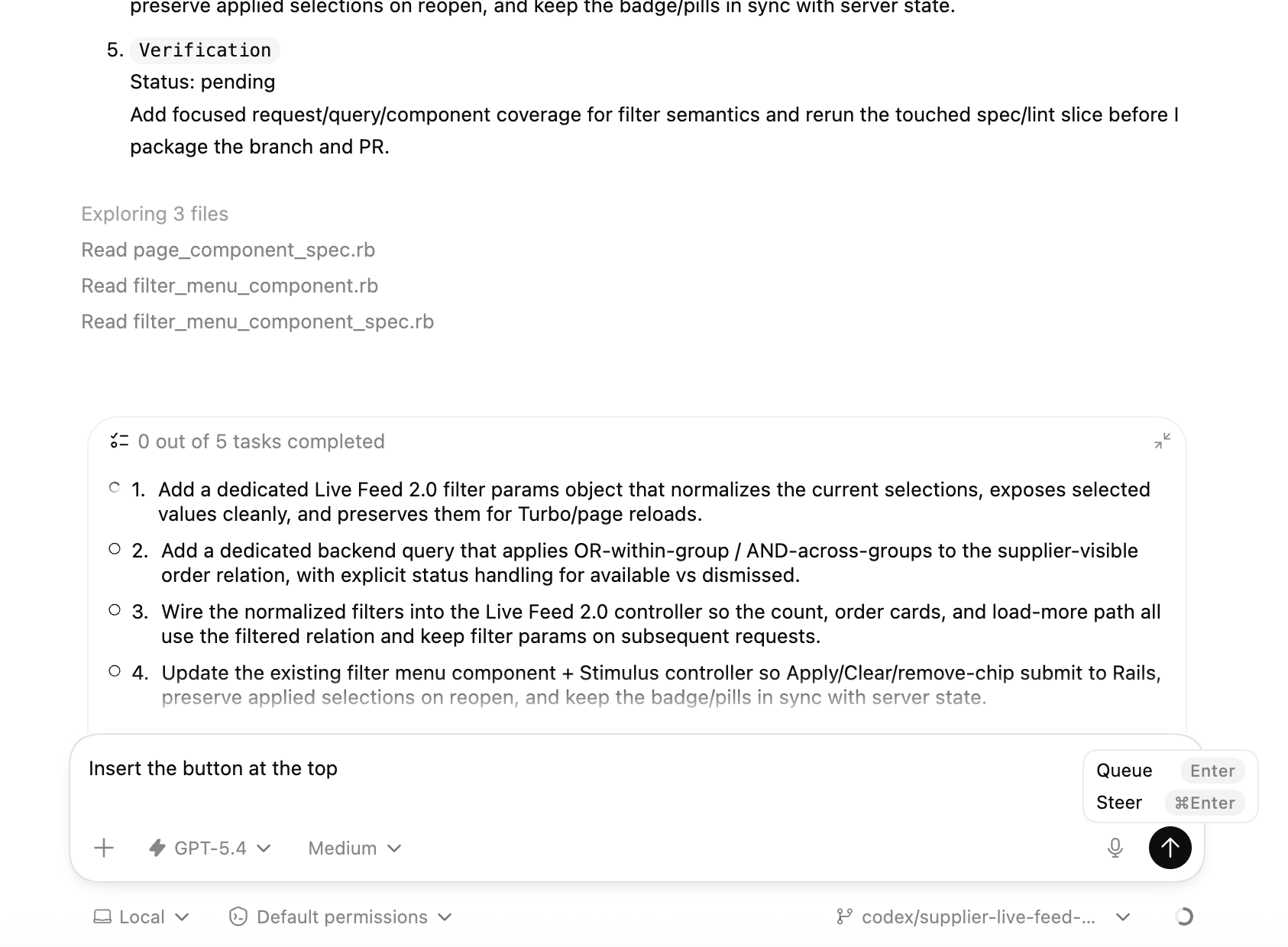
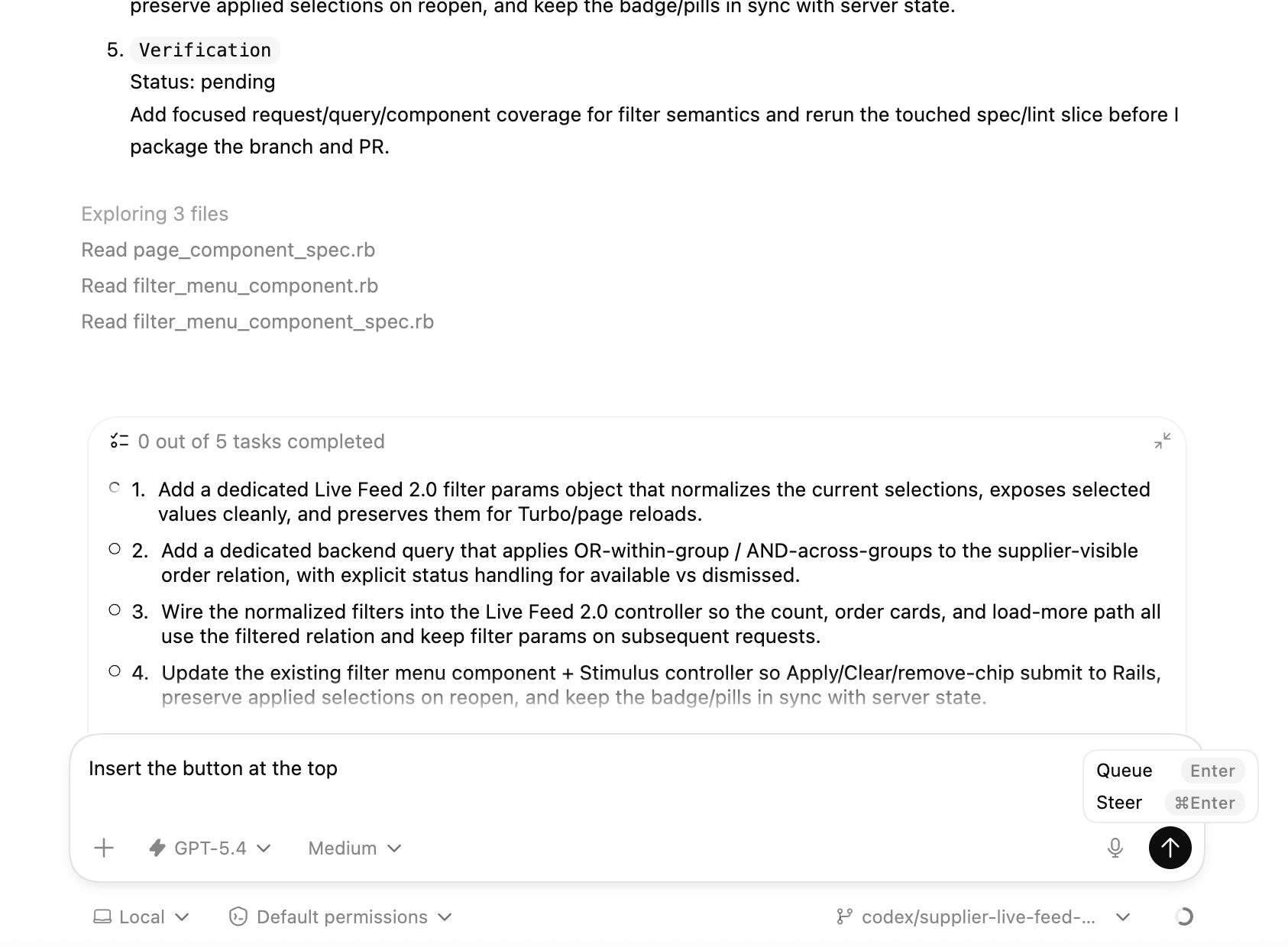
Now I have an AI pair programmer working from my playbooks, patterns, and strategies. Attached is my pair programmer, Codex.
The screenshot shows what I mean in practice: AI acting as a pair-programming assistant, stacking work, showing progress, and giving me the chance to step in and steer before a full cycle completes.
That matters even more in monoliths and legacy systems, where hidden coupling, strange data, and old patterns are not always obvious at the start.
The real value is not just faster implementation.
It is a shorter feedback loop.
I can let execution keep moving, watch progress locally, verify behaviour in real time, and intervene early when the shape of the problem changes.
I still own the intent, constraints, architecture, and judgement.
But now I have a pair-programming assistant that is observable, steerable, and continuously executing.
That is the pair-programming model I actually wanted.