One of the biggest advantages is that a shipped job can carry its own decision trail with it:
- the prompt/spec
- the run log
- the verification steps
- the PR
- the final code and tests
That becomes more valuable as the system evolves.
Because months later, the hard part is often not reading the code. It is understanding the context the code was written in.
What was the job actually trying to achieve?
What constraints mattered at the time?
Why was one design chosen over another?
What was verified?
What issues showed up during delivery?
What should be reconsidered before changing it again?
A good run log captures that.
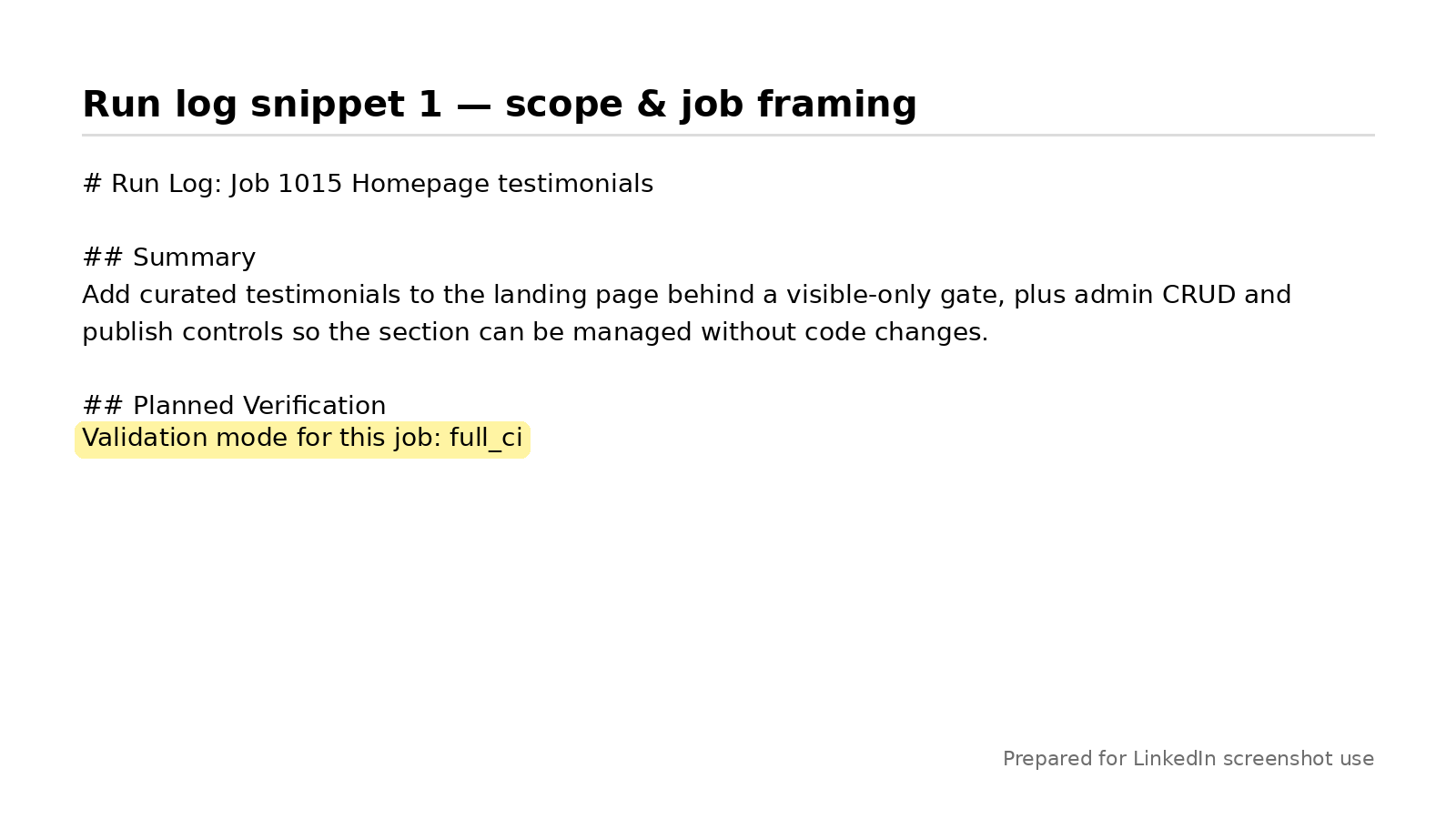
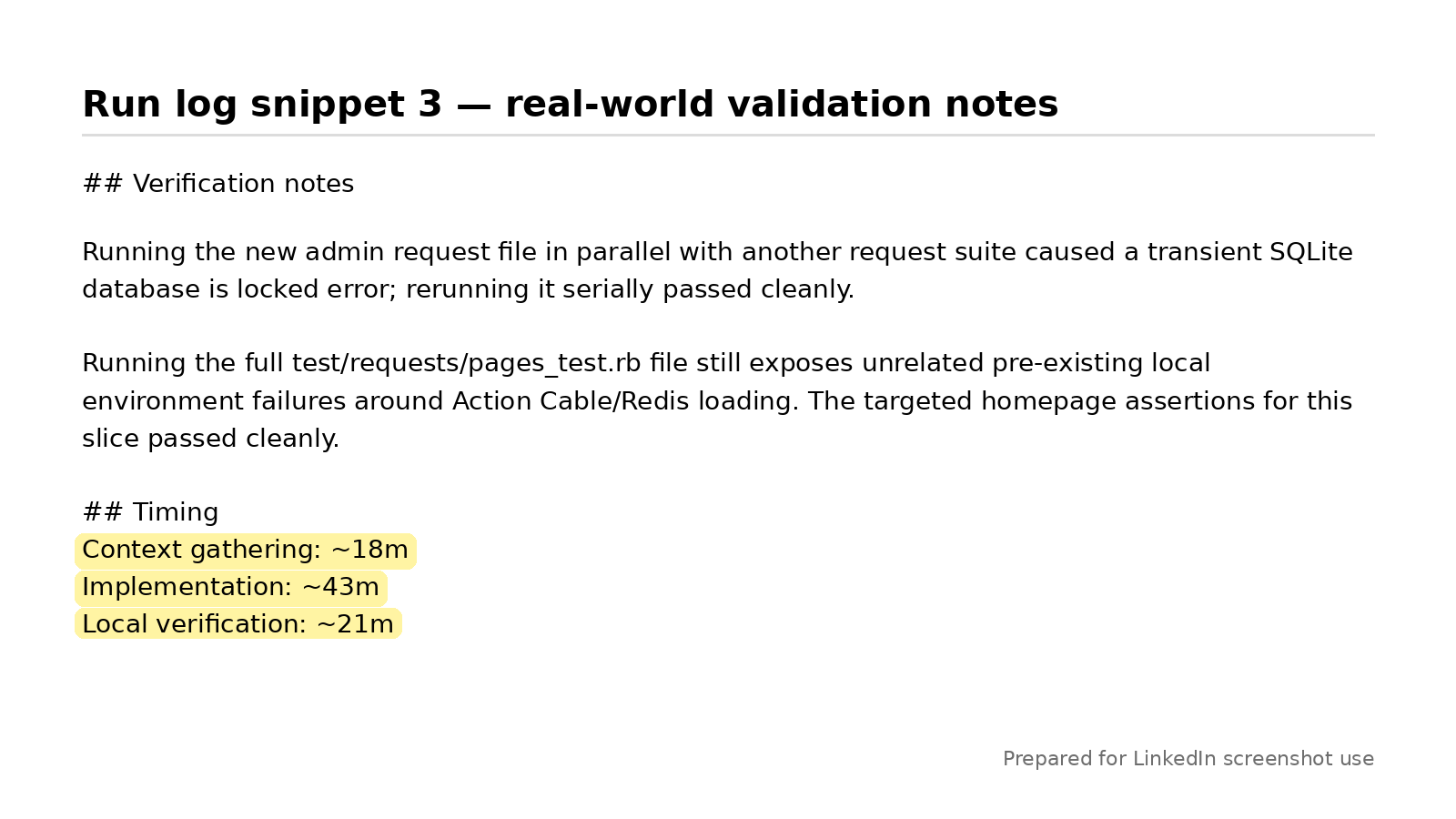
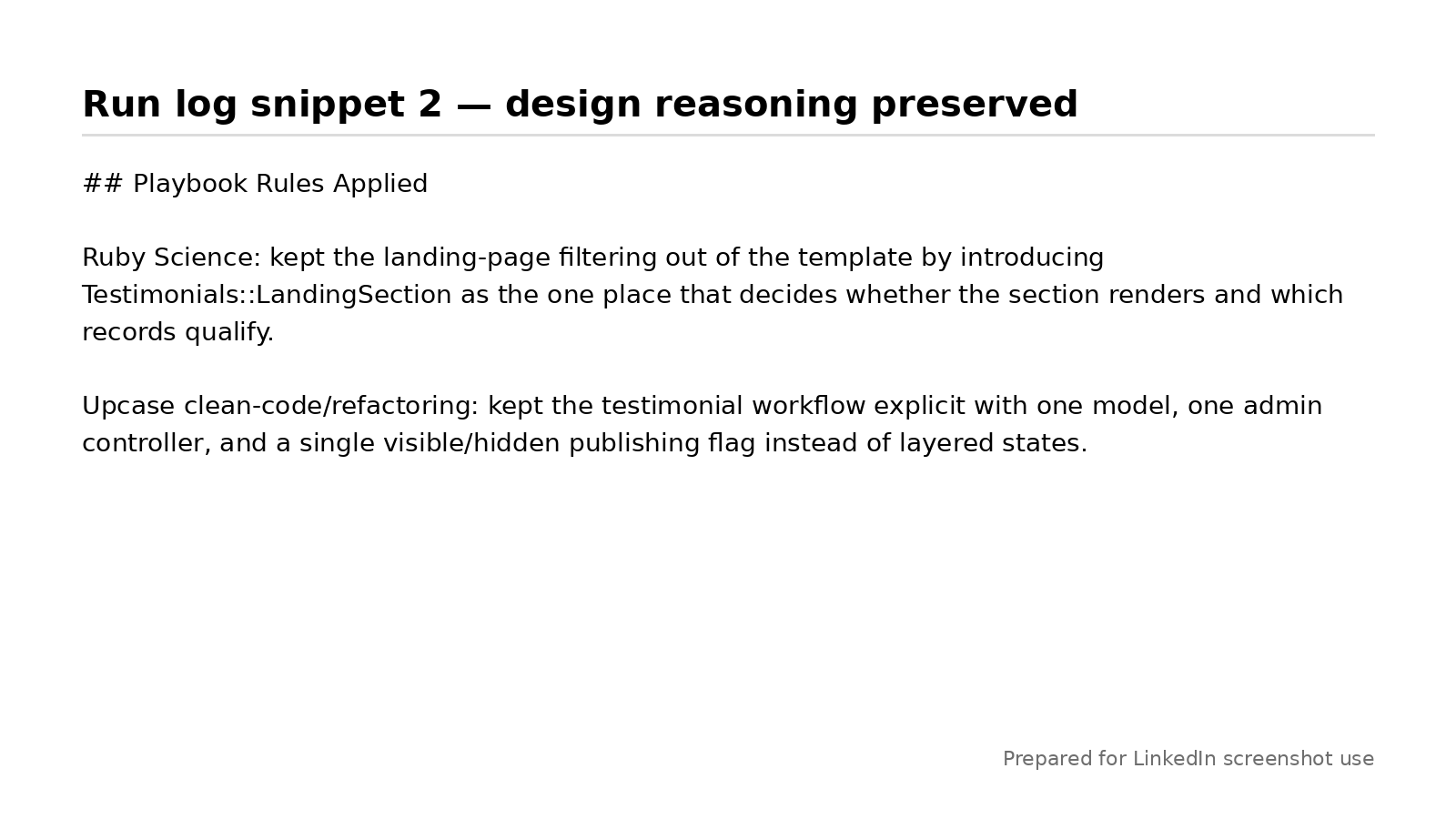
For example, one recent job record included:
- the original scope
- the playbook rules applied
- why the feature shape was kept simple
- the verification plan up front
- the real-world validation notes from delivery
That is far more useful than just seeing the final diff.
Even with documentation, tests, and a clean codebase, there is something uniquely useful about being able to rewind to the exact moment a decision was made and inspect the reasoning in context.
That helps engineers.
It is even more useful for factory agents.
They can consume the old prompt, run log, PR, and current codebase very quickly and use that context to assess the safest and most appropriate next change.
In long-running systems, that matters.
Because no matter how strong the team is, people cannot keep every historical trade-off in their heads forever.
The delivery transcript becomes a real engineering asset.
Not just code memory.
Decision memory.
One of the underrated advantages of software dark factories is that they do not just help you ship faster. They help you preserve the why behind what was shipped.
For future engineers — and future agents — that rewind button is incredibly powerful.