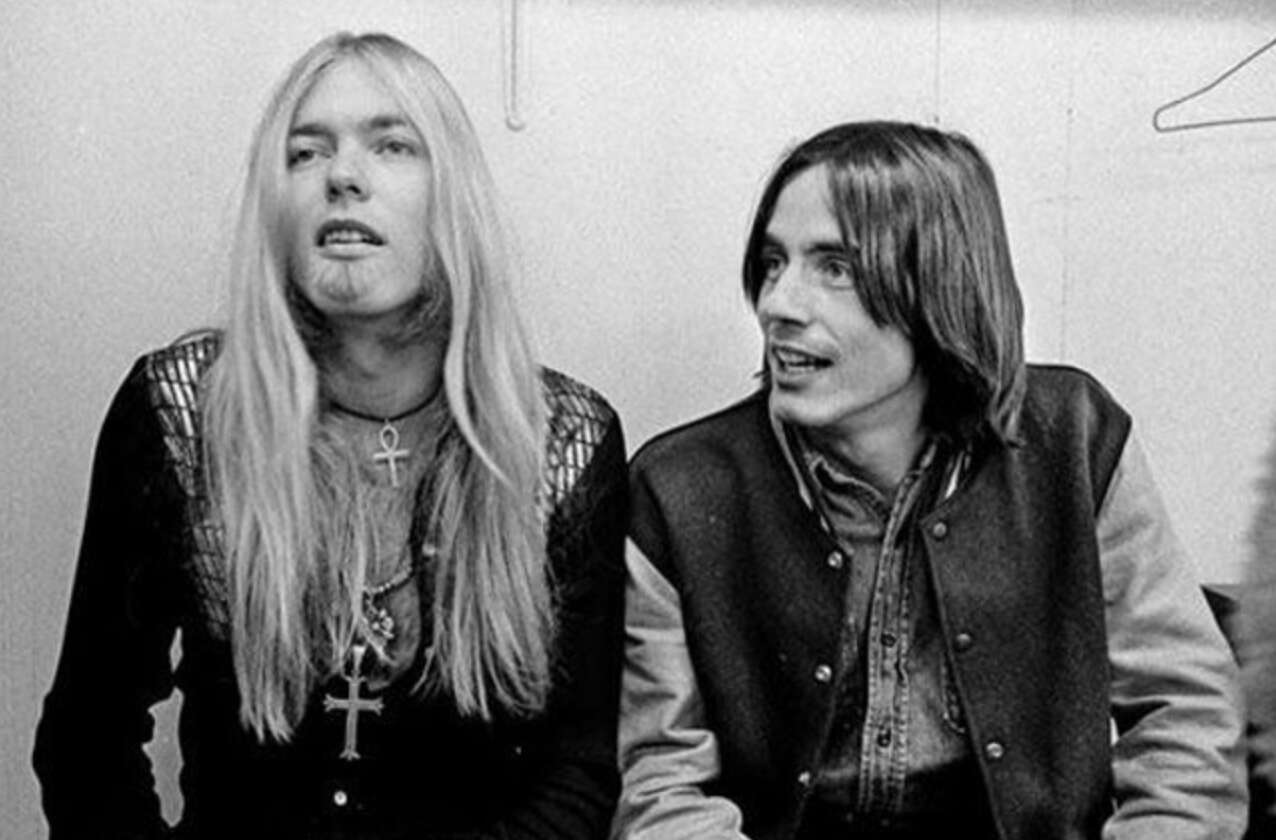
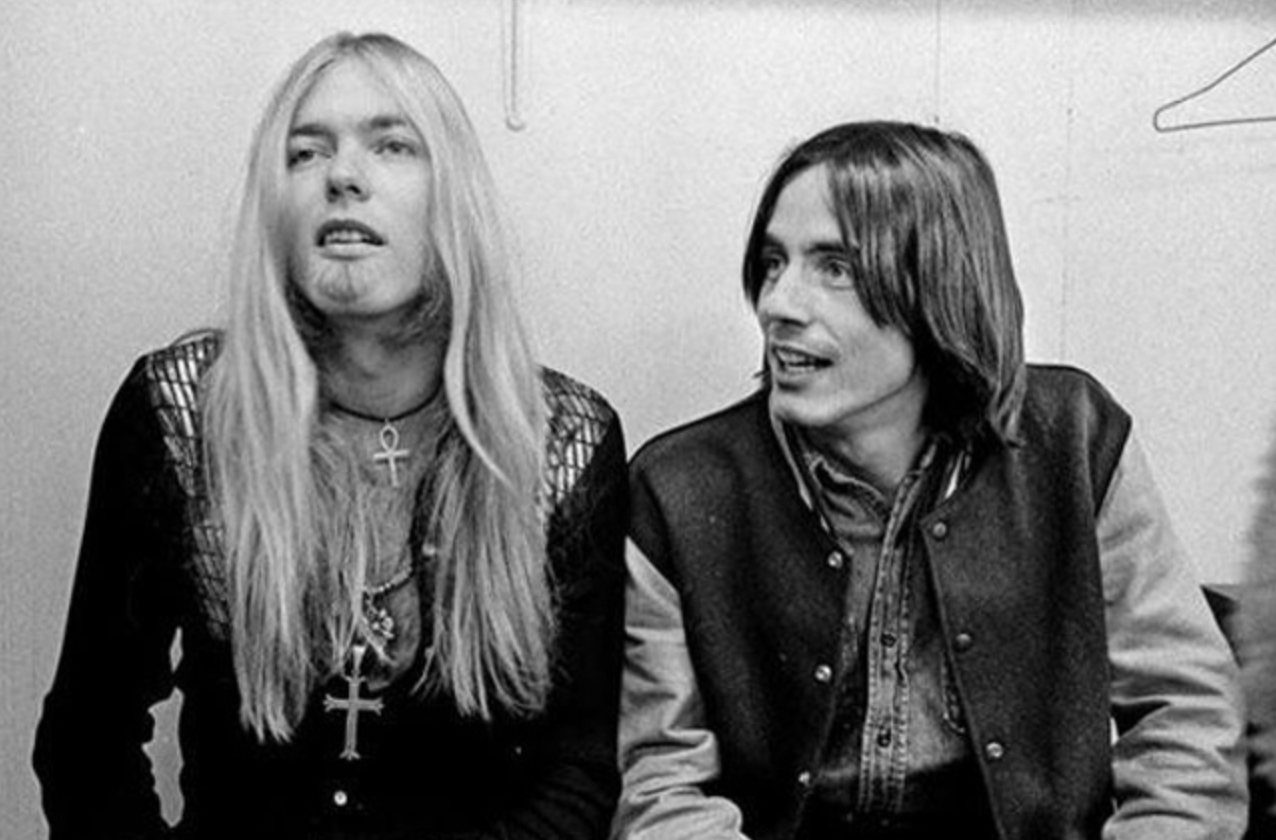
These Days, cover songs don’t hold a candle to Gregg Allman’s take on a Jackson Browne classic
Note: Jackson was on a podcast released today (06/18/21) where he talked about people covering his songs. Worth checking out. Go straight to 1:40 to hear his comments.
—
What is the purpose of a cover song, anyhow?
Is it a tribute to a fellow artist? Is it a way to piggyback on someone else’s prowess to grab attention? Is it a desire to reinterpret a song in a better way?
Cover songs. Some completely overhaul the original in every way possible. Jimi’s cover of Bob’s “All Along the Watchtower” was so transformative Bob’s been playing Jimi’s version ever since. Some are absolute train wrecks. Brittney Spears once covered the Stones’ “Satisfaction.” You don’t remember it? Exactly. And, better you don’t.
Then there’s the cover song that uses a sleight of hand that is so subtle but so powerful that it completely dismantles the essence of the original and abducts the narrative as its own.
Gregg Allman did this to one of Jackson Browne’s most popular and personal songs. And he did it with just one word.
Jackson Browne is one of the original singer-songwriters that emerged in the late 1960s and gained massive popularity in the 1970s. His early songwriting is the stuff of Woodstock Generation legend. Before he moved to California and perched himself high above L.A. in the Laurel Canyon hills with the rest of his superstar peers, he was cutting demos in New York City.
In 1967 he cut a few tracks, one of which was a song titled “I’ve Been Out Walking.” This infamous demo later became known as the now-classic “These Days.” Take a pause and listen to the song. The mature, world-weary lyrics tell the story of a person who has “been losing so long.” It’s a look back. It’s a look inward. It’s a look through the eyes of someone who has seen a lot.
Yet, when Jackson wrote it, he was just 16 years old. Amazing. The emotional complexity in this song is not something you expect from a 16-year-old kid. It’s deep, complicated, and saturated with an aching yearn to turn a page.
In the late ‘60’s Brother Gregg Allman moved out to L.A. with his brother Duane to make it with their then pre-Allman Brothers Band band, The Hourglass. While there, Gregg befriended Jackson, and the two spent time as roommates. They played with and learned from one another. Woodshedding. Trading licks. Building chops. Strong ties.
Later on, in 1973, Gregg put out his first (phenomenal) solo album, “Laid Back.” On it was the cover of “These Days.” The funny thing is, Gregg cut it and released it before Jackson officially did. In 1973, Jackson put out his classic album, “For Everyman.” This release came out on the heels of “Laid Back.” Jackson put his official version of “These Days” on it. Oddly enough, he copped Gregg’s arrangement of the song for his version. Essentially it was a take on a cover of one of his own songs. Tangled webs.
Now, about that one word.
Let’s dive right into the second and third verses of Jackson’s version.
Now, if I seem to be afraid To live the life I have made in song Well it's just that I've been losing for so long
These days I sit on corner stones And count the time in quarter tones to ten, my friend Don't confront me with my failures I had not forgotten them
It’s contemplative. He’s looking forward. He knows his past is there, a few steps behind - but he doesn’t want to be reminded of it. It’s over. It’s in the past. He hasn’t forgotten, but those failures he mentions? Past tense.
His version is a turning point. These days are becoming those days for him. He comes right out and says it.
Well, I’ll keep on movin’, movin’ on. Things are bound to be improvin’ these days.
While Jackson was trying to move on, Gregg was deep-rooted in the hurt.
The two versions are very similar in arrangement, but the hint of optimism in Jackson’s take is an ominous void in Gregg’s performance.
Let’s go right to the last two lines of each version. See for yourself.
Jackson:
Don't confront me with my failures I had not forgotten them
Gregg:
Please don't confront me with my failures I’m aware of them
POW! There is it. Jackson is saying he hadn’t forgotten his failures; Gregg tells us he is aware of them. He’s still living them. He’s still struggling. He’s in the deep end. He can’t get out of his way. He knows he’s fucking up. He knows he needs to change. He just can’t yet.
Using “aware”in the last line changes the entire song! It’s a devastating gut-punch. You feel for Gregg. He’s in pain. He’s asking you, pleading with you not to confront him. He doesn’t need you or me to remind him. He’s had enough of everyone trying to help. He’s well aware of his failures. So aware.
It’s so heavy. Every time I listen to Gregg’s version, I feel it. It’s a song that requires your full attention. You are right there on the cornerstones with him, staring off into the distance, trying to figure it all out, looking for a way out.
Gregg lived another 40-plus years after releasing that cut. The song was a staple in his solo tour sets. His life’s road was a legendarily bumpy one. He may have overcome a lot in his time, but you always got the feeling that his failures were omnipresent.
Sure, they were in the past - but living the kind of life he did, you felt that 40 years on when Gregg would sing “These Days,” he was still very much aware of his failures. He didn’t bury them in the past; they were companions that kept him on the right path.
Cover songs. The ones that stand out and stand up on their merit are the ones that are done with deep respect for the person that wrote it and with an added personal touch by the one that covers it.
Yes, folks. Songs are written and released into the universe for people to absorb and enjoy and interpret as our own. As much as they are a personal statement of the artists, they are also very personal to us, the listener. As music fans, we don’t just invite these songs into our lives; they become a part of our lives.
They mark occasions. They inspire action. They heal wounds. They shed tears. They give us joy over and over and over again whenever we press play or drop a needle. Hell, when you think about it, even us non-musicians are covering our favorite artist whenever we sing along to our favorite songs. We’re singing along to our favorite songs, at the top of our lungs, just having fun. And it feels so damn good.
—
Right before Gregg died in 2017, he released his last solo album, “Southern Blood.” It might be the most appropriate swan song to a life lived in and for the song. The last song on the album is another Jackson cover song called, “Song for Adam.” Jackson sings back-up on this one with Gregg. Gregg was dying at the time of the recording. Two old pals came together again to send a friend off. Comrades in song.
Gregg stole the show again on this one. He was recording in Fame Studios in Muscle Shoals, Alabama. This is where his brother Duane did legendary session work playing guitar on some of the most famous soul songs ever recorded. Gregg was recording there to tie up loose ends. He was keeping the circle unbroken.
During the end of “Song for Adam,” Gregg got choked up.
Though Adam was a friend of mine, I did not know him long And when I stood myself beside him, I never thought I was as strong Still it seems he stopped his singing In the middle of his song
You can hear it in the track. He starts losing it when he singing those last two lines.
Still it seems he stopped his singing In the middle of his song
He’s thinking of his brother Duane. When Duane died it was a crushing loss that Gregg never got over. And there he was, knowing he was sick and staring down his last days, trying to get his last album out, laying down this tribute to his dear brother, and it overwhelms him. His brother got stopped in the middle of his song. Gregg carried the torch for him while recording his own last song.
There are still two more lines to that verse, but Gregg couldn’t finish them. He trails off. Gone. The music plays on without the words. Gregg can’t deliver them. And really, there’s nothing more he needed to say.
About Judd Marcello
I’m Judd. I am a husband and dad. I’m a marketer by trade and a music fan at heart. I own a turntable and over 700 long players. I lived around the world. I wear denim shirts a lot. I met my wife at a Tom Petty concert. They call me Mr. Lucky.