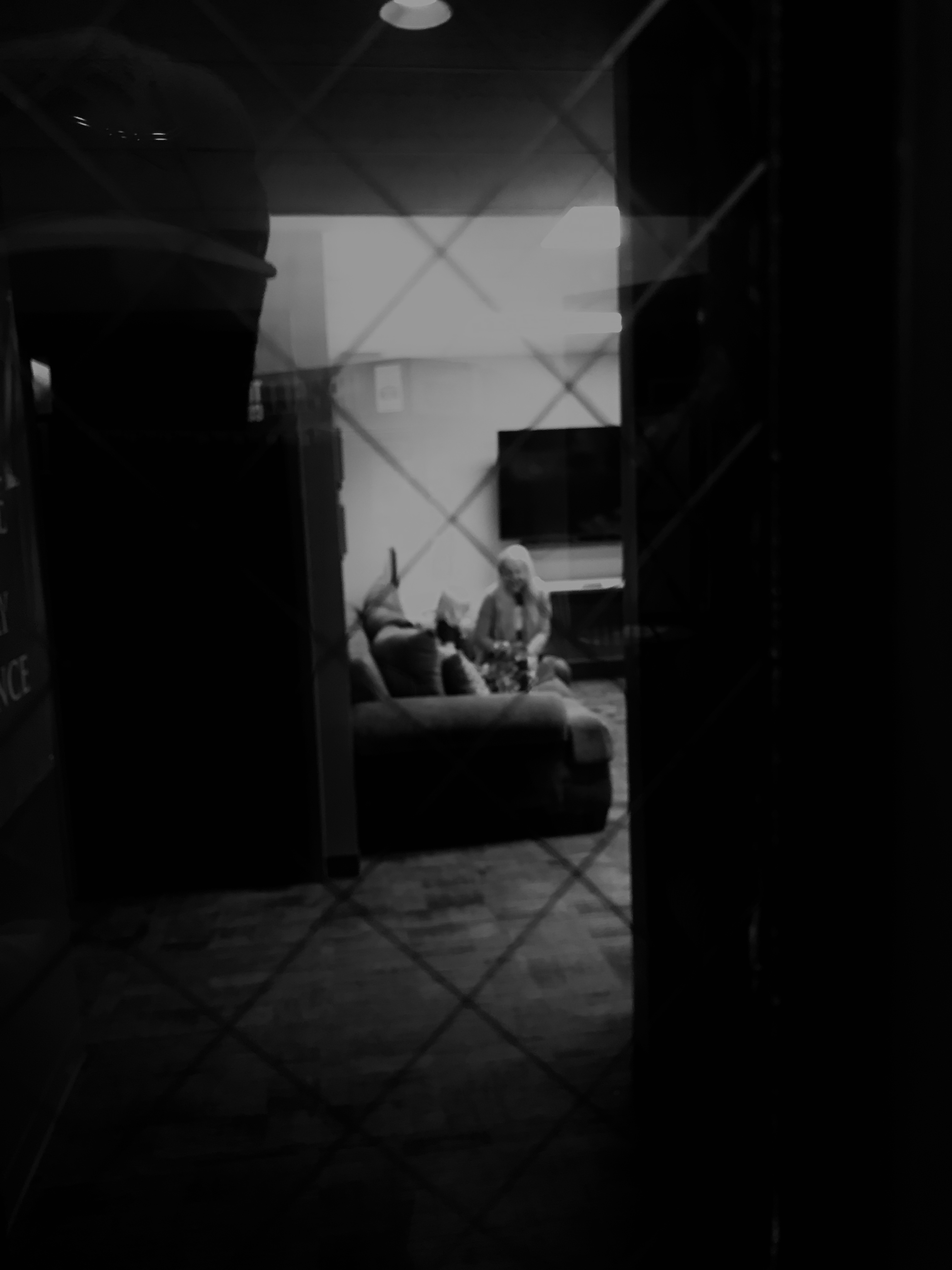
“The Custodians of Brown Hall”
There’s a Jewell rumor about a ghost that lives in Brown Hall— someone who drowned in the old pool that used to be in the basement. When I worked at Jewell, I was always eager to re-purpose old furniture from over-stock storage to finish out rooms for students to study, have practice debates, or just hang out in the evening. They always complained that their dorms were gross. When my grandma Shirley Dennis had to move into a nursing home, the Jewell Debate team inherited her couch, a very nice piece of furniture that is still being used for naps between classes.
I always thought of myself as a custodian of Jewell.
As David Sallee would oft quote, “standing on the shoulders of giants.” I know that things existed long before me and will exist long after me, if God so wills. My parents always taught me to refer to people who tended to the grounds as “custodians” (not janitors) because their job wasn’t merely to clean up as a janitor might—it was to protect the overall value of the property. They were deputized, so to speak. My folks always understood the long-tail value of property. My dad was proud of the fact that I used to work at William Jewell because he thought Jewell somehow represented a certain aspect of status, like you were really someone who made it if you could afford to send your kids to William Jewell College. If his son was a professor there, that was a signifier of somehow a successful life, I think.
He always told me stories of the old days when the Chiefs would have their training camp at William Jewell, his video lab would be in the basement of Brown Hall. He often commented on how well the campus was tended to by these relatively low-paid yet somehow career custodians, who proudly worked, mowed lawns, and performed maintenance at Jewell, enjoying the benefits of being able to send their kids to the same school they were entrusted with protecting.
When I started in the Communication and Theatre Department, the custodian for our building (and maybe others) was this really nice woman named Angie—she had worked at the college for a number of years I can’t remember, but a pretty significant amount of time as I recall. After working at Jewell for less than a year, I started to hear the first rumblings of financial trouble, like enrollment wasn’t what everyone was comfortable with, and maybe budgets for student programs like debate and theatre could be cut. Angie was given the opportunity to apply for her custodial job through an outside 3P firm—less pay and worse benefits—but everyone sort of felt like that wouldn’t be her choice, and it wasn’t. The new staff mostly spoke Spanish, and there would often be this polite, liberal-arts-language barrier.
This was at least somewhat approximate to the same time that Campus Safety was contracted out to a third-party entity as well. A new vendor would also take over the dining hall. Brown Hall, the building at Jewell where I worked, would increasingly become staffed and policed by people who were employees of third-party contractors and student workers, who often received what felt like criminally low wages, opaque benefits, and less-than-ideal working conditions, in my opinion.
The school that my dad had always described on The Hill—this Midwest liberal arts Mecca that everyone was so proud to send their kids to—seemed like it was being pieced out by a Board of Trustees like a hedge fund might do with the bones of a purely capitalist enterprise. It stoked my belief that all institutions will turn on you the second it becomes slightly more profitable for them to do so—if they think they can avoid some liability with you or streamline some aspect of labor. Work agreements are statements of value—you value me as much as you’re willing to pay me. In my opinion, there is no implied value in the honor and respectability of working somewhere like my dad thought.
It also showed me that a bunch of white liberals would just let their colleagues lose their jobs so long as those were people who washed dishes or cleaned floors—without ever joining arms—because they were afraid they were next. Feckless and ineffectual is the white liberal’s resolve toward their working-class counterparts. If we can mechanize the college industry to a whole bunch of Fresh Ideas and Titan Securities, we’re just going to go ahead and do that, and nobody is going to ask questions. No more custodians of Brown Hall needed.