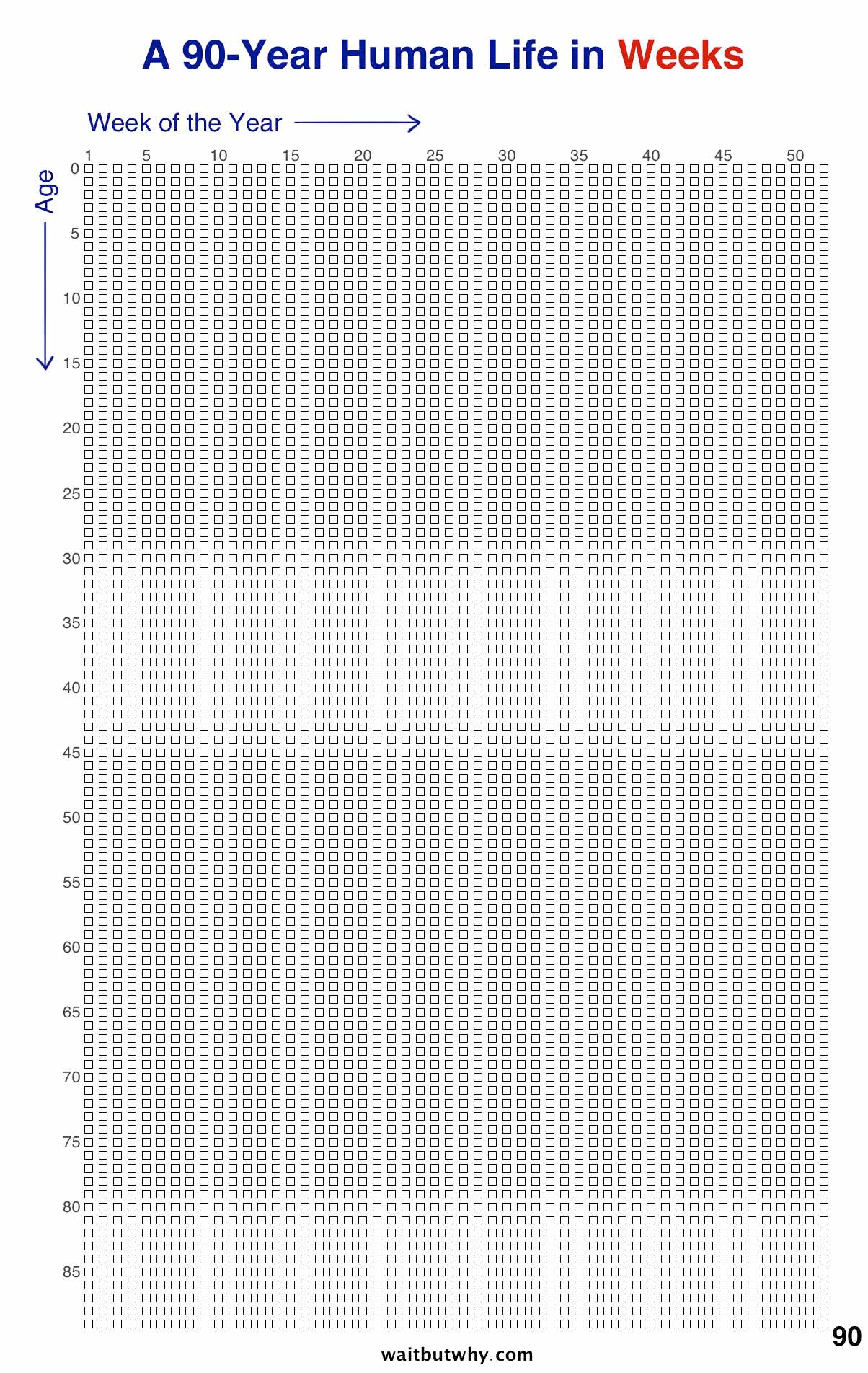
In the end, people regret that they didn’t spend more time with the people they loved, speaking up and telling the truth, taking risks, telling people they loved them, and getting to know themselves or God. Nobody will regret not spending enough time at the office. Everyone reading this needs to grapple with that fact as soon as possible.
Your job basically sucks, and nobody will care that you did it after you’re dead. Time well spent is the only thing that matters. It’s that simple. I’m 39—(to borrow the author’s cadence) let’s be super optimistic and say I’ll be hanging around drawing wireframes of websites and products until I’m 90—I probably won’t be. I’ve likely got fewer than 50 summers left. At my current pace, if I don’t change something, that’s fewer than 100 trips to the lake. If Juice lives as long as Oatie, I’ll probably only have three more dogs in my life. I’m almost certainly inside the last 5% of the time I have to spend with my mom.
When I wrote this reflection the first time, I assumed my dad and I had at least another couple of fishing trips. He’s died since, with zero additional fishing trips under our belt.
I used to take Louise to breakfast every Thursday morning before school, but we’ve stopped for some reason. It was the best time I spent every single week. But we’ve only got 533 more chances to do that until she graduates high school. And all of that is assuming life goes as planned—it won’t. Ask anybody.
Don’t spend too much time working on the wrong thing. You can’t afford to.
How do you know if you’re doing the right thing? Working at the right place? Have the right friends? You can’t just assume that your perception is correct.
Human perception is incredibly faulty.
You might be stuck in a maze. It’s okay. Many of us are—perhaps of our own making. You have to step outside yourself for a second and ask: How’s this actually going? Who’s going to tell you the truth? How do you receive feedback from your spouse or co-workers? What about your friends? Are you defensive? Are you thinking about what you’re going to say next? Do you feel compelled to explain yourself?
As a UX researcher and strategist, I spend most of my time trying to think through complicated technology problems with sober judgment. My job is to make edits without getting caught up in superficial feelings. It’s a superhuman power that’s stuck with me over the years.
Because of my exposure to competitive debate, I’ve had thousands of opportunities to receive feedback on my positions and to edit them with other theories and ideas. The result is that I don’t take almost anything personally. If you’re like my mom, you might be closing in on the final 5–10% of your life. It feels like everything is deeply personal to her.
Maybe you’re in the second half of your life already. Maybe you know someone who has recently lost their life. Do you like where you live? Is your job making you unhappy? Have you made terrible choices that you now regret? It’s never too late.
I’ve always known that Kyle is bigger than one idea, one position, one project, one experience, one job, one partnership, etc. I’m not sure that’s true for all people. Add my tendency toward being blunt and my strong commitment to searching for truth and reason.
To me, that means my capitally productive work (and to a broader extent, my life) exists in the shadow of a couple of basic questions:
1. Is what we’re doing working?
In other words, how do we define and measure success? Are we asking the right questions?
In other words, how do we define and measure success? Are we asking the right questions?
2. If not, why?
Don’t tell me your theory—show me your proof. I’m always holding the projects I work on accountable for ensuring everyone is building the right thing and sharing the same goals 100% of the time.
Don’t tell me your theory—show me your proof. I’m always holding the projects I work on accountable for ensuring everyone is building the right thing and sharing the same goals 100% of the time.
3. How do we fix it?
If what we’re doing now isn’t giving us the results we want, we have to come up with fixes in the most efficient way possible.
If what we’re doing now isn’t giving us the results we want, we have to come up with fixes in the most efficient way possible.
I think everyone should agree to test lots of different ideas with low-risk investments. Unsurprisingly, it’s simple: Living a good life often comes down to figuring out what you’re doing wrong that’s causing results you don’t like and doing less of that as quickly as possible, while simultaneously figuring out what you’re doing well and doing more of that as quickly as possible.
The same is true in business.
The truth is, most people don’t want to hear the truth because they already know it. Most people just don’t have the discipline to act on a force that’s already moving in the wrong direction. Their cave brain will happily allow them to continue living their lives, simply pushing forward with the same habits and patterns—unchallenged—for weeks, then months, then years, then decades.
The same thing happens in every workplace I know.
Every single person I know is a hypocrite, including me.
If I could teach you one thing about my career so far in advising people on technology research, strategy, and design, it’s that being imminently receptive and nonjudgmental to feedback is everything. Being calm, present, unprecious, unflinching—almost disassociated—a demeanor of complete indifference about the outcome and only being concerned with the method is an incredible asset to anybody trying to work on technology.
Without true openness to multivariate feedback channels and external assessments of our work and our lives, we get too personally invested in outcomes. Most humans end up like mice trapped in a maze, never having the perspective to place themselves on the outside looking in.
My job as an experience designer is to give humanity something that’s (at least in part) uniquely me—a company that builds cool stuff where I can feel like my “professional” foibles are assets, not liabilities.
My inability to keep a clean schedule or sit still can be recontextualized as that of a dynamic leader who won’t settle. Failing quickly so I can get feedback first and then race to the finish line isn’t something my teachers can be mad about anymore. My inability to tune out details isn’t disabling if somebody else sees value in my perception. The fact that my words and actions provoke honest reactions from others isn’t a curse anymore if that’s what clients want.
My job is to make the world a better place—more friendly toward technology users. It is a way to honor God and my family—by giving countless human beings the gift of thoughtful, accessible user experiences and interfaces that allow them to better live, grow, love, share, thrive, and survive.
I pray for every single person who is reading this and hope that it might advance your journey toward personal growth, health, happiness, and spiritual awareness. Yesterday is not today. I hope you feel nothing but absolute love emanating from these words.
Thank you for reading.
This post is public, so feel free to share it.