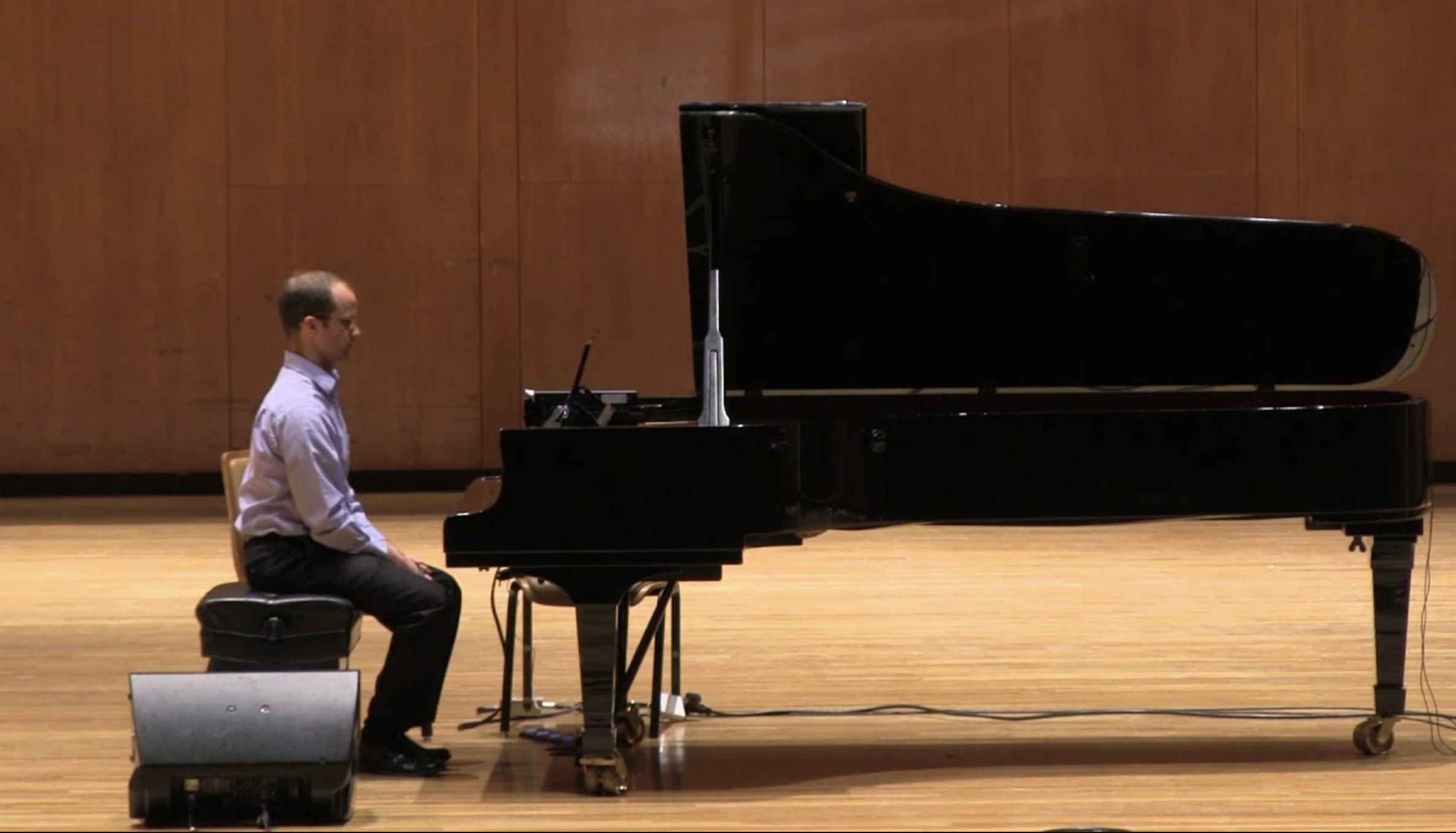
'4:33' is a music composition by John Cage composed 'for any instrument or combination of instruments', divided into three movements (lasting in total 4 minutes and 33 seconds).
There are at least two peculiarities connected with this that I am particularly fond of.
The first is that 4 minutes and 33 seconds is equal to 273 seconds, which is in its negative temperature connotation absolute zero (-273 degrees Celsius)
The second is that the whole composition consists of silence
It is indeed performed by a musician (or musicians) who sit on stage, use their sheet music (and even turn pages between movements), but sit in silence and do not play a note, resulting in audience listening to silence for the whole duration of the piece.
Of course, it is never an absolute silence, but rather ambient sound — people breathing and whispering, the airplanes flying and cars honking outside, building ventilation systems humming, and, after all, your own thoughts craving attention, — how the composer himself characterised it, encouraging us to reflect upon the fact that there is never true silence. If you find yourself in the audience during such a performance, you would first be surprised, then listen to the silence as in 'humming and ambience', and then a wondrous thing would happen — the silence would show you the way to listening to your thoughts.
It is no coincidence that it can (and some would argue it should) produce an unsettling effect we are not used to.
The Norwegian writer and explorer Erling Kagge in his book 'Silence: In the Age of Noise' writes exactly about this almost extinct effect, but he also argues that not only do we have to learn how to enjoy it and use it for relearning how to listen to ourselves, but also actively seek it.
Silence is a luxury — that's his idea, and I was astonished at how obvious it became once you acquainted yourself with it. Nowadays we live in noisy apartments in noisy cities, work in open spaces (noisy again), travel in noisy public transport, etc. Finding silence requires efforts, and in most times — status and money, from booking private flights or living in affluent areas in spacious apartments far from all the city noise and working from the silent comfort of your own office (or not working at all?), to as simple an act as buying a good noise-cancelling headphones and having the luxury of using them often — in so many cases now it seems silence is not given, but bought.
The question of 'how to create more silence around us' is not a static one, I am afraid, and we can't find a solution once and for all that would always work. For some it is as simple as, indeed, purchasing a membership at a local library to carve out a couple of hours of focused work during the day. For some — seeking opportunities to relocate to a place where your silence would be interrupted by morning bird chattering rather than by the sound of a DHL van engine or your neighbour's chopsaw.
The trick is to pause, take a breath, and think: what can I do to create more silence around me?
Otherwise, our thoughts might never truly be heard, which would be quite tragic, if you ask me.
Hey! I am Mark Marchenko. I write about balanced personal development and discovering beauty of our world through careful observation, thinking, and reading good literature. I studied linguistics, Medieval languages and literature, and philosophy at the University of Edinburgh.