A Foreword by Fons Trompenaars on my new book on Information Autonomy
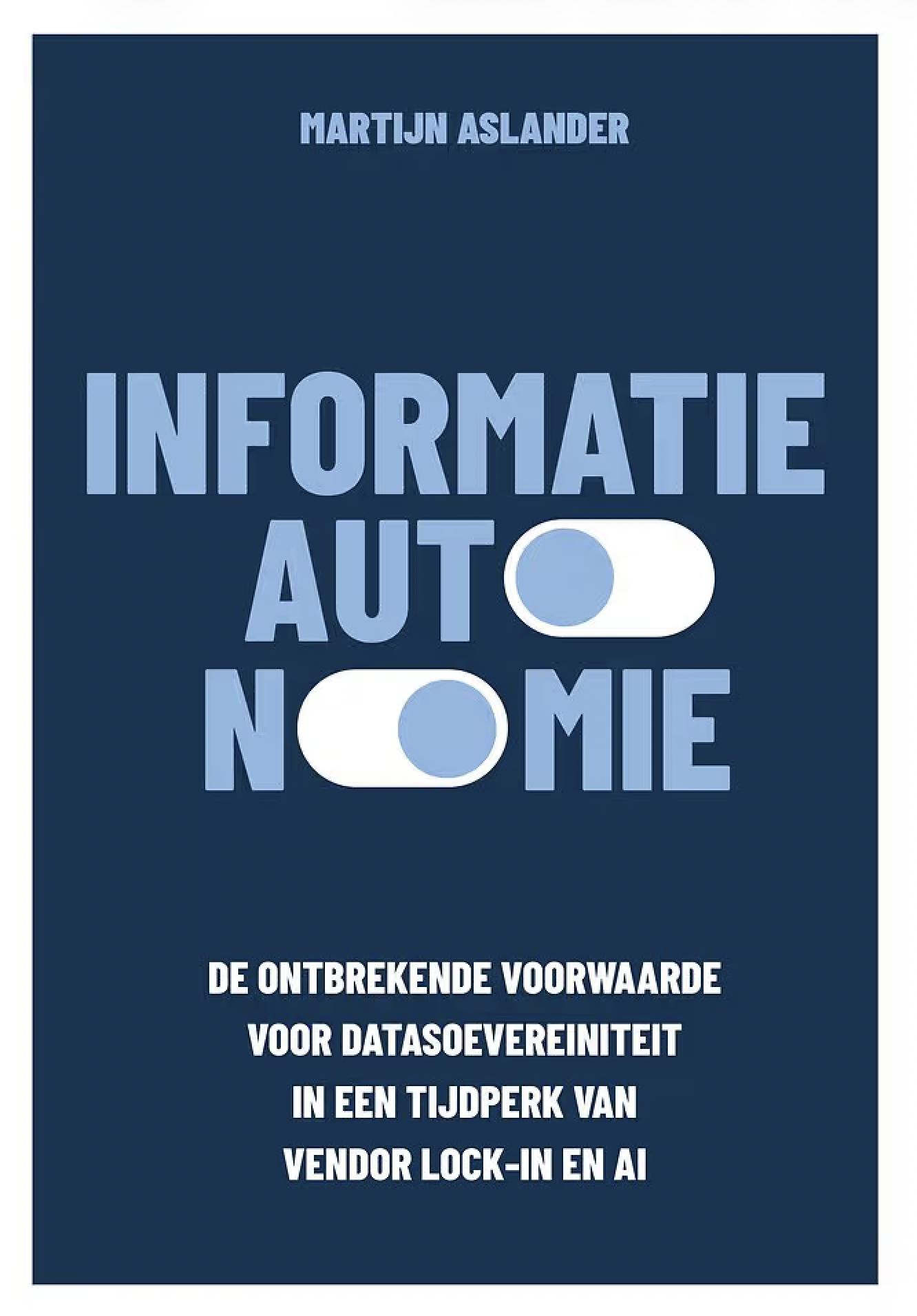
(I used the Dutch version of the cover, as soon as the English one is available, I will replace it)
Years ago, I shared a stage with Fons Trompenaars at an event in Leeuwarden, in the northern part of the Netherlands. What started as a brief encounter grew into something warmer — a sustained exchange of ideas that has lasted ever since.
Fons needs little introduction. He is one of the most cited scholars in organizational science, with tens of thousands of references to his work in academic literature. He is, in every sense, an éminence grise — a global authority whose influence on how we understand culture, behavior, and change runs deeper than most people realize.
There is also a personal layer here that I find hard to ignore. Mauk Mulder's work on power distance shaped Geert Hofstede's thinking in ways Hofstede himself openly acknowledged. Fons Trompenaars built on Hofstede's foundation before forging his own path. I worked alongside Mauk Mulder for more than fifteen years. Which means that when Fons agreed to write this foreword something quietly closed — a line running from Mulder's original insight, through Hofstede, through Trompenaars, and back to someone for whom Mulder was not a reference, but a presence.
And it does not stop at an endorsement. Fons and I are currently working together on an academic paper — building the scientific foundation beneath the thesis this book rests on. An academic of his stature does not lend his name to things lightly. Which is precisely why what follows carries weight.
What he writes confirms what I had long suspected: information autonomy is a crucial missing link in the world of organizational and change management — one that has been hiding in plain sight.
Below is his foreword for the English edition of Information Autonomy, appearing alongside the Dutch and German editions.
Foreword 📗 Information Autonomy
There are books that add something to what we already know. There are books that rearrange what we thought we knew. And then, more rarely, there are books that make visible the thing that was shaping us while we were looking elsewhere.
This is such a book.
For decades, we have spoken about the knowledge worker, the learning organisation, digital transformation, information overload, burnout, collaboration, autonomy and artificial intelligence as if they were separate subjects. We have built departments around them. We have designed interventions for them. We have trained leaders to manage them. We have treated them as psychological, cultural, managerial or technological challenges.
Martijn Aslander asks a more uncomfortable question: what if many of these problems share a common material source? What if the medium in which organisational knowledge is stored is not a neutral container, but an active force shaping cognition, control, collaboration, power and health?
Marshall McLuhan taught us that the medium is not merely a carrier of content. The medium forms the user. It creates habits before it creates opinions. It structures perception before it delivers information. In the office, the medium is not only the screen, the platform or the meeting room. It is the file, the format, the folder, the workflow, the system of permissions, the architecture of retrieval. It is the environment in which knowledge workers think.
And this is where Martijn’s argument becomes both simple and radical: for the knowledge worker, the office is primarily an information environment. And that information environment begins with the file format.
Peter Drucker famously argued that the knowledge worker cannot be supervised in the old industrial sense. Knowledge workers must be able to steer themselves. But self-steering is not a matter of character alone. It requires access to one’s own information. It requires the ability to search, connect, compare, retrieve, re-use and build upon what one knows and what the organisation already knows. When the format prevents this, autonomy becomes a slogan. The worker is asked to be self-directed while being structurally denied the informational conditions for self-direction.
Robert Karasek showed that high demands combined with low control produce stress and illness. In most organisations, we still interpret “control” as a question of management style: does the worker have enough freedom, enough voice, enough decision space? Martijn forces us to look deeper. Control is also built into the medium. A person who cannot find their own knowledge, cannot connect it across systems, cannot access it without a vendor interface, cannot let machines read it, and cannot reconstruct context without additional meetings, emails and compensatory labour, has low control by design. The cause is embedded in the format. The symptom appears in the body.
That is the power of this book. It connects what has been treated as separate. McLuhan gives us the mechanism: the medium shapes the user. Drucker gives us the human demand: the knowledge worker must steer themselves. Karasek gives us the health consequence: high demand without control damages people. Martijn shows where these lines converge: in the material infrastructure of knowledge work.
This is not a book against technology. It is a book against technological unconsciousness. It does not romanticise paper, nor does it reject artificial intelligence. On the contrary: it argues that AI sovereignty, organisational memory and human autonomy all depend on a deceptively basic question: can a computer read the organisation’s knowledge without being dependent on the software that created it?
That question sounds technical. It is not. It is cultural. It is political. It is psychological. It is strategic.
The file format determines who can read, who can search, who can connect, who can decide, who must compensate and who becomes dependent. It determines whether artificial intelligence becomes an instrument of emancipation or a new architecture of dependency. It determines whether knowledge workers use their minds for judgment, imagination and responsibility, or spend their cognitive surplus reconstructing what the system has hidden from them.
Martijn’s insight also belongs to the world of dilemmas. Organisations need standards and flexibility. They need reliability and creativity. They need local context and shared infrastructure. They need security and openness. They need human judgment and machine readability. The answer is not to choose one side and suppress the other. The answer is to reconcile the tension at a higher level: formats that are open enough for machines, stable enough for governance, flexible enough for practice and humane enough to return cognitive control to the people doing the work.
This is why the argument matters now. Artificial intelligence has made the missing layer impossible to ignore. Organisations are racing to deploy AI on top of information architectures that were never designed to be read, connected or reasoned over by machines. They ask AI to create intelligence from containers that have systematically destroyed context. They want transformation without changing the substrate. They want sovereignty while remaining dependent. They want autonomy while preserving the medium that removed it.
Martijn does not offer a fashionable diagnosis. He offers a structural one. And structural diagnoses are often resisted because they move responsibility upward. If burnout is merely personal resilience, the worker must adapt. If collaboration failure is merely culture, the team must communicate better. If information overload is merely attention management, the individual must focus harder. But if the file format is part of the causal chain, then leaders, technologists, policy makers and institutions must confront the architecture they have normalised.
That confrontation is overdue.
The importance of this book lies not only in its thesis, but in its invitation. Once the layer is named, it can be governed. Once the medium is seen, it can be redesigned. Once the container is understood as formative, organisations can stop treating knowledge work as a behavioural problem and begin treating it as an ecological one.
We do not merely work with information. We work inside information environments. Those environments shape our power, our attention, our collaboration, our autonomy and our health.
Martijn Aslander has named the layer that was hiding in plain sight.
Now we can no longer pretend that the container is innocent.
Fons Trompenaars May 2026
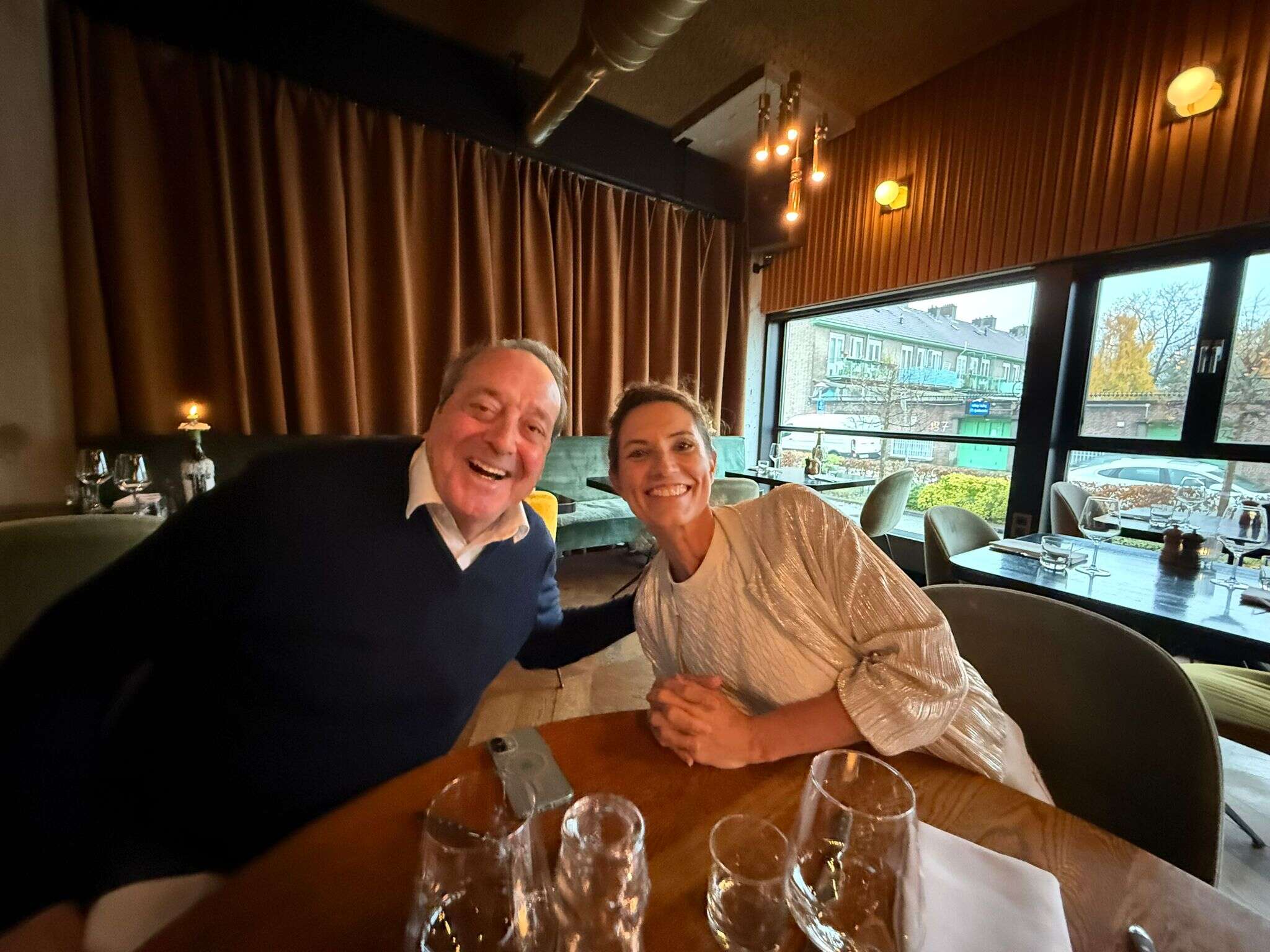
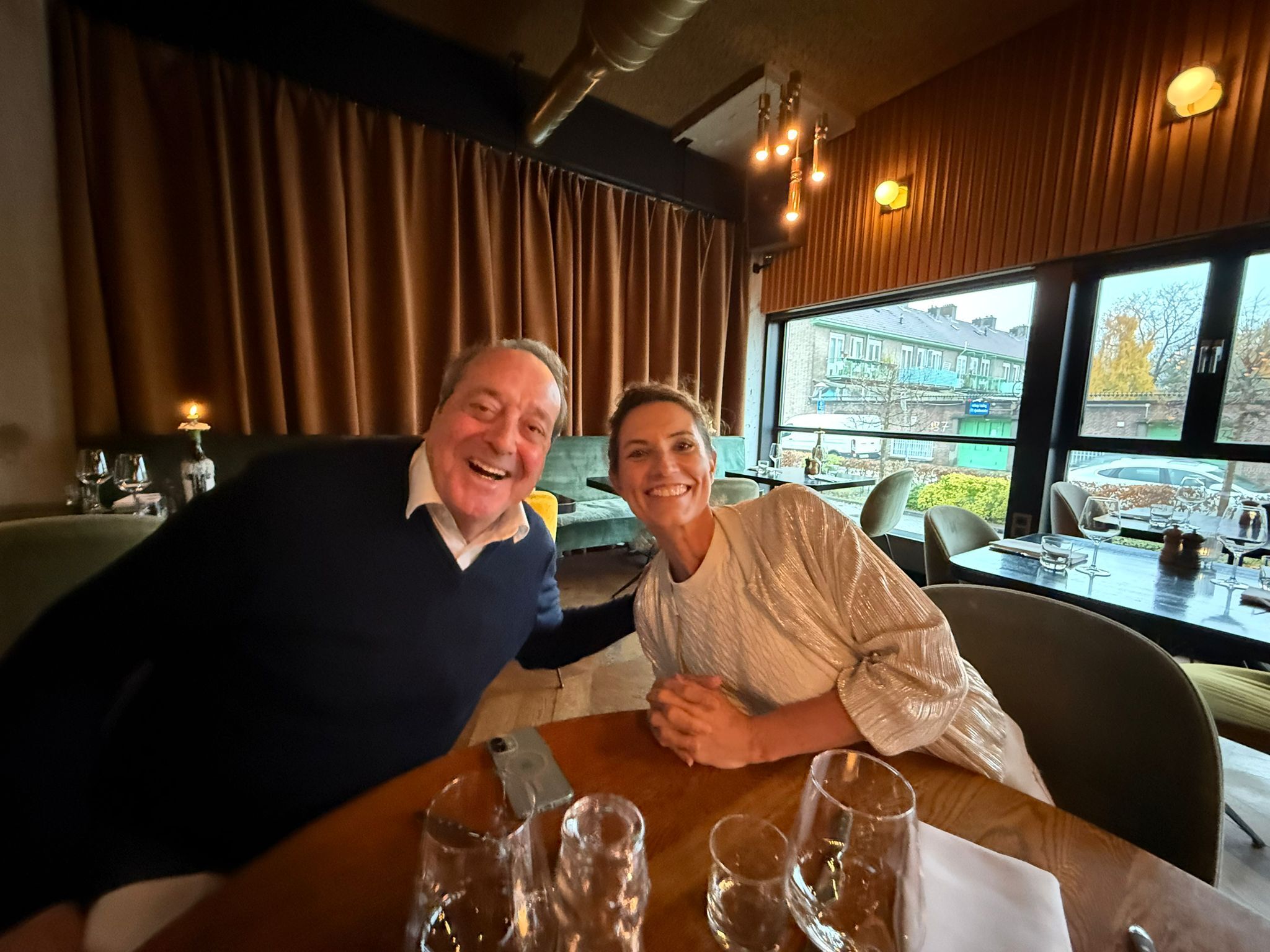
Recently, I brought Fons and Genieke Hertoghs together. A spectacular collaboration was born. I captured that moment in this photo. Awesome people with great minds ❤️
ps. I'm currently working on making the book available as a pre-sale. As soon as the link is available, I will add it here.
About Martijn Aslander
Technologie-filosoof | Auteur | Spreker | Verbinder | Oprichter van vele initiatieven