I accidentally discovered a crack in the App Store. Here's why that matters.
Last week, I stood in front of a small audience and did something that would have been impossible just three months ago. Someone in the room mentioned they needed a simple app to track volleyball scores during matches. Fifteen minutes later, I showed them a working iPhone app. Not a mockup. Not a prototype. A real app, running on my phone, with a custom icon that I had generated while we were talking. Blazingly fast, functioning just like intended.
I am not a programmer. I have never written a line of Swift in my life. Let me back up.
I was there when this all started
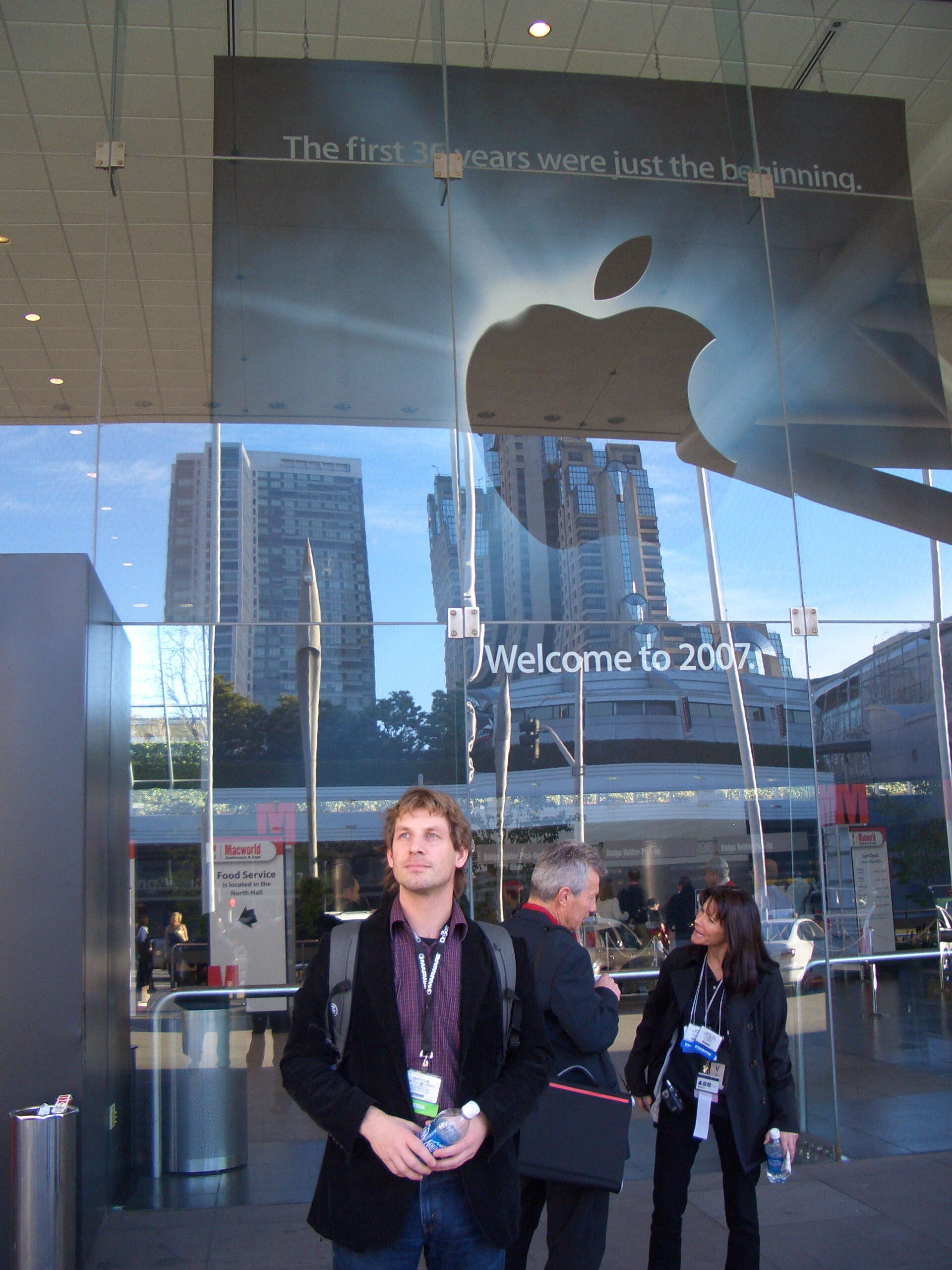
In January 2007, I happened to be in San Francisco and luckily joined the audience when Steve Jobs unveiled the iPhone. I have been an Apple power user ever since. Over the years, I have spent thousands of euros on apps. Productivity tools, creative software, utilities, games. I have deep respect for developers and their craft. Building good software is hard, and I have always been happy to pay for it.
I have also watched, with growing unease, as Apple tightened its grip on the App Store. The 30% commission. The opaque review process. The arbitrary rejections. Some of Apple's arguments are defensible. Much of it feels like a monopoly hiding behind rhetoric about security and user experience.
But what can you do? If you want to reach iPhone users, you play by Apple's rules. That has been the reality for seventeen years.
Until now.
My accidental discovery
A few months ago, I started experimenting with Claude Code, an AI coding tool that runs in the Terminal on my Mac. I use a voice app called Wispr Flow to talk to my computer in Dutch, describing what I want to build. The AI writes the code. I explain my ideas in plain language, and working software emerges.
So far I have built six different apps this way in the past few weeks. A personal transit tracker. A task manager tailored to my exact workflow. Small tools that solve specific problems in my life. Each app took about an hour to create. None of them exist in the App Store. None of them ever will. It is highly personal software created just for me. But more and more people saw what I created and wanted to have theirs, and I happily shared my code.
This way I made a lot of existing apps that I happily paid for absolutely obsolete. The stuff that I created was simply doing more of what I wished for, building on the ideas of all the apps I have seen before. A next iteration, but just for me. That is not something to be ashamed of. It is how innovation has always worked. Every app ever made builds on ideas from others. All developers learn from each other. The difference is that now I can participate in that chain of iteration and improvement, without having to learn programming first.
The process was not just productive. It was fun. The kind of creative joy I remember from the early days of the web, when making something and sharing it with the world felt like magic.
But I must say, I was not one of the people that could create. That used to be the realm of the developers. I did not know how to write code, or to create it. Until now.
How ridiculously simple this is
Here is what I discovered: the technical barrier that kept ordinary people from making iPhone apps has essentially vanished.
You need three things. A Mac with Xcode, which is free to download. A $99 per year Apple Developer account. And an AI tool that can write code based on your descriptions.
Now, regular AI chatbots like ChatGPT or the web version of Claude can generate code too. But there is a crucial difference. With those tools, you get code that you have to copy, paste into files, create the right folder structure, and hope it all fits together. That is still a significant barrier for someone who does not know what they are doing. Claude Codeworks differently. It runs in your terminal and writes directly to your computer. It creates the project structure, tests the code, fixes errors when they occur, and iterates until everything works. It is the difference between receiving a recipe and having a chef cook in your kitchen.
The AI generates a complete Xcode project. You download it as a zip file. You open it in Xcode. You click one button to compile. One minute later, the app is running on your phone. That is it. No programming knowledge required. No complex configuration. No waiting for App Store approval.
I have done this dozens of times now. It works. It is almost absurdly easy.
The moment it clicked
I shared the source code of my transit app with a few friends. They asked if they could try it. I sent them the zip file. They downloaded Xcode, opened the project, clicked compile, and suddenly my app was running on their phones.
That is when I understood what was happening.
What if you do not sell your apps, but share them? What if the source code itself becomes the thing you give to the world? Anyone with $99 and the free Xcode software can compile code onto their own phone. No App Store review. No 30% cut. No gatekeepers.
The question is not whether this is technically possible. It has been possible for years. The question is what happens now that anyone can create the code in the first place.
This is not about technology. It is about culture.
Yes, sideloading has existed for years. Yes, developer accounts have always allowed you to run your own code. That is not my discovery.
My discovery is what happens when you combine these existing pieces with AI-assisted coding and think through what it means for ordinary people who like to make things.
We have seen this pattern before. Blogs democratized publishing. YouTube democratized video. Podcasts democratized audio. In each case, the tools became accessible, the barriers fell, and millions of people started creating, not because they wanted to build businesses, but because making things and sharing them is deeply satisfying.
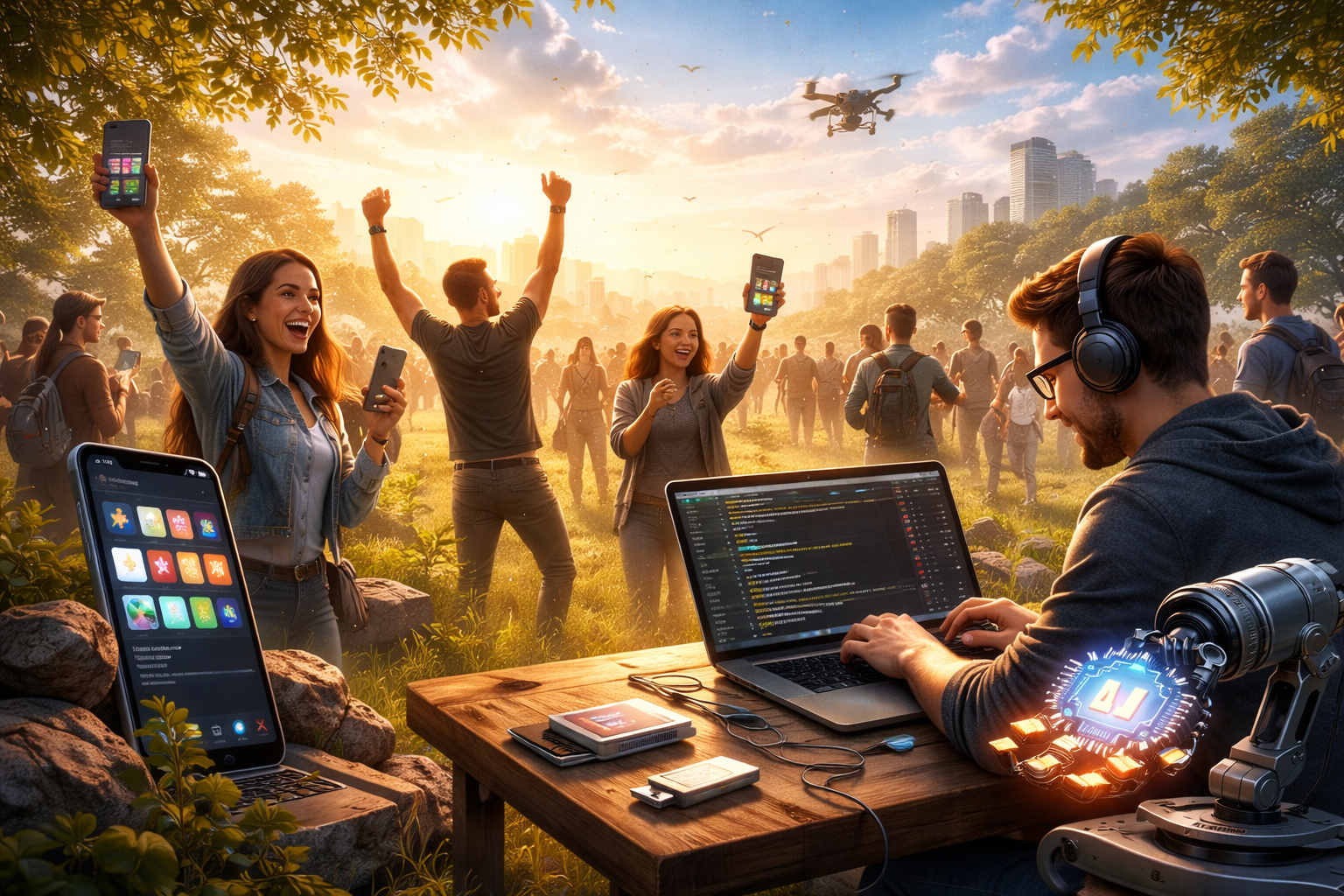
I foresee a cultural shift in app development that will create an avalanche of millions of new creative apps we have never seen before.
Not polished products designed for mass markets. Not apps optimized for App Store rankings. Apps made by people who had an idea, built it in an afternoon, and shared it because they thought someone else might find it useful or fun. A volleyball scoring app for a local club. A habit tracker designed for one specific workflow. A game made for a group of friends. Tools so niche they would never survive the App Store review process, and were never intended to.
The joy of making and sharing
What drives this is not money. It is the same thing that has always driven creative communities: the pleasure of making something and putting it into the world.
I spent an hour building an app that solves a small problem in my life. That hour was genuinely enjoyable. The thinking, the iterating, the moment when it finally works. Then I shared it with friends, and they found it useful. That feeling is its own reward.
Multiply that by millions of people who now have access to these tools. People with more time and creativity than I have. People who will build things I cannot imagine, and share them freely, maybe with a donate button attached, maybe not.
Someone will build a platform for sharing these projects. A kind of GitHub meets App Store for code that was never meant to be sold, only shared. I am not going to build that platform. But I am certain someone will, and they will probably make a lot of money doing it. That is fine. The point is not the platform. The point is what people will create once it exists.
What this means for Apple
The implications are significant. Apple's control over iOS software distribution has always rested on two pillars. First, the App Store as the only legitimate channel. Second, the high barrier to creating software in the first place.
The second pillar just collapsed. And without it, the first pillar looks different. The App Store is not going away. It will remain the home of professional, polished applications. But it will no longer be the only place where iPhone software lives.
Apple faces choices. They could try to restrict sideloading further, but that means fighting against a tide of users who simply want to run software they or their friends created. They could lower their commission and improve the review process, making the App Store more attractive compared to the alternatives. Or they could embrace this parallel ecosystem, perhaps even finding ways to support it.
I do not know which path they will choose. But I know the landscape has shifted.
A new form of digital literacy
Last week, I built a volleyball scoring app in fifteen minutes for someone I had just met. That small moment contained something much larger.
We are entering a time when the ability to create software is no longer a specialized skill. It is becoming a basic form of digital literacy, like writing a document or making a spreadsheet. Not everyone will do it. But everyone could, if they wanted to.
For those of us who have spent years thinking about how technology can empower individuals, this feels like a watershed moment. The tools are accessible. The distribution channel exists. The only remaining ingredient is people discovering that they can do this.
I discovered it by accident, over months of experimentation, one small app at a time. Now I am sharing what I found.
What surprised me most: Apple's hidden AI layer
Two of my more spectacular discoveries were about how far Apple has actually come with local, privacy-first AI. It did not take me long to integrate Apple Intelligence into my own apps. Using the extra RAM of my iPhone to deploy my own version of a small language model that learns from my own behavior. I think the real power of personal AI is going to be amplified enormously by what Apple has quietly built for developers. Thank you, Apple. Much appreciated.
One app I built, which I call ThetaVision, can recognize the content and intent of screenshots, photos of books, newspapers, or articles. It runs entirely on my device. No data leaves my phone. And it works remarkably well. This would have been science fiction a few years ago. Now I built it myself, without writing code.
These iPhone apps I create work together with a Mac app, forming what I call a Life Lens System: a way to view your own life from multiple perspectives, using information you already possess. I have been thinking about this for twenty years. The technology to build it only became accessible to me in the past few months.
For those interested in the deeper thinking behind this, I wrote about the 250-year history of people searching for ways to make connections in information visible. From Buffon in 1749 to Vannevar Bush's Memex to Luhmann's Zettelkasten to David Allen's GTD to Gordon Bell's MyLifeBits. They all saw pieces of the puzzle. They simply lacked the technology to put it together. We no longer have that excuse.
I'm excited to see what's coming next
I know many people share the desire to build better tools and apps that truly fit their own needs. Tools that do exactly what you want, nothing more, nothing less. Until now, that desire ran into a wall called "I cannot code."
That wall is gone.
I foresee a cultural shift in app development that will create an avalanche of millions of new creative apps we have never seen before. Within a year, there will be platforms filled with apps that were never meant for the App Store. Communities sharing code the way people once shared recipes. A new generation of creators who happen to use Swift instead of paint or words.
I'm excited to see what's coming next when we unleash the creativity of millions of thinkers on this idea. People who have been waiting for years to build what they envisioned but lacked the means.
The fortress has a crack. The keys are being handed out.
Share your ideas and wishes in the comments. What would you build if you could?
Let's build!
About Martijn Aslander
Technologie-filosoof | Auteur | Spreker | Verbinder | Oprichter van vele initiatieven