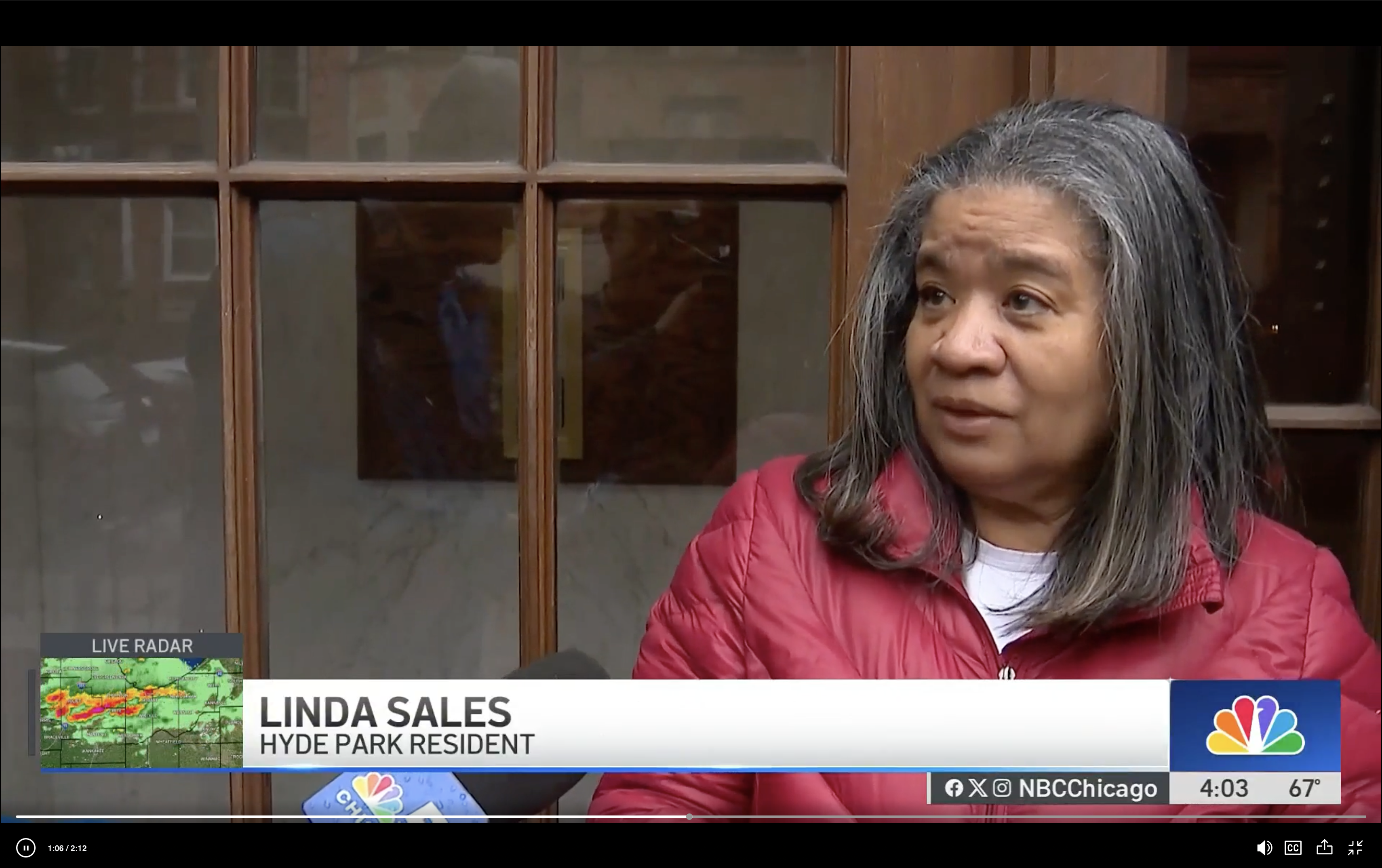
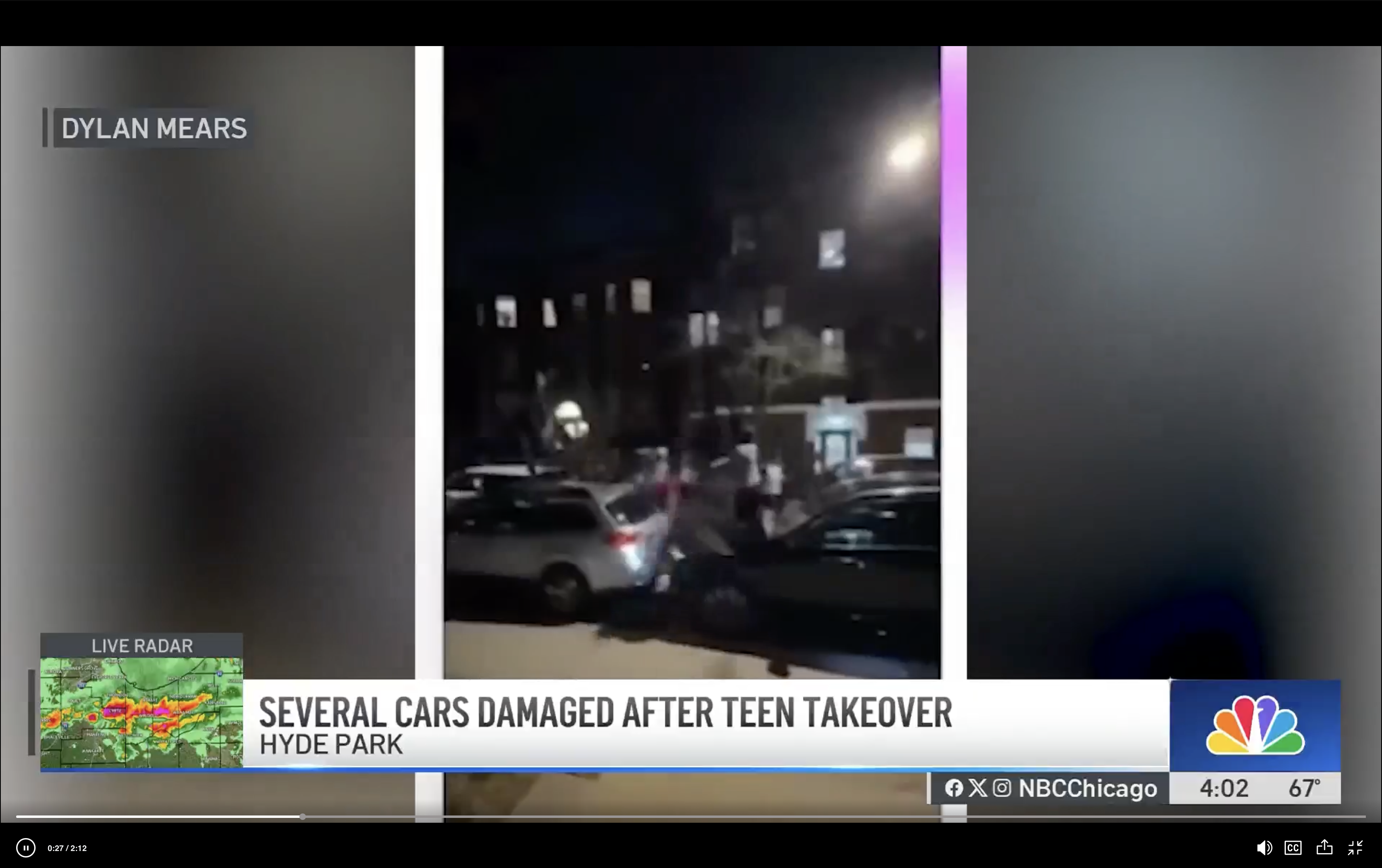
Channel 5 showed up outside her building in Hyde Park after hundreds of teenagers ran down her street, jumping on cars, stomping on hoods, causing thousands of dollars in property damage across roughly 30 vehicles. At one point, a resident armed himself in response to the damage being done to his vehicle. It could have been a tragedy. One arrest was made, a 16-year-old girl found with a weapon.
This happened March 30th. Kids got out of school, used social media to call in teens from surrounding neighborhoods, and by evening an estimated 500 young people had converged on 53rd Street. Police were there in force. Dozens of patrol cars, bikes, two helicopters. They watched the kids jump from hood to hood. My mother described the sound as thunder.
These "teen takeovers" aren't unique to Chicago. D.C., Philadelphia, and cities across the country are seeing the same pattern: social media coordination, hundreds of teenagers converging on commercial districts, overwhelmed police, and a political class stuck between enforcement and investment without the conviction to do both. In Chicago, a 14-year-old was killed at the Christmas tree lighting in November. The incidents are escalating.
When I called my family the next morning, they centered on parental accountability. Where are the parents at 10 PM on a school night? Fair question. Mom's instinct is to round them up and make the parents post bail. "Book 'em, Danno," she says. She's half-joking. She's also not wrong that accountability matters. But I've been digging in, and the picture is more layered than any single explanation.
The public school system graduates the vast majority of its students while only a fraction are proficient in reading and math. Chronic absenteeism has more than doubled since COVID. The South Side neighborhoods these kids come from have lost their commercial corridors, banks, and gathering spaces. Hyde Park is one of the only neighborhoods with anything, so everyone converges there. The skating rinks, teen clubs, and federal youth employment programs that gave previous generations structure and somewhere to be were defunded decades ago and never replaced.
Evidence-based programs that reduce youth violence exist and they work. Youth mentoring, summer employment, community-led intervention. Some have been studied rigorously and show significant reductions in violent crime. The city has made real investments in youth employment. But the scale of what's being funded doesn't match the scale of the problem. The investments aren't proportional to the crisis and don't address it at the system level required for lasting progress.
The leadership math doesn't add up either. The mayor vetoed a curfew ordinance last summer, then aggressively enforced the existing curfew on New Year's Eve for a nationally televised broadcast. It worked perfectly. You can't call enforcement a sin in the summer and a strategy in December.
What stays with me is these kids organized 500 people to a specific location within hours. That is a genuine skill. Mobilization, coordination, moving a large group toward a shared objective. Right now it's pointed at destruction because there's no compelling alternative. That organizing capacity isn't the problem. It might be the most underutilized asset in our communities. The question is whether we're serious enough to channel it.
I ran for mayor in 2019 on many of these same systemic issues. I didn't win, but the problems didn't go anywhere. They've gotten worse. So I'm turning my investigation hat back on. Talking to people in these neighborhoods, attending community meetings, looking at what's working and where the gaps are. And I'm not doing this to write a static policy paper, this is just me being honest that I've seen enough, the people I love are directly affected, and the layered nature of this demands more than reactive takes and underfunded gestures.
We talk a lot about the power of technology to organize, mobilize, and connect people at scale. It's one of the things I'm most excited about building toward. But that same infrastructure is playing out in American neighborhoods in ways we're not prepared for. And for me, this one landed at home.
If you have ideas, experience, or perspective on any of this, whether you're in Chicago or seeing this play out in your own city, I want to hear from you.