There are moments when a life rearranges itself around a single thing: a craft, a cause, a way of making sense. For some people that rearrangement happens early; for others it arrives late. Passion is not a single lightning strike—it is a recurring pattern of experiences that bring creative warmth, energy, flow, and meaningful output. This essay explores the conditions that help people discover that “something to live by” and offers practical steps readers can use to invite that discovery into their own lives.
Why passion arrives sooner for some and later for others
People who find their calling early usually live inside environments that invite curiosity, practice, and identity formation. Those who find it later often arrive there through low-stakes experimentation, a change in context, or a slow accumulation of small wins. The difference between “sooner” and “later” is rarely luck alone; it’s the presence or absence of certain conditions that make discovery likely.
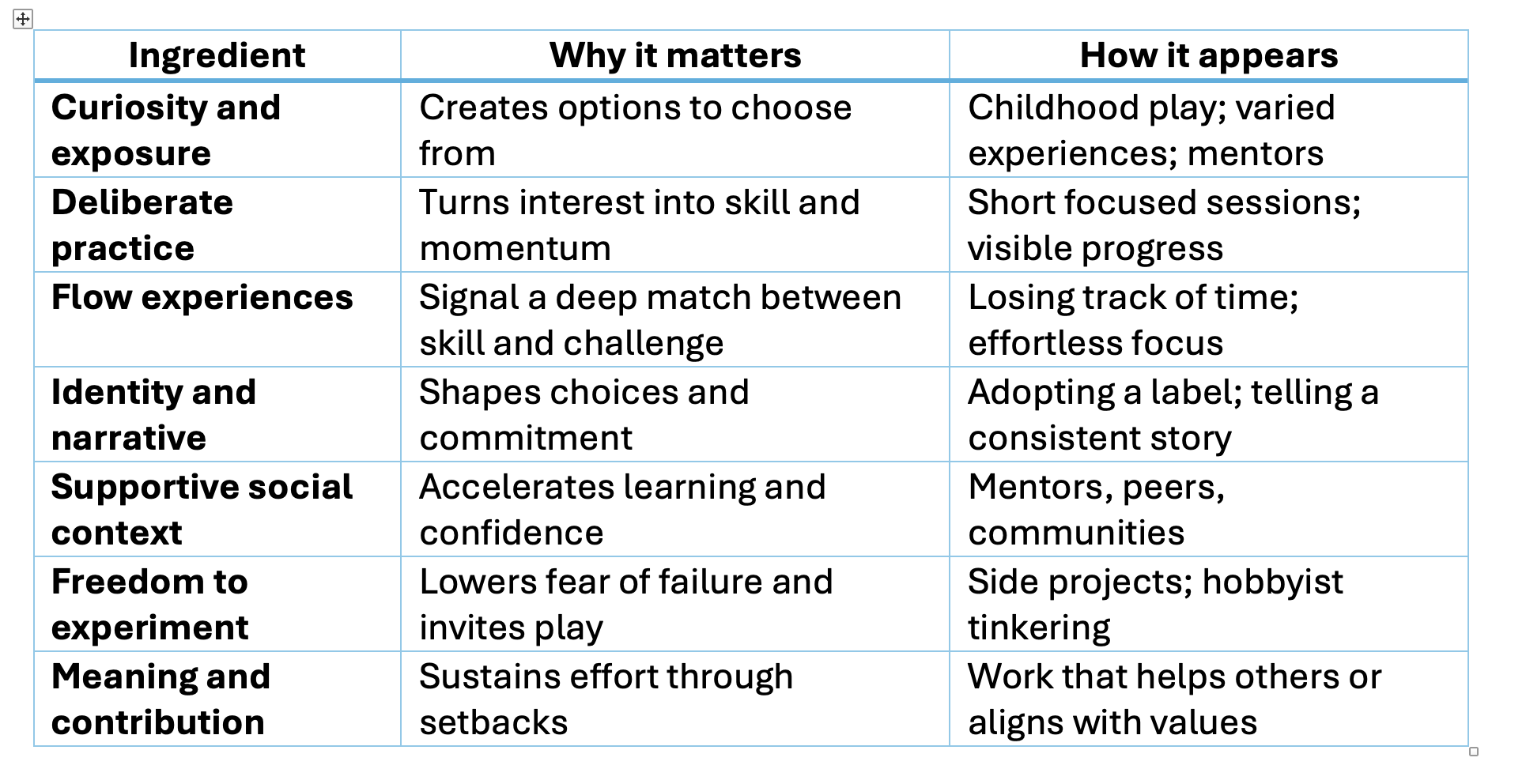
The ingredients that lead to discovery
How discovery actually feels
When something becomes “a thing to live by,” it shows up in ordinary ways: you choose it when you could choose comfort; you return to it after setbacks; you feel energized rather than drained by it. Flow is the clearest early sign—those hours when time thins and work feels like breathing. Small wins are the steady fuel—projects completed, skills improved, feedback received. Over time, the activity moves from “I do this” to “I am this,” and that identity shift changes how you spend your time, who you spend it with, and what risks you take.
Two short stories
The late-blooming potter
A corporate analyst in her forties took a weekend pottery class to escape screens. She felt a rare calm and focus while centering clay, so she kept going—weekly classes, a shared studio, a small online shop. The practice gave her competence; the studio gave her community; the slow accumulation of pieces and sales gave her meaning. What began as a weekend escape became the axis of her life.
The childhood coder
A child given a programmable toy spent afternoons tinkering, then building simple games. Early exposure and repeated flow experiences made coding feel natural. As competence grew, so did identity: “I build things.” That identity shaped school choices, friendships, and eventually a career. For this person, passion arrived sooner because the conditions that invite discovery were present early and often.
Practical steps to discover your something
- Try three new things this month.
Commit to at least four sessions for each before deciding. - Track flow moments.
Note when you lose track of time and what you were doing. - Log small wins.
Record progress to build momentum and confidence. - Try on an identity.
Use a label for 30 days and notice how your choices shift. - Find one supportive person or group.
Share experiments and ask for feedback. - Make space for play.
Schedule low-stakes time to tinker without goals. - Connect to contribution.
Ask how an activity helps others or expresses your values.
Something to live by is less a single revelation and more a pattern: exposure, repeated engagement, flow, identity, and social support braided together. The sooner we design lives that invite curiosity, practice, and low-stakes experimentation, the sooner we give ourselves the chance to discover what truly lights us up. If you want to find your something, start small, keep going, and pay attention to the moments that make you feel most alive.
- Omar