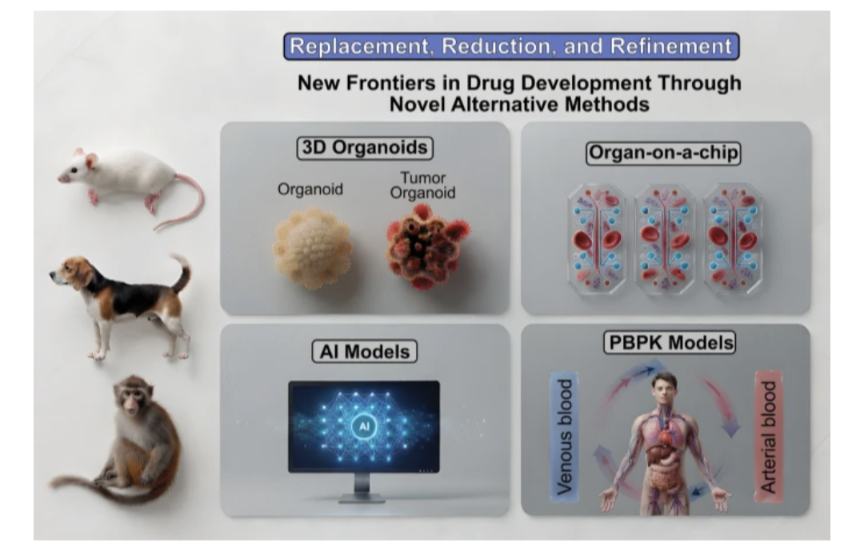
What a round up! As Eurotox got over for this year, the closure brought with it the winds of change and final countown on NAMs.
FDA has changed the words in the Code and posted receipts from real reviews. NIH has stood up an office, a Common Fund program, a validation network and nine-figure infrastructure so human-based methods can be built, standardized and reviewed.
The scientific bottleneck for MIDD and early development is no longer permission. It is model credibility tied to a first-in-human decision: dose, hazard, species, and what you will measure in the clinic because the NAM cannot.
If your 2027 FIH package still treats PBPK, MPS and in vitro PoDs as “supportive color” behind a default animal grid, you will be arguing last year’s case. If you treat them as the primary human-relevant evidence with a written CoU, you will be speaking the language FDA and NIH just put on the record.
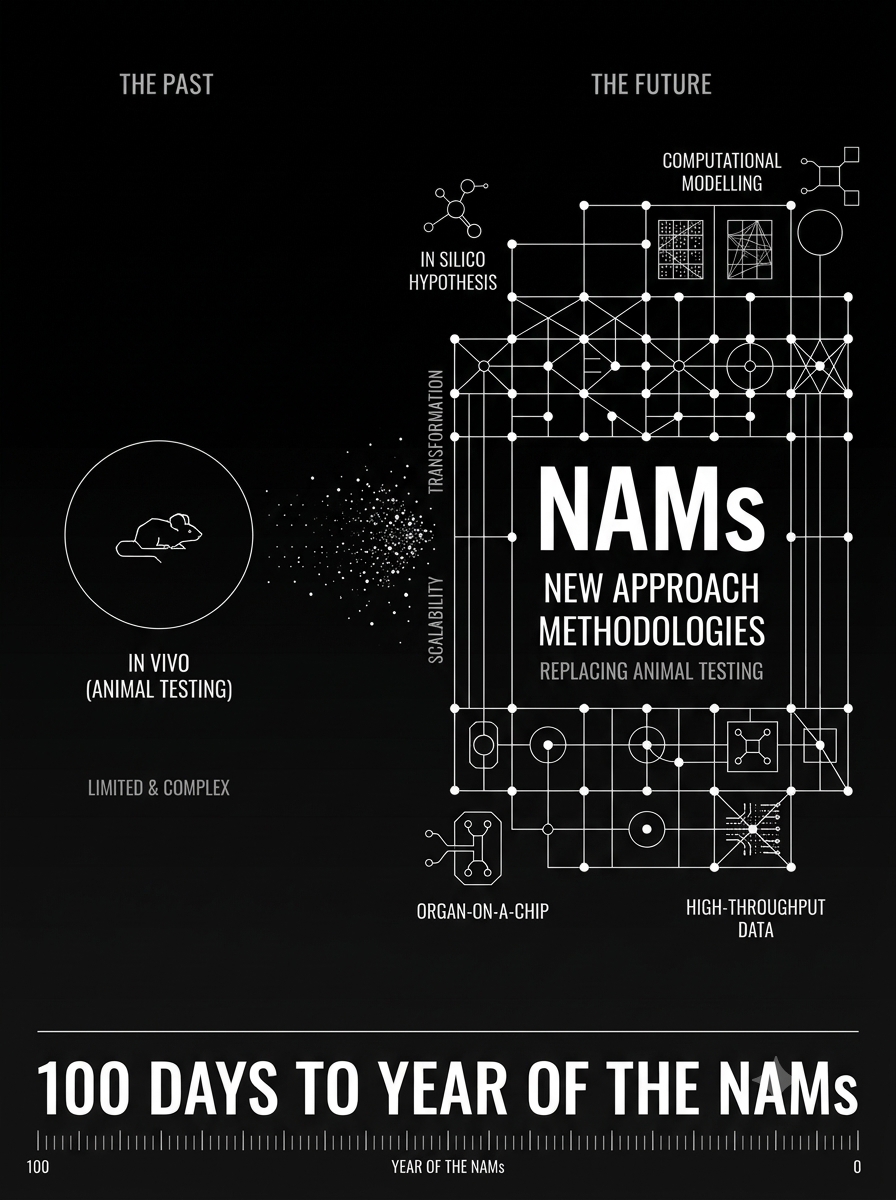
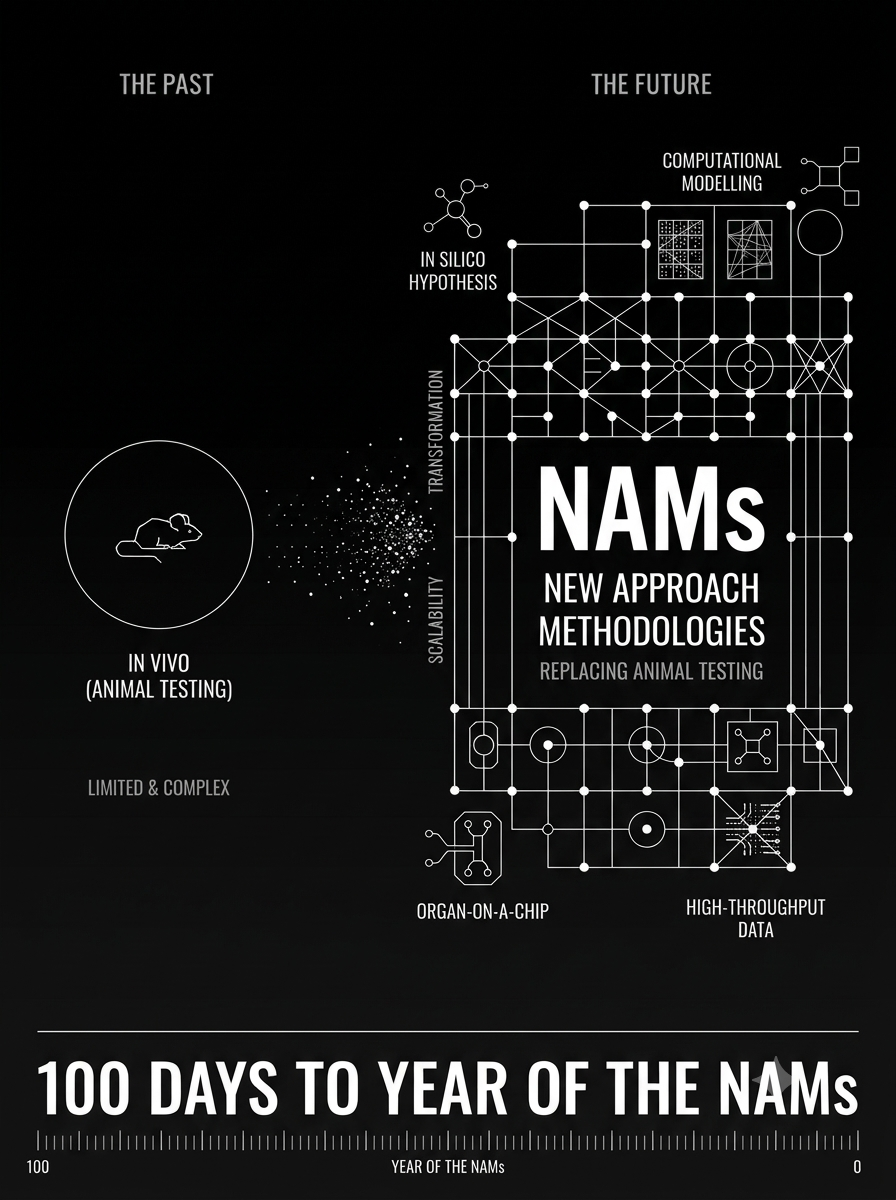
Welcome to 100 days to 2027- the year of NAMs.
A simple model
Old game: generate animal data → translate to human → hope.
New game: generate human-relevant evidence → state the decision it supports → use the animal only when the decision still needs it → hope.
Atleast in this try, we got a bit compassionate ✨
Two things that FDA changed
From past months where FDA came out with a draft guidance of NAMs with biologics, this further changed and got more concrete in the last months with:
Direct final rule on nonclinical testing terminology (21 September 2026).
That matters for FIH more than it looks. IND nonclinical sections, species-justification memos and “why we did not run X in the monkey” paragraphs can now cite the regulation itself, not only the Modernization Act and a roadmap.
NAM Use-Case Database (same week).
CDER posted 25 examples mined from public review documents, searchable by method and linked toward CAMERA records. The first rows include BCOP and EpiSkin SIT in approved products such as Symdeko and Veklury. Use it to show your method is not a first-contact surprise.
CDER/OND have also published how they already used NAMs in decisions — CiPA, computational mutagenic-impurity assessment, carcinogenicity WoE, and product-specific in vitro packages that expanded labels or supported first-line use in rare disease (Kalydeco CFTR assays; Veopoz complement/hemolysis work)
What NIH is funding so the pipeline exists
FDA can accept a method. NIH has to make the method exist at scale, with data standards and people who can review it.
September 2026 HHS/NIH wave, same day as the FDA rule:
More than $88 million for biomedical infrastructure
A >$7 million challenge on quantum-enabled detection and measurement inside lab-based NAMs
A Clinical Center laboratory integrating standardized organoids, robotics, AI and data systems
Recruitment of grant reviewers with human-based science expertise
An RFI on an annual public report of vertebrate animals used in NIH-funded research
Closure of NIH’s last intramural beagle laboratory; grant funds usable to retire or rehome animals
Complement-ARIE’s Reduction-to-Practice Challenge Phase 1 winners (July 2026, $80k each, eligible for Phase 2 up to $2.9 million total) are a useful map of where integrated NAMs are already pointed at drug questions: brain combinatorial NAM (MGH), vTIME+AI for IO CRS prediction (Qureator), human lung anti-fibrotic testing (Wake Forest), atherosclerosis NAM, CAR-T trials-on-chip, skin immune organoids plus AI (Stanford), bone remodeling, immune-cardiac device NAM, high-throughput tissue remodeling and toxicity. Those are FIH-adjacent platforms, not irritation assays.
Why this is an FIH and MIDD problem, not only a 3Rs problem
First-in-human decisions are rarely “is this NAM as good as the rat.” They are:
What is the human-relevant starting dose and escalation logic?
Which hazards are you actually managing in SAD/MAD?
Do you need the second species or the NHP study for this modality?
Can you defend that in a Type B or Type C meeting without waving at a future qualification?
PBPK, HTTK/IVIVE and QSP/QST are the quantitative layer that turns an in vitro PoD into a human equivalent dose, a margin, or a “this species will not inform the decision” argument.
FDA’s CoU examples - dose selection, mechanistic follow-up, species waiver, hazards not measured in humans are exactly the jobs those models already do when they are credible. The failure mode for 2026–2027 submissions is not lack of a chip. It is a beautiful MPS or LLM pipeline with no stated CoU, no applicability domain, no comparison to the decision the animal study would have supported, and no link from assay concentration to human exposure. 🤷
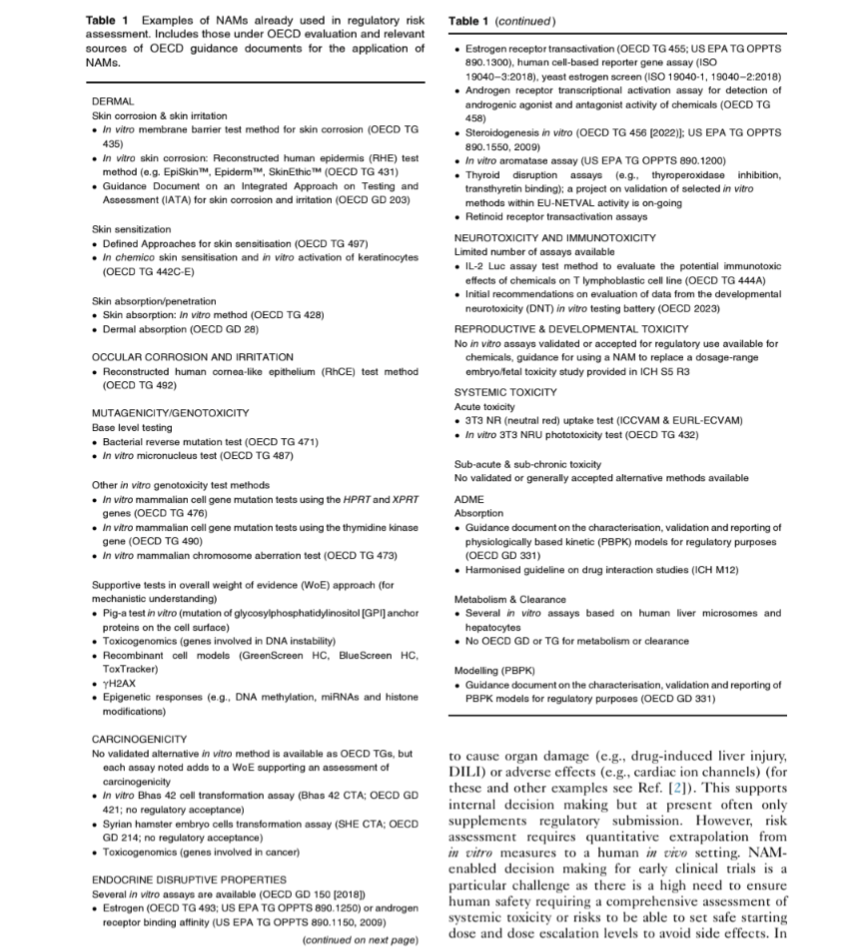
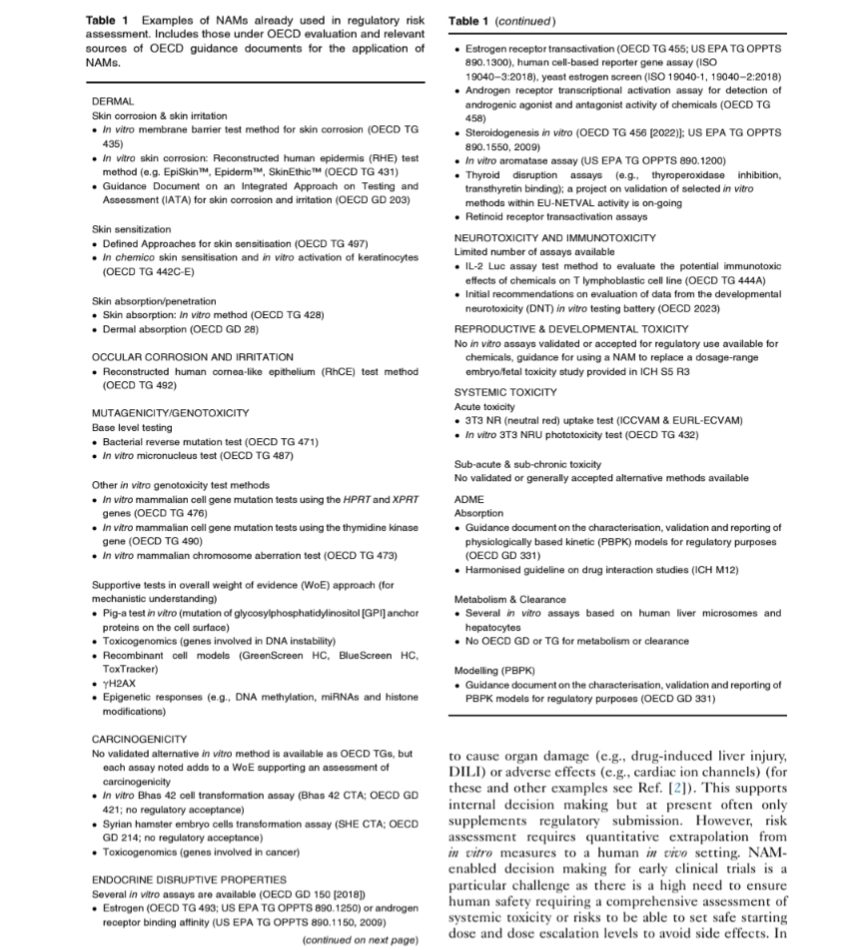
A recent publication from the regulatory application perspective does a great gap analysis where it states that irritation, sensitization, genotoxicity and endocrine activity are the mature NAM space. Systemic, reproductive and developmental toxicity are not
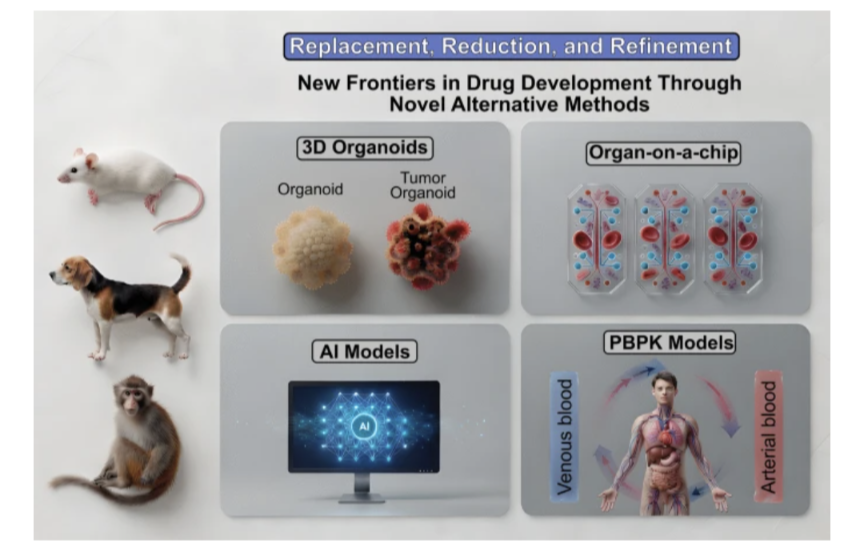
Another publication that is interesting to read is on the MPS qualification via a testing consortium, organoids, PBPK, AI/ML - sequenced by context of use.more and more publications are connecting PBPK to MPS.
Eurotox also had VIVOSIM where it showed up to 28-day liver spheroids and multi-week intestinal barrier models. Ranking of DILI/GI risk for small molecules and ADC payload/linker hepatotoxicity. This targets attritions seen at FIH dose selection.
2027 will be an exciting year for toxicolgy and LLM assisted toxicology for NAMs advancements. I can already see it. ♥️
I wonder- a lot. So, I write my wonder here. What to expect? The chaos and curiosity that my being brings. As living a human life is not bound by definitions in the macros- the posts here will be spontaneous and identity-less! I like to give and create art. So if you buy an act of creating I will use it for things that I am passionate to give for. Obviously, a little support on my art will make me feel visible.
"Change. Change. Change. Change … change. Change. Chaaange. When you say words a lot they don't mean anything. Or maybe they don't mean anything anyway, and we just think they do."