When Everyone Owns the Customer, No One Owns the Product
I have talked about many players in an organisation, treating their work as status game. AI makes that game cheaper to play and more expensive to lose. Recently, I have been using the situation of this sort to understand where is the reality living for a customer? especially as the software offering itself, and the narrative used to sell it, become dangerously intertwined.
When Sabotage looks like help
It rarely looks like sabotage. Usually, it disguises itself as collaboration.
In 0-to-1 innovation or proof-of-concept work, once the technical approach is established, the real challenge is translating that technology to solve the actual problem. From a product perspective, this means rigorously mapping a customer's communicated needs to the implementation. But everyone is a little too SaaS-brained. Software is increasingly just table stakes for doing the work. This is exactly where product teams must become ruthlessly sharp at processing feedback.
Then, someone outside the role arrives and says, "I've worked with this customer for years. I know what they really want." Because organisations are operationally conditioned by this psychology, that feedback doesn't just inform the product team's judgement; it overrides it. A parallel story spreads through side conversations, and suddenly the team has two product directions, only one of which has actual acceptance criteria.
Why AI accelerates this game to worse
A bad call on a traditional tool shows up fast, because the button just breaks. AI-native products fail quietly. Most people don't understand where the system is grounded, where it guesses, or what "good" means for an agent inside a scientist's workflow. That makes the story easy to sell: "Customers just want the agent to do it." "How is this different from other solutions?" Neither claim is checkable.
Agents also make it cheap to produce something that looks finished, like a polished summary deck nobody has really absorbed. Creating propaganda is therefore cheap. People can generate evidence for their story faster than the team can verify it.
Two debts
Technical debt comes from mid-flight pivots. You end up with half-built integrations, features shaped by one anecdote, and agent capabilities patched in to keep promises made in meetings where the real style to work with the product weren't absorbed or shared fully by the stakeholders in it.
Communication debt costs more:
Engineers hear two priorities, so they hedge or stall.
Customer input shows up as a verdict, without the context needed to question it.
Real decisions happen in hallways, so they can be rewritten later.
When an audit asks how something was handled, the details stay with whoever controls the narrative.
The work flows down to whoever still answers, while the credit flows up to whoever presents.
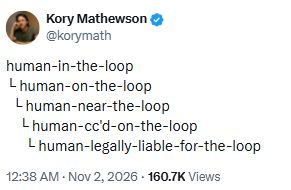
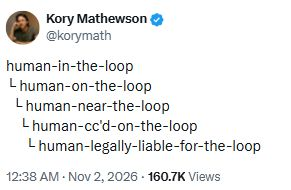
Kory Mathewson's ladder runs from: Ambiguous ownership pushes the people doing the work down that ladder. They end up accountable for judgment someone else made.
The triangle of sabotage from "I know the customer"
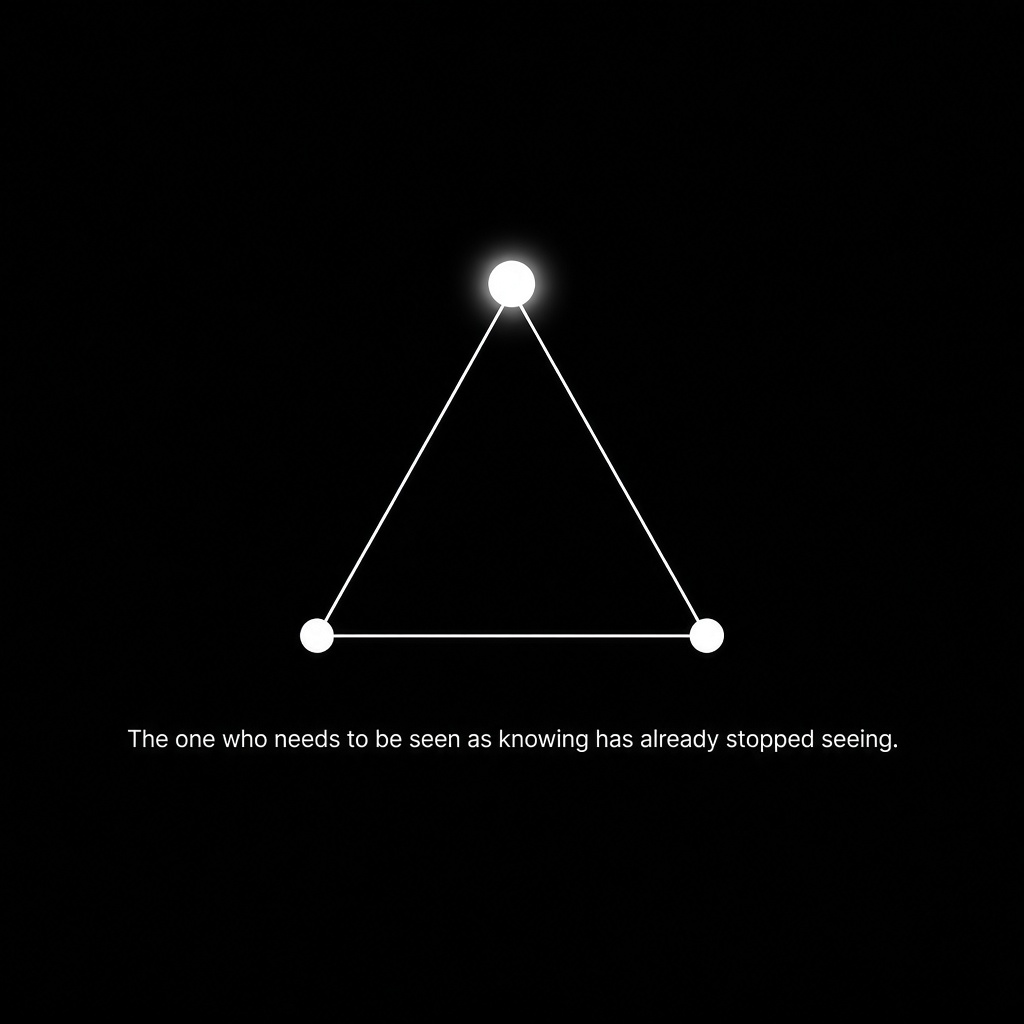
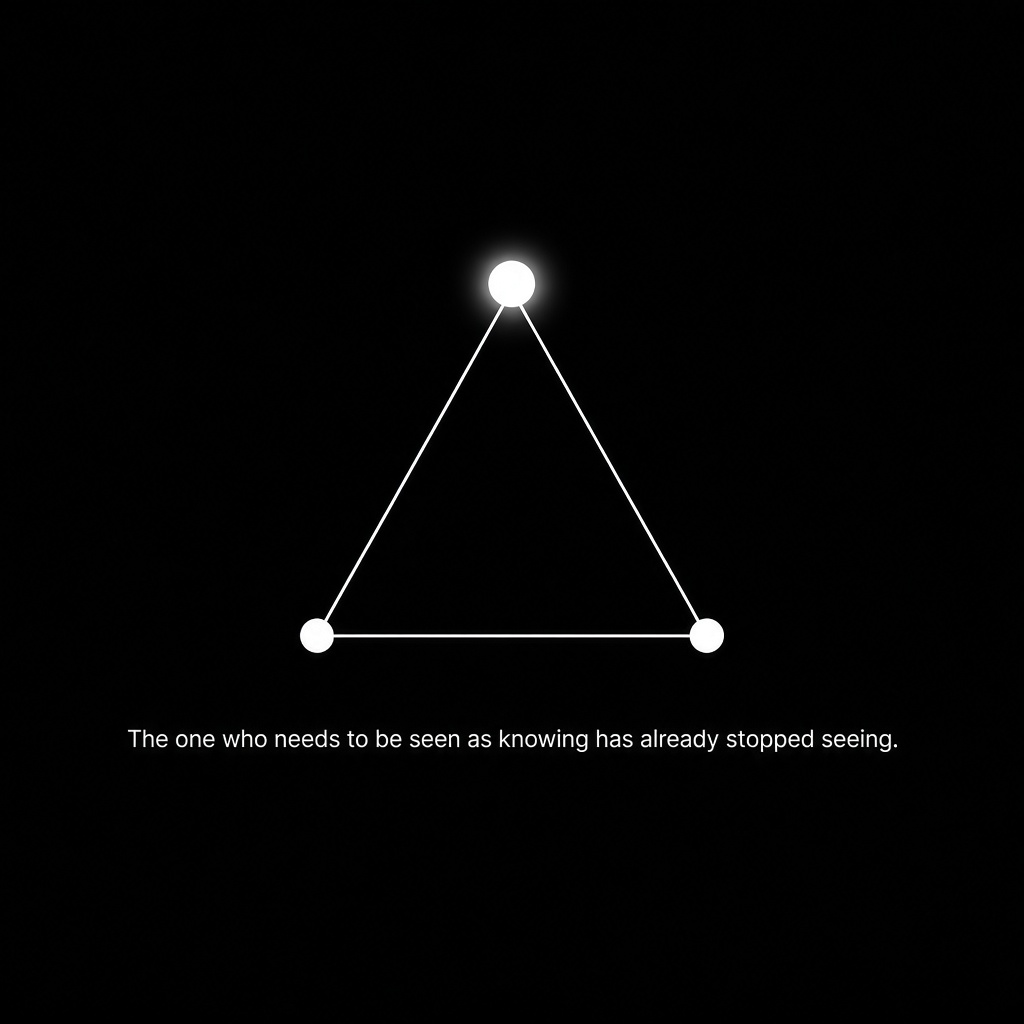
Underneath all this is a human pattern with three corners.
The narcissist needs to be seen as the one who knows. Thus, will take the role of communication even without fully respecting the people doing the roles. Boundaries feel like a threat to them, and their overstepping feels to them like a gift.
The target is doing the actual job. Over time they start pre-defending every decision and doubting judgement that was sound, and energy that should go into the product goes into survival. They think they have to handle all the details independently. They feel like they are running the currency of trust and are also often in ineffective positions to translate work due to these circumstances.
The empath sits in the third corner, and this is the part most orgs miss. Empaths see what's happening. They feel the tension, and they want everyone to get along, so they smooth it over. They relay the narcissist's feedback "just to be helpful." They tell the target to "assume good intent." They take on the emotional cost of the conflict without ever confronting it. Their kindness is real, but by keeping the peace they keep the pattern alive.
Nobody has to be malicious. Each corner protects itself and builds its own version of events. Three narratives, no shared truth. The team stops arguing about solving the right problem and starts managing each other. In return, the client, is frankly- only frustrated.
How to break the pattern
Own outcomes, not labels: One person owns each end-to-end customer outcome, including its acceptance criteria and priorities. Partnerships and customer relationships feed requirements into the product; they do not co-own it. Unresolved trade-offs must go to a single, named decision-maker.
Give customer insight a channel: Feedback should arrive as evidence: what the customer said, about which workflow, and what is at stake. Seniority isn't a trump card, and neither is claiming to "know everything."
Write the shift down: Translating execution into time-to-value outcomes is the top priority, and doing it with purity is vital. Write down exactly how the work is being executed and how it maps to those outcomes.
Name the empath's corner: Recognise that smoothing over a boundary violation is still a choice; and often the wrong one.
Character is the job requirement
At the 0-to-1 stage, the scarce skill isn't building. It's judgment, and that comes from character, not a résumé. The catch is that 0-to-1 and 1-to-10 call for different characters, and putting the wrong one in the seat is how the triangle starts.
0-to-1 needs people who: - Are comfortable with ambiguity and don't need a title to feel safe. - Stay close to the customer and the work, not just to the story about it. - listen, and change their minds without treating it as losing. - Take risks under their own name and own the failure if it comes. - Hold customer knowledge as evidence, not leverage: "Here's what I heard. It's your call."
1-to-10 needs people who: - Turn what worked into systems, processes, and clear decision rights. - Value consistency, governance, and doing it properly over doing it fast. - Scale through others, and are fine being less visible as the work gets bigger. - Protect the boundaries the 0-to-1 phase was too fast to draw.
Neither is better, and both fail when combined in the wrong spots. A 1-to-10 operator in a 0-to-1 role reaches for process and control before it is needed.
Operating in ambiguity and finding the right call to implement a product and to shape it takes curiosity, relentless iteration, and fearlessness, while scaling takes systems thinking and organisational design, and that very few people are great at both. So hire the character for the stage, and hold everyone to the same integrity at every stage.
I wonder- a lot. So, I write my wonder here. What to expect? The chaos and curiosity that my being brings. As living a human life is not bound by definitions in the macros- the posts here will be spontaneous and identity-less! I like to give and create art. So if you buy an act of creating I will use it for things that I am passionate to give for. Obviously, a little support on my art will make me feel visible.
"Change. Change. Change. Change … change. Change. Chaaange. When you say words a lot they don't mean anything. Or maybe they don't mean anything anyway, and we just think they do."