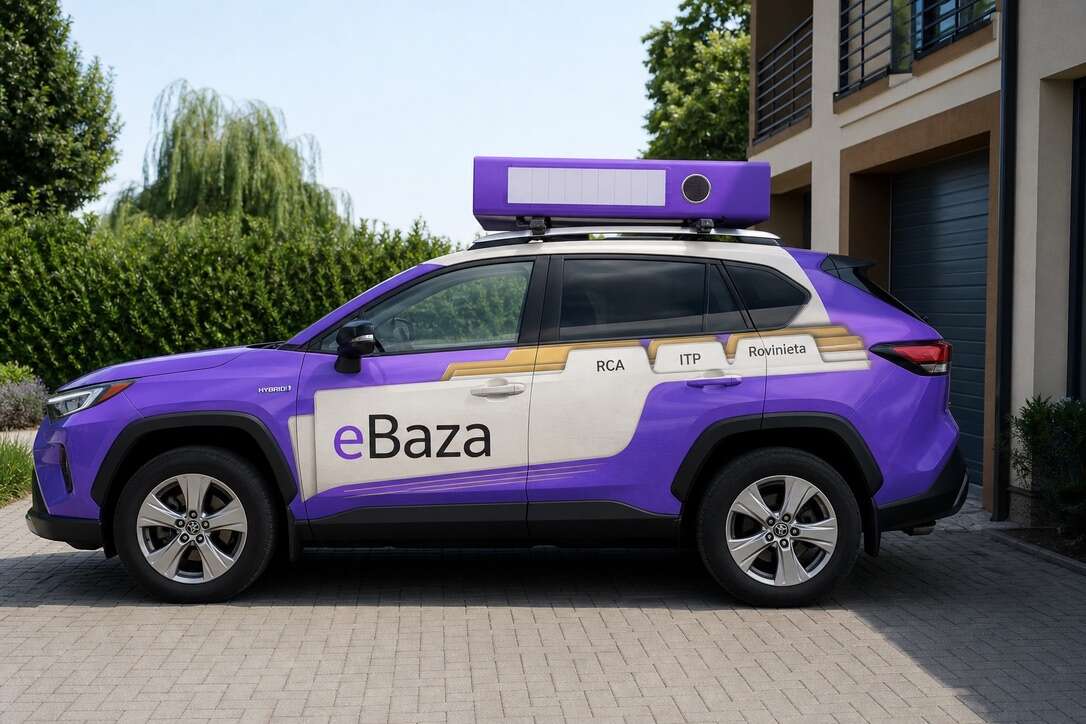
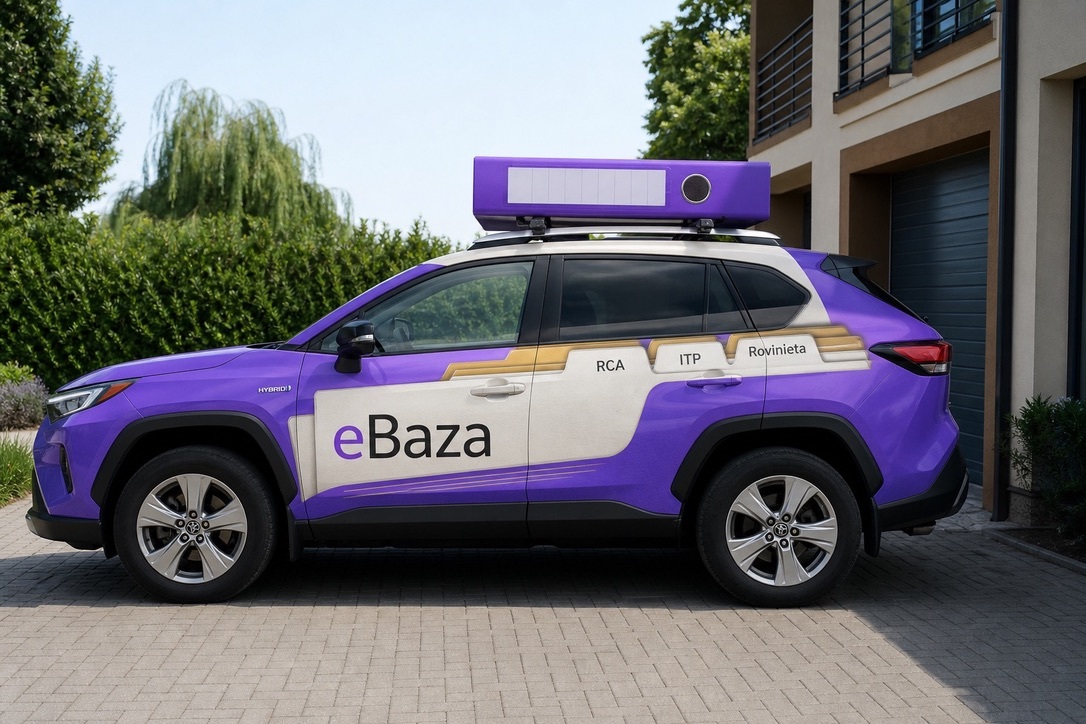
A few weeks ago, I asked Grok Bot for a wild way to advertise an app I had built on my car. I expected a ridiculous car wrap. Instead, it gave me a giant ring binder sitting on the roof. Here's the image:
My first reaction was to laugh. My second reaction was: Wait! I think I can actually build that.
That was the beginning of a five-day woodworking-and-metalworking detour I did not have on my roadmap.
The idea was absurd. It also made sense.
The app is called eBaza. The simplest way to describe it in three words is: Your vehicle's accountant.
You add your vehicles and get email or push reminders before obligations such as insurance, inspections, and Romania's road vignette expire. You can photograph invoices and fuel receipts, track costs, and see what you have spent over time.
Useful, I hope. Not necessarily the sort of thing that stops someone in the street.
But owning a vehicle comes with dates to remember, documents to keep, and expenses to add up. Exactly the sort of things you might put in a folder.
For me, the ring binder is a familiar symbol of that administrative work. I suspect you do not need to live in Romania to understand the feeling of searching through one for a single piece of paper.
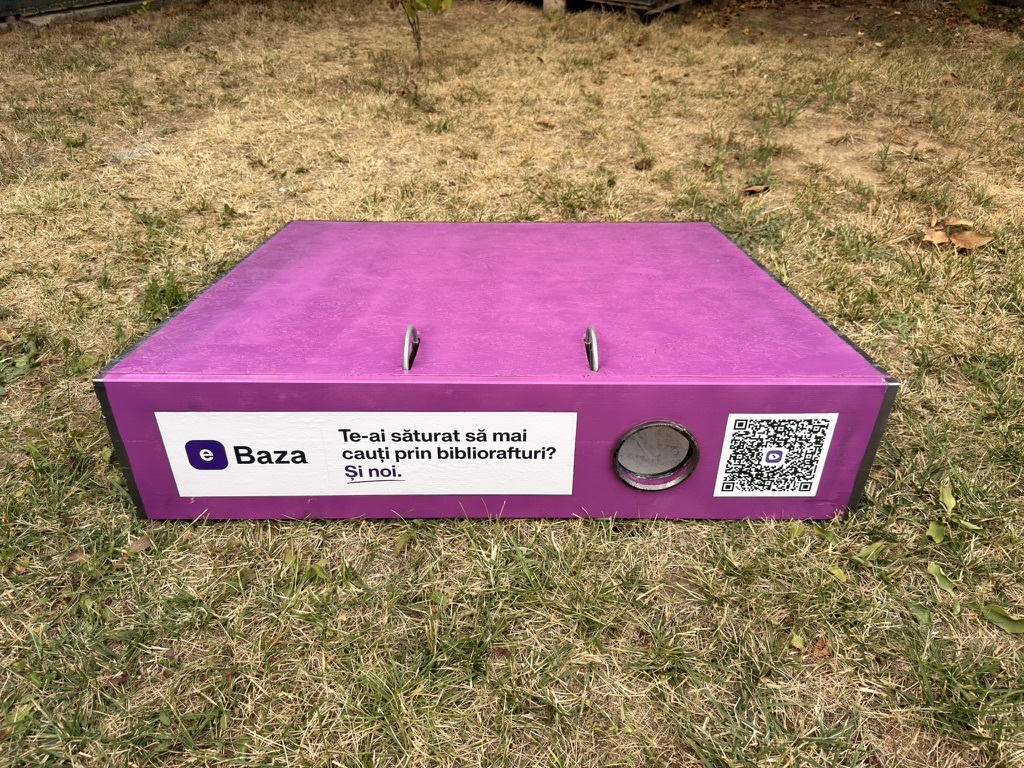
On its spine, I put a message that translates as:
Are you tired of searching through ring binders? So are we.
That is basically the entire campaign.
The binder was not just a random attention-grabbing object. It was a physical exaggeration of the problem the app tries to make less annoying.
So naturally, I decided to make the paperwork enormous.
Unfortunately, the image did not include an assembly manual.
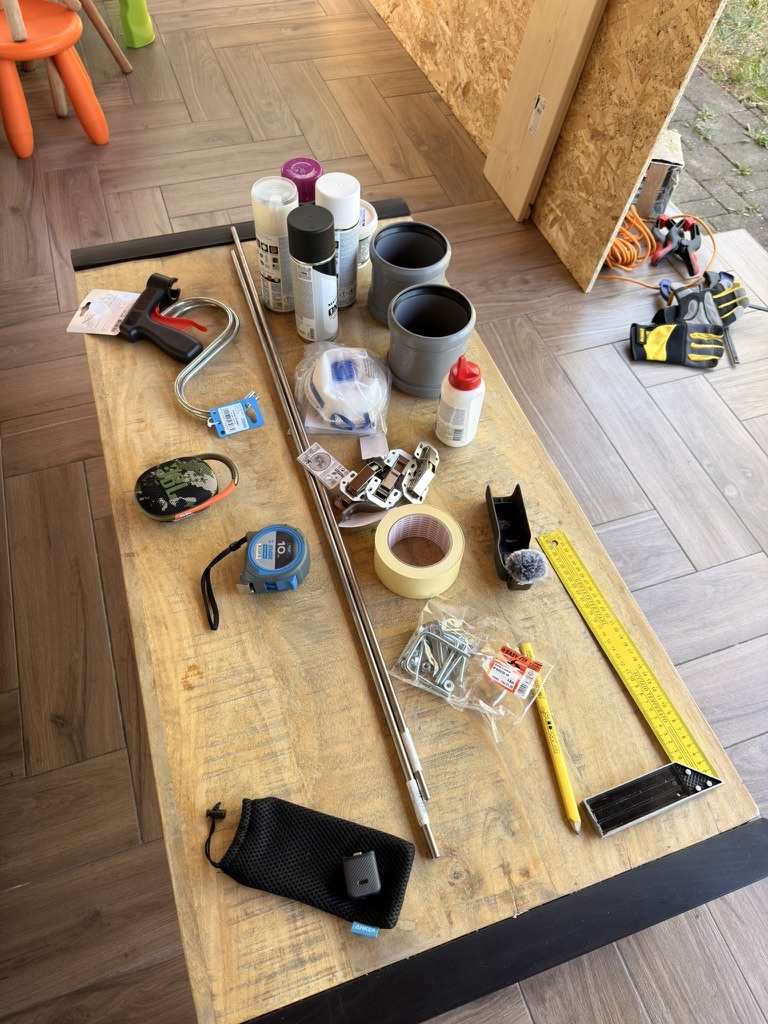
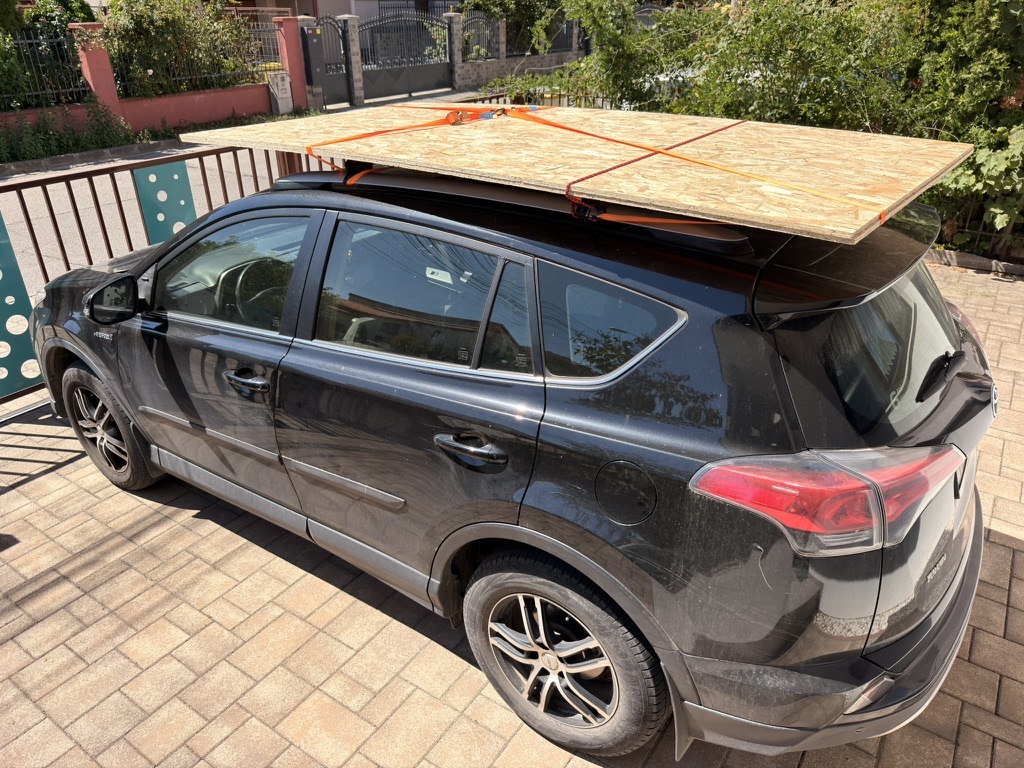
I spent two mornings during a weekend in a hardware store, trying to work out how to turn the idea into something real.
The covers were relatively straightforward. The metal parts were not.
I did not want to put two purple boards on the car and declare victory. I wanted a functioning binder. The covers had to open. The rings had to open. In theory, you should be able to put enormous sheets of paper inside it.
Was any of that necessary for an advertisement?
No.
Once I had decided to build it, though, it somehow became very important.
A strange return to something I used to do
Most of my career has involved building software. I spent four years at Gumroad, and some of my work on Flexile involved invoices, tax filing, documents, and administrative workflows.
Apparently, that part of me was still around. It was just waiting for a sufficiently unreasonable project.
Five days, a few hours at a time
The actual build took five days in my spare time, usually two or three hours a day. Ended up totaling 11h 40m, plus the two mornings spent figuring out the parts.
Not five full working days. A series of small sessions fitted around everything else.
It felt different from software. In an editor, I can move things around, change my mind, and undo most of it. Here, an idea had to become a physical part that fitted another physical part.
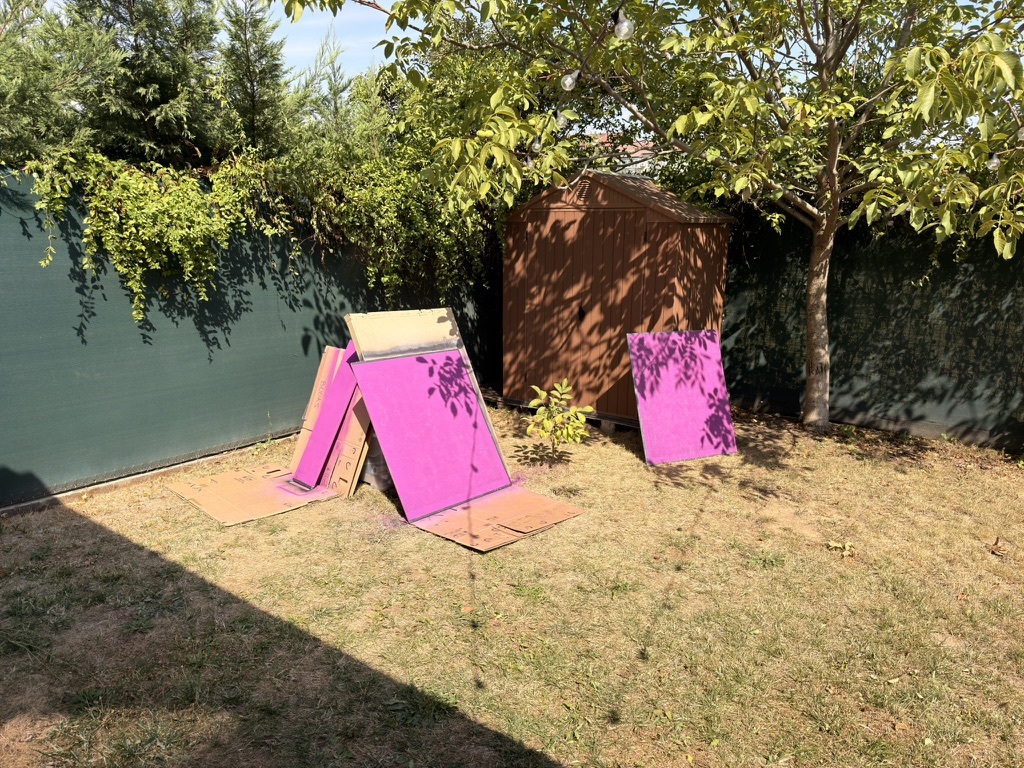
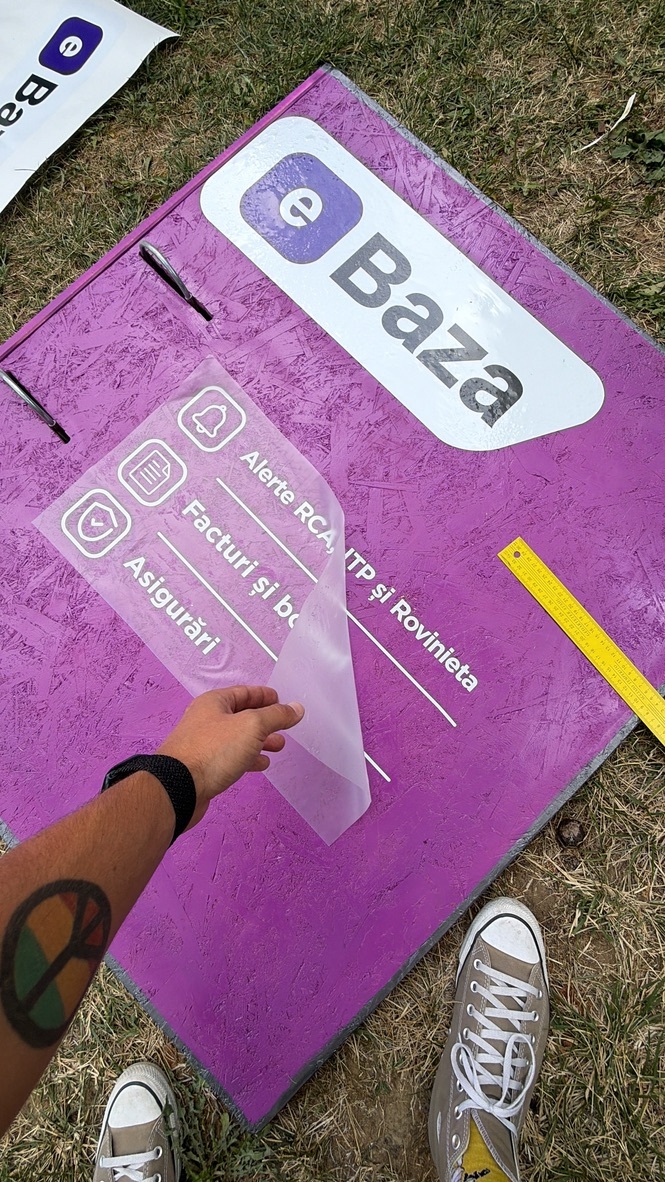
First I cut the wood. Then I painted it, inside and outside, including metallic-gray details on the corners. Only after the paintwork was finished did I add the mechanism.
After cutting the wood, I painted the panels inside and out. The purple started turning the cut pieces into something that resembled the original idea.
I used metallic-gray paint on the corners to give it that real-binder look. I wanted the familiar appearance of an ordinary binder at this completely unreasonable scale.
Apparently, making it enormous was not enough. The details had to look right, too.
Then I made it work like one
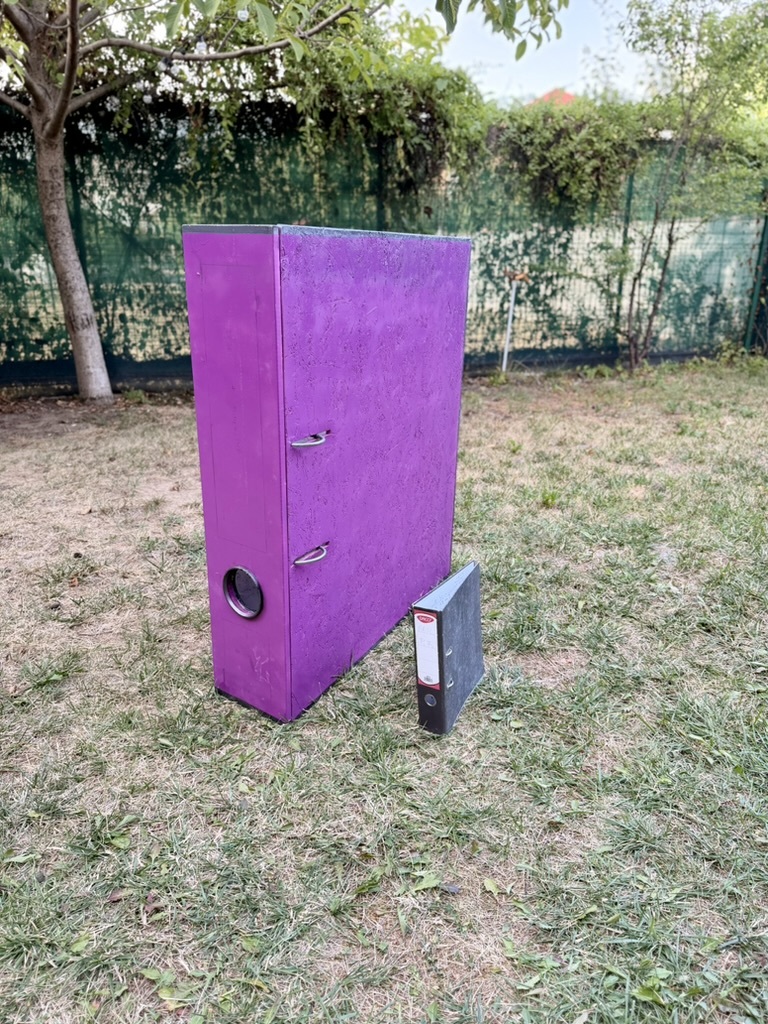
Only after painting the inside, outside, and corner details did I install the mechanism.
This was the part I had spent so much time thinking about in the hardware store. I wanted someone to look at it and ask, "Wait, does that actually open?"
And for the answer to be yes.
The giant sheets of paper are still theoretical. The working rings are not.
Putting an ordinary binder beside it also helped explain the scale.
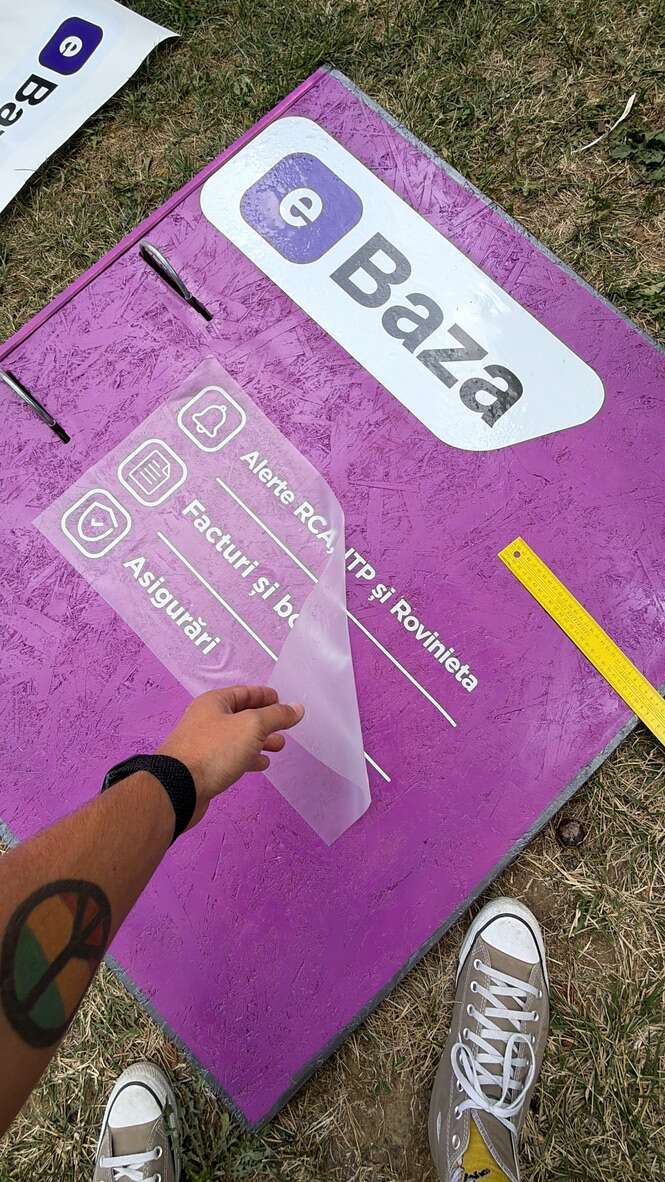
The finishing touch was the branding
The logo and lettering connected the whole thing to eBaza. Once they went on, it stopped being only a construction project and became the campaign.
There is something satisfying about reaching the point where you no longer have to explain what you are trying to build.
You can just point at it.
The picture became an object
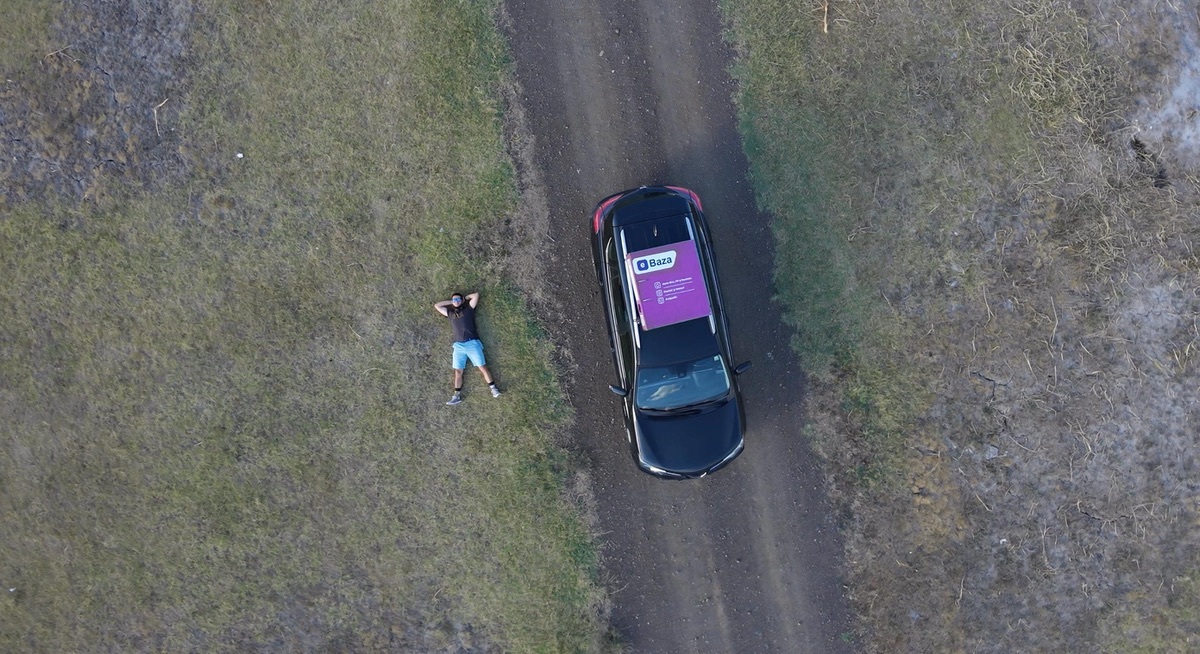
Then I saw it where it had been intended to go: on the car.
A friend filmed the finished thing with a drone. Seeing it from another angle made the whole project feel even more ridiculous, in the best possible way.
I had taken a strange AI-generated picture and worked out how to make it real. The software gave me the idea. The hardware store, the metalwork, and the spare-time sessions were my problem.
The app is supposed to do the opposite
The binder makes the paperwork enormous. eBaza is supposed to make managing it less of a job.
It does not remove the need for insurance, inspections, or the road vignette. It does not make invoices and receipts disappear. It helps you keep track of what expires, what you spent, and where the documents are.
You can start free with up to three vehicles at eBaza.ro.
I am still figuring out whether this will turn out to be a useful marketing experiment.
But it is definitely the first time promoting one of my apps has required this much manual labor.
P.S.: ⚠️ The giant binder is not included.
About Raul Popadineți
Full-time dad, part-time solopreneur. Curating the Calm Companies newsletter. Building my first AI startups: Git Digest, OG Pilot Creator, investor, and alumnus at Gumroad.