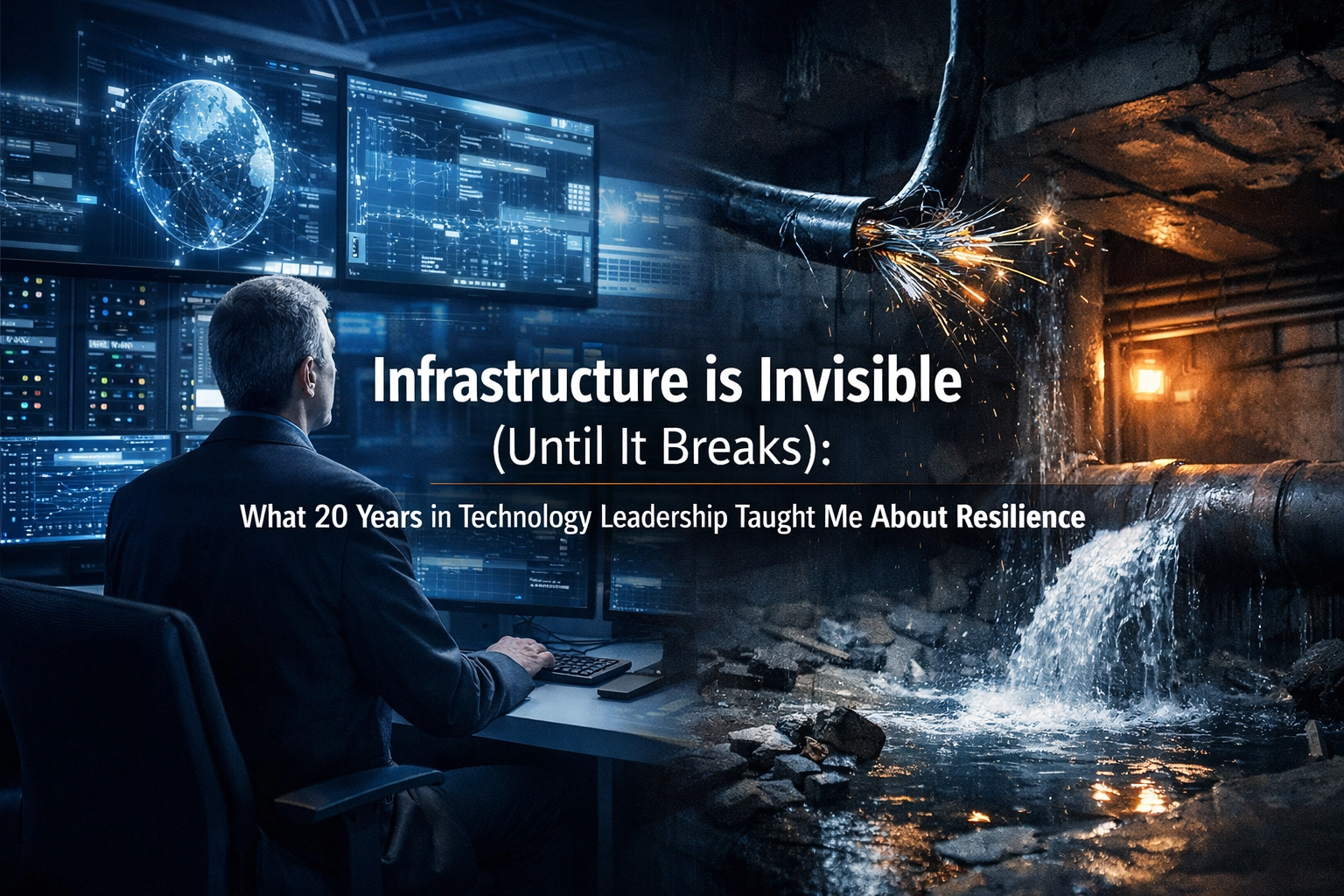
Nobody thinks about the water system until they turn on the tap and nothing comes out. Nobody notices the power grid until the lights go dark. And in business, nobody appreciates the network until the conference call drops or the ERP system goes offline.
That's the paradox of infrastructure: when it's working perfectly, it's completely invisible.
I've spent two decades building and managing technology systems across telecom, healthcare, and energy sectors. And the most important lesson I've learned isn't about protocols, bandwidth, or uptime percentages. It's this: the systems we take for granted are the ones that matter most, and the ones we're least prepared to lose.
The Illusion of "Just Working"
Here's what most business leaders don't see: infrastructure doesn't "just work." It works because someone designed it to handle stress. It works because someone monitors it constantly. It works because a team somewhere is patching vulnerabilities, updating firmware, and replacing aging components before they fail.

In healthcare, I watched hospital IT teams manage systems where downtime wasn't measured in lost revenue; it was measured in patient outcomes. A failed network switch wasn't an inconvenience; it meant clinicians couldn't access lab results during a critical decision window.
In energy, I saw control systems managing grid load in real-time, making split-second decisions that kept energy flowing to hundreds or thousands of locations. One misconfigured relay could cascade into a regional problem.
In telecom, I learned that what looks like a simple phone call actually traverses dozens of interconnected systems, each with its own potential failure point.
The complexity is staggering. The fact that it works at all is remarkable.
What Failure Reveals
Infrastructure becomes visible only when it breaks. And when it does, the breakdown exposes more than just technical problems; it reveals the hidden dependencies, the human effort, and the organizational gaps that were always there.
I've been on the phone at 2 AM troubleshooting a network outage. I've watched seasoned engineers solve problems that weren't in any documentation because they understood not just the system design, but the quirks, workarounds, and informal knowledge that made it actually function.
That's the thing about resilient systems: they're held together by more than configuration files and routing tables. They're sustained by people who know which vendor support engineer actually understands the product. Who knows that Server 47 runs hot and needs extra attention. Who remembers that the backup failover has never been tested under real load.
When you lose those people, through turnover, retirement, or budget cuts that eliminate "redundant" positions, you don't just lose employees. You lose the invisible scaffolding that keeps your visible infrastructure standing.
The Three Threats Nobody Plans For
Modern infrastructure faces challenges that didn't exist when most of it was built:
1. Cybersecurity as a daily reality. Your network isn't just moving data; it's under constant probe and attack. The infrastructure that seemed adequate five years ago is now a liability because security wasn't a design parameter; it was an afterthought.
2. Climate stress beyond design specs. Data centers built to handle 95-degree peaks are now dealing with 110-degree heat waves. Power systems designed for predictable load patterns are managing extreme weather events that used to happen once a decade but now happen twice a year.
3. Deferred maintenance as policy. Budget cycles reward short-term thinking. It's easier to delay an infrastructure upgrade than to cut headcount or cancel a visible project. But aging systems don't announce their failures; they cascade unexpectedly and expensively.

I've watched organizations run critical operations on infrastructure that was already past its planned lifecycle when I first encountered it. Not because they didn't know better, but because "it still works" is hard to argue with in a budget meeting.
Until it doesn't.
The Hidden Labor That Keeps Systems Running
Here's what gets missed in efficiency drives and automation initiatives: much of the critical work that sustains infrastructure is invisible by nature.
It's the network admin who notices unusual traffic patterns and investigates before they become a breach. It's the systems engineer who knows which vendors actually respond during a crisis. It's the project manager who maintains relationships across silos so that when you need to coordinate a complex change, the right people are already talking to each other.
This work doesn't show up on dashboards. It doesn't fit neatly into KPIs. But it's the difference between a system that survives unexpected stress and one that collapses under it.
I've seen organizations measure efficiency by reducing "redundant" technical staff, only to discover six months later that their response time to incidents has tripled. The metrics looked better. The reality got worse.
Building for Resilience, Not Just Uptime
Resilience isn't the same as reliability. You can have five-nines uptime and still be fragile. Reliability means things work under expected conditions. Resilience means they survive unexpected ones.
Here's what actually builds resilient infrastructure:
Redundancy isn't waste, it's insurance. That backup system that "never gets used" isn't inefficient; it's the reason you're still operational when the primary fails. Redundancy costs money. Fragility costs more.
Documentation matters, but tacit knowledge matters more. Write down your procedures. But also recognize that your most experienced people carry knowledge that can't be documented because it's pattern recognition developed over years of seeing how systems actually behave under stress.
Test your failovers before you need them. If you've never actually failed over to your backup data center, you don't have a disaster recovery plan; you have documentation that might work. Maybe.
Invest in the boring stuff. Upgrading aging infrastructure isn't exciting. Replacing end-of-life equipment isn't strategic. But neither is explaining to your executive team why the company lost $2 million because a 12-year-old switch finally died.
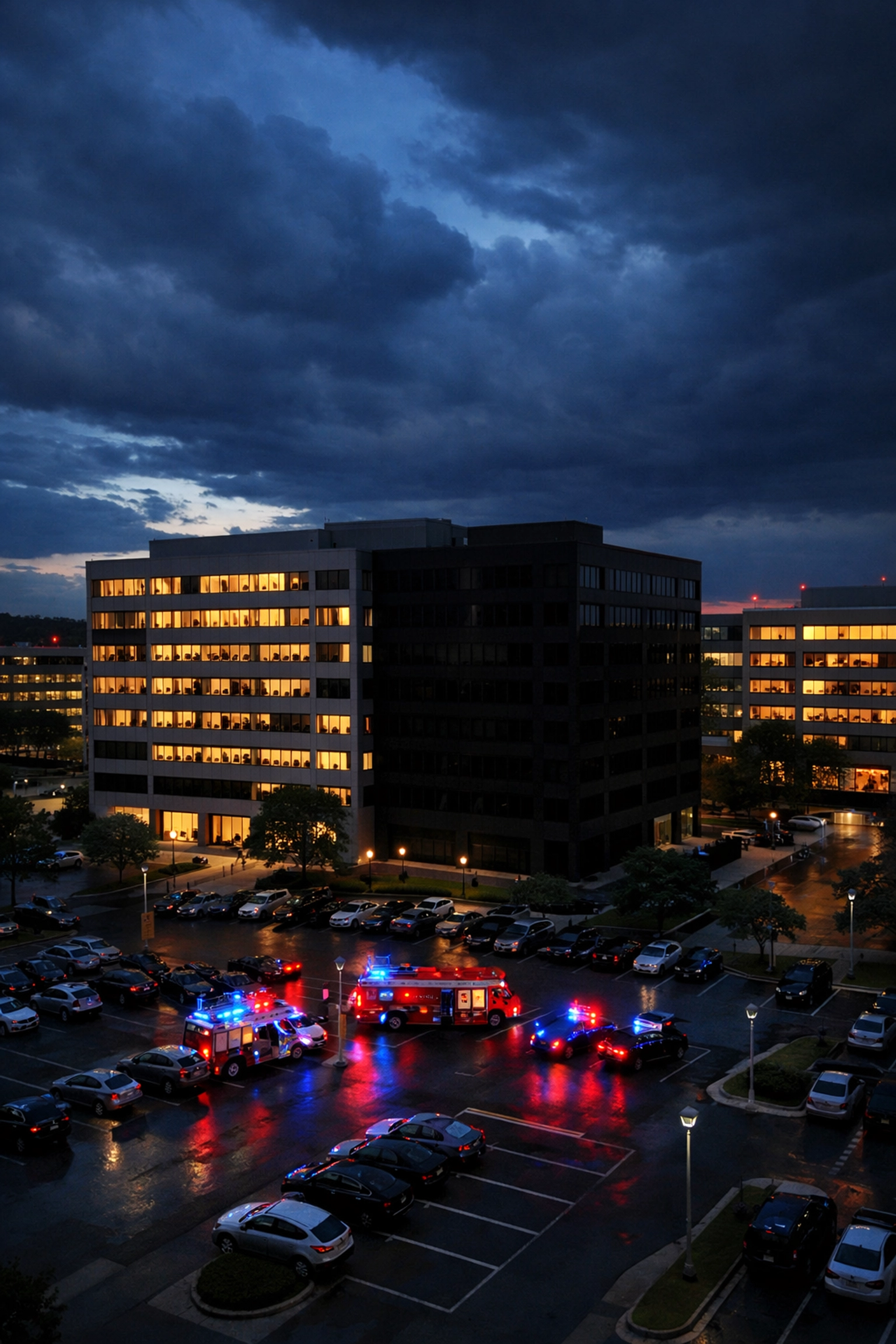
Budget for maintenance like you budget for growth. Infrastructure isn't a one-time capital expense. It's an ongoing operational requirement. Organizations that treat it as optional inevitably learn this lesson the expensive way.
The Leadership Mindset Shift
The hardest part about building resilient infrastructure isn't technical; it's organizational. It requires leaders who understand that invisible systems are valuable precisely because they're invisible. That the absence of problems is evidence of success, not evidence that the investment wasn't needed.
It means recognizing that the guy who's been quietly keeping your network running for 15 years isn't "just" a network admin, he's the institutional memory that prevents you from making mistakes you don't even know are possible.
It means valuing the work that doesn't generate headlines or check boxes on strategic initiatives but keeps the foundation solid so everything else can build on it.
Resilience is what you build before the crisis, not what you scramble for during it.
What Happens Next
Your infrastructure is either resilient or it isn't. You either have the depth of expertise and redundancy to handle unexpected stress, or you're one bad weekend away from a career-defining crisis.
The good news is that building resilience doesn't require revolutionary technology. It requires clear-eyed assessment of where your systems are fragile, commitment to maintaining what matters, and recognition that the invisible work sustaining your operations is as strategic as any growth initiative.
Twenty years in technology leadership has taught me that the organizations that survive and thrive aren't the ones with the flashiest tech stack. They're the ones that respect what they've built, maintain it honestly, and understand that infrastructure invisibility is a feature, but infrastructure fragility is a choice.
The time to fix your roof is before it rains. The time to build resilience is before you need it. Call me to discuss this further. My assistant, Rachel, can set up a quick call at (303) 879-3282. Zollerconsulting.com - otgai.ai