Banning social networks isn't the same as keeping smartphones out of schools.
Some of the very best and worst things are on the internet. In what are commonly called social networks, there are issues that exist in any online platform where:
Some of the very best and worst things are on the internet. In what are commonly called social networks, there are issues that exist in any online platform where:
- People are tied to unique accounts with their ID information, personal relationships, everyday location, face recognition, etc.
- People are encouraged to snitch on themselves and each other, accumulating historical data for everyone.
- Free features at a massive scale are powered by surveillance and sponsored content.
- The best minds in the world are paid to maximise unhealthy metrics like usage time spent 24/7.
If we pay attention to these dynamics, we can already see the ChatGPTs as a new wave of the same old problems. If we don't notice what we're experiencing, we have no idea what we should be banning or what kind of internet we should be fostering.
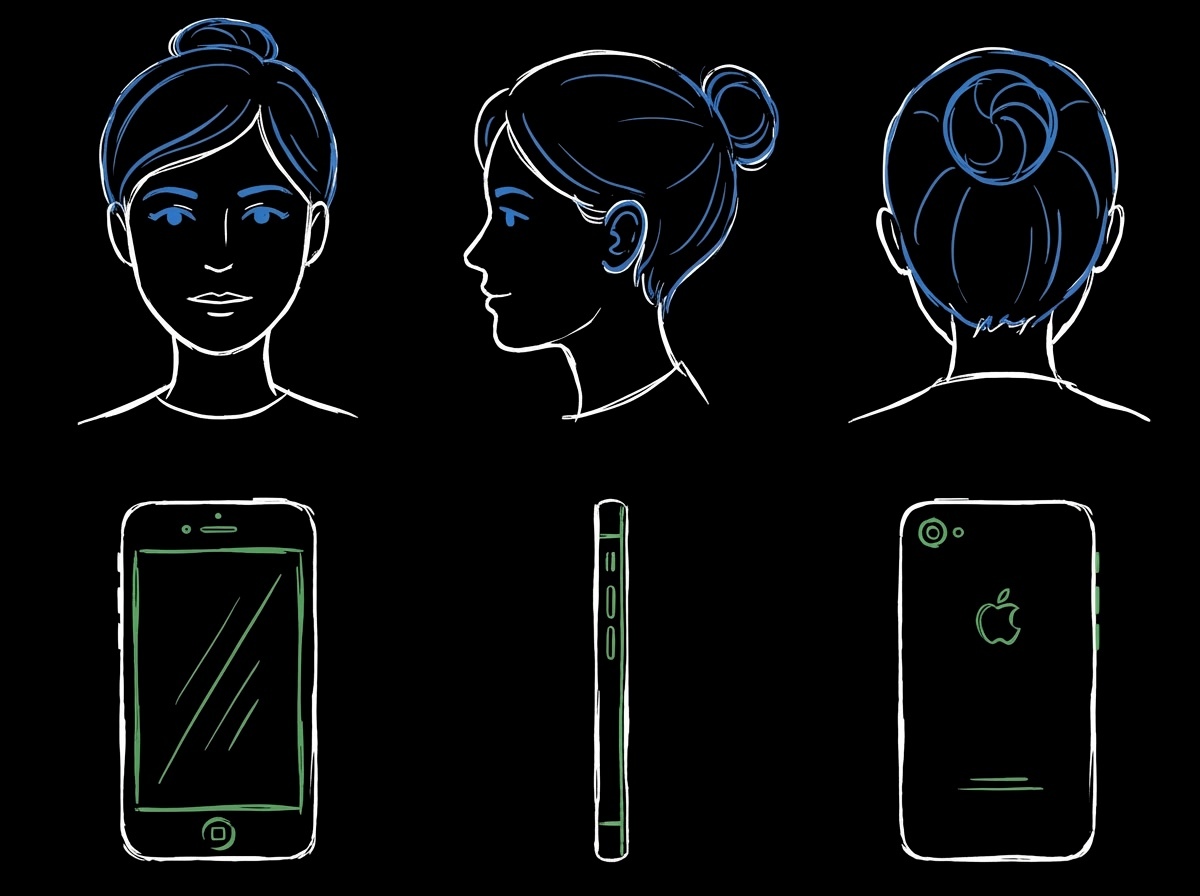
Everyone suffers from the problems listed above, but children are often unknowingly put into these situations. Placeholder accounts are created for them as soon as parents snap a photo of their newborn and share it on one of these platforms. When they get to school, they've already been tracked for years, and any account they eventually create lines up with that history to maximize connections and pin them down to that identity.
It's like you're walking down the street with a sign hovering above your head detailing your profile. This can be helpful to meet people, but it's also a natural cause of fear and anxiety. Therefore, cyber-bullying isn't a new problem; it's the same bullying that has been happening for centuries, but massively accelerated by these platforms. Online profiles tied to single identities not only become an easy target, but also a scoring board. Kids feel like they get more imaginary points the more they bully. And every abuse they eventually suffer is a negative score hanging on them online, supposedly forever.
Social networks gained popularity by stomping on online anonymity, but we went too far in the other direction. Now, kids are becoming increasingly performative to match how they want to see themselves online. The overlap between analog and digital identities has become too tight because these platforms thrive by reducing people to sets of monetizable labels. Our real identities are fuzzy, but ads are best pushed to well-defined targets. Platforms can modulate this tension to raise ad prices while increasing user engagement. People themselves crave authenticity, but mostly they want to be seen.
And for complex issues, governments have become increasingly good at using problems as pretexts without actually solving them. The mass surveillance implemented by the biggest online platforms is convenient for political players. Through more or less official channels, state interventions have moderated content, gathered citizen information, and manipulated what goes viral. People in power appreciate the dynamics that keep these social networks on top, so they prefer to live and die by that sword rather than improve the internet for citizens.
Therefore, ruling parties envision adding government surveillance on top of the already existing corporate surveillance. People making lists of websites they believe shouldn't be online is nothing new. But age-gating is their freshest tool. Age verification is being pushed as a new requirement for online platforms and eventually operating systems. Normally, this would fall under already existing parental controls, but governments see an opportunity to replace parents in this domain and gain another foothold in state-sanctioned surveillance.
As a pretext, these measures don't need to care about the many ways kids can find to circumvent them. They certainly don't address the dynamics I've described that make the internet worse. What matters for those in power is to monitor citizens more closely and to establish another blacklist for websites. We can see the same approach rolling out in the European chat control proposals with child abuse as another pretext to introduce automated scanning of all encrypted messages. Doesn't matter if it solves anything; mass surveillance takes another step forward.
We shouldn't be surprised. To paraphrase Timothy C. May from 1988, how will privacy be attacked? The "Four Horsemen" are drug-dealers, money-launderers, terrorists, and pedophiles. These threats are real, but there's also a danger in them being presented as a reason to restrict our freedoms. "Won't somebody think of the children?!" And people are aware of this authoritarian move, but we live in desperate and uncertain times. Better not to think of it.
Parents worried about how their kids are on the internet should start by noticing how they themselves are present online. Especially early on, children learn by mirroring their parents. Are you aware of your own behaviour with technology? Do you foster curiosity, knowledge, and independence? Is it possible for you to feel happy about being on the internet, or is it just a necessary evil? Can your children see you struggling, learning and becoming better?
About technology in schools, I think students can benefit a lot from computers and the internet if these educational investments are long-term and purposeful. But personal smartphones right now are too much of a surveillance technology that the kids use on themselves and others. And besides, moderating the use of hardware in specific spaces is a lot more reasonable than interfering with software everywhere.