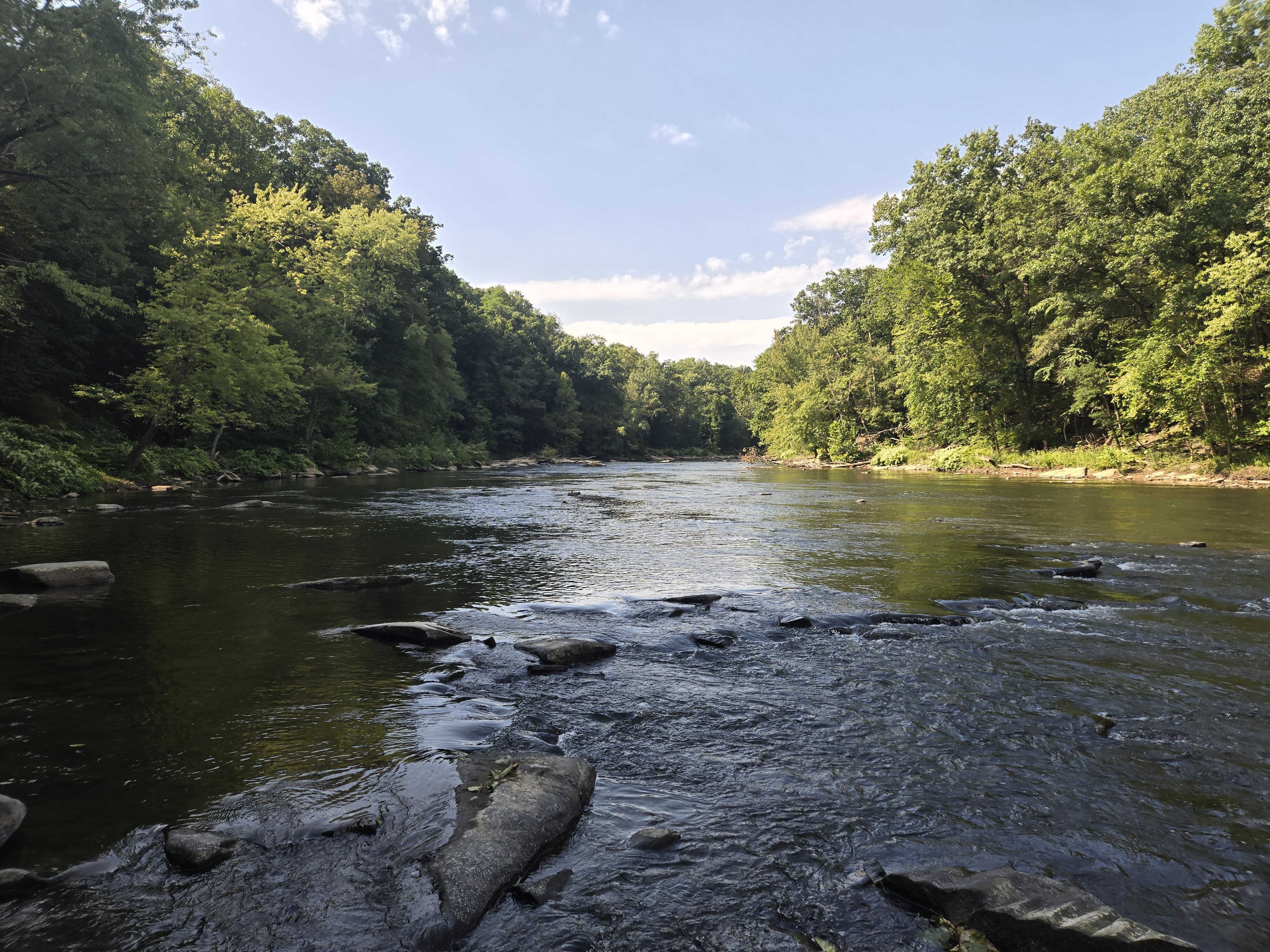
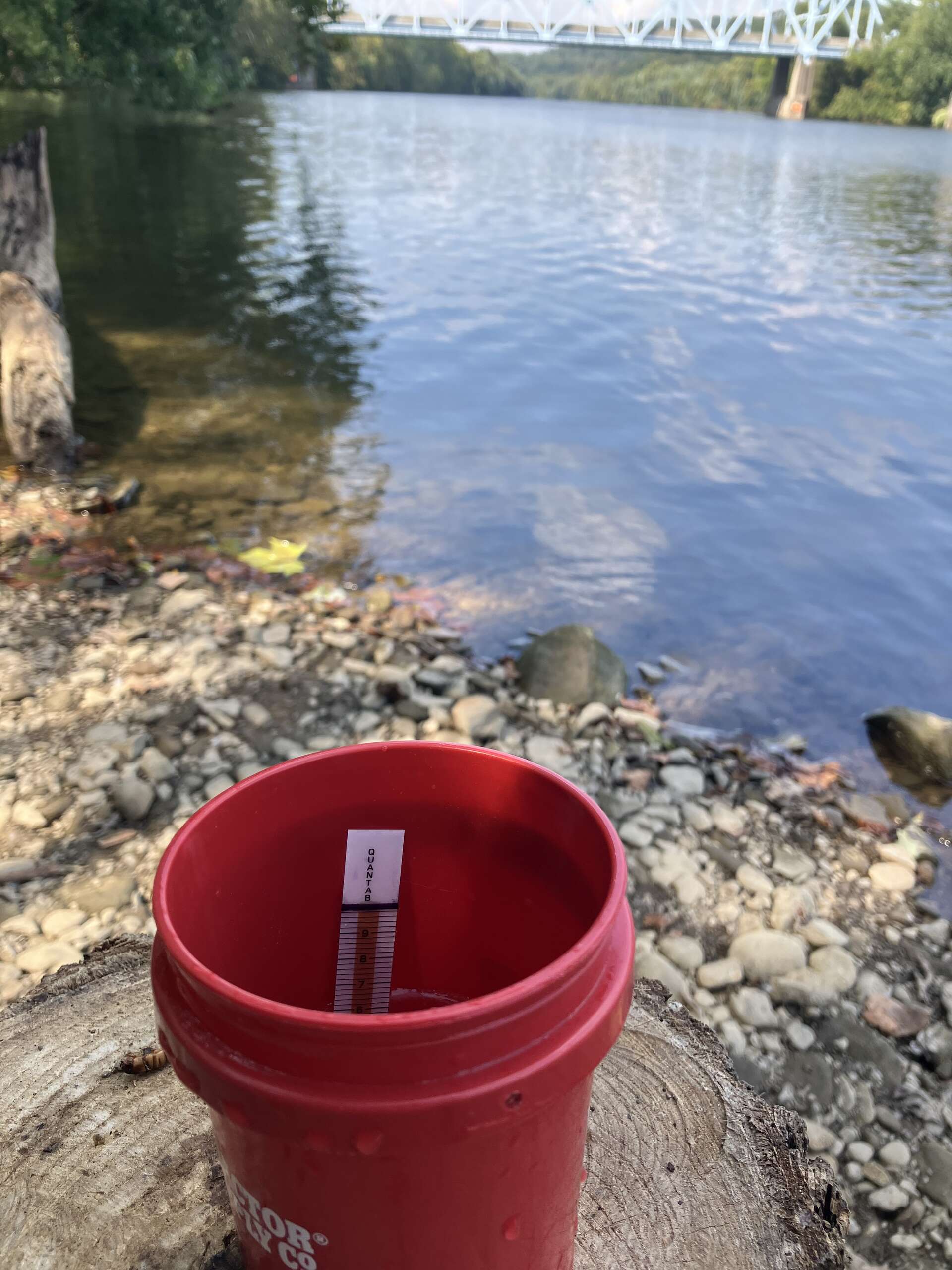
My students and I have been making our way to a couple of bodies of water in Western Pennsylvania to test them for salt. Yep, the same salt you might remember from high school chemistry, made up of sodium and chlorine (NaCl). That may seem like an odd thing to do for freshwater streams far from an ocean. However, one growing concern in Western Pennsylvania and the Northeast is the increasing salinization of streams from winter road treatments. While essential for public safety, this practice introduces significant amounts of salt into the environment each year, especially in years with greater snowfall. As snow melts, runoff carries dissolved salts into nearby waterways, increasing their salinity.
Downstream, water treatment facilities detect this change through relatively simple conductivity measurements. Because salt allows water to conduct electricity more easily, higher conductivity can indicate a higher concentration of ions, including sodium and chloride. This detection matters because higher sodium and chloride ions can harm aquatic life and reduce water quality. The impact is especially noticeable in urban areas with paved roads, parking lots, and other hard surfaces that permit runoff.
For instance, a January 2026 article in the journal Wetlands suggests that sodium ions from road salt suppress the ability of urban wetlands to remove nitrogen through denitrification. These wetlands act as the “kidneys” of the land, removing the potentially harmful excess nitrogen.
The chief takeaway of this research article is that lower sodium concentrations in the water don’t seem to have a significant impact. However, at higher sodium concentrations (150 mg kg-1 in their study), the bacteria responsible for denitrification cannot process nitrogen as effectively.
So, why is this important to study? Excess nitrogen can result in algal blooms that block sunlight from entering the water and deplete oxygen levels. Lower oxygen levels can cause fish kills.
So, we are monitoring a couple of local streams to determine the amount of salinization. We are participating in the Salt Watch program sponsored by the Izaak Walton League. These results show chloride (Cl-) concentration, one measure of salinity that is easy to measure in the field.
This small project connects our students to their surroundings and helps them see the impact of our everyday activities on the environment in our own backyard. In this way, they can explore their vocational callings and see how they might put their skills in service for others.
Rahman, M.M., Peipoch, M., Kan, J. et al. Road Salt Impacts on Soil Properties and Permanent Nitrogen Removal Capacity of Freshwater Urban Wetlands. Wetlands46, 14 (2026). https://doi.org/10.1007/s13157-025-02026-3