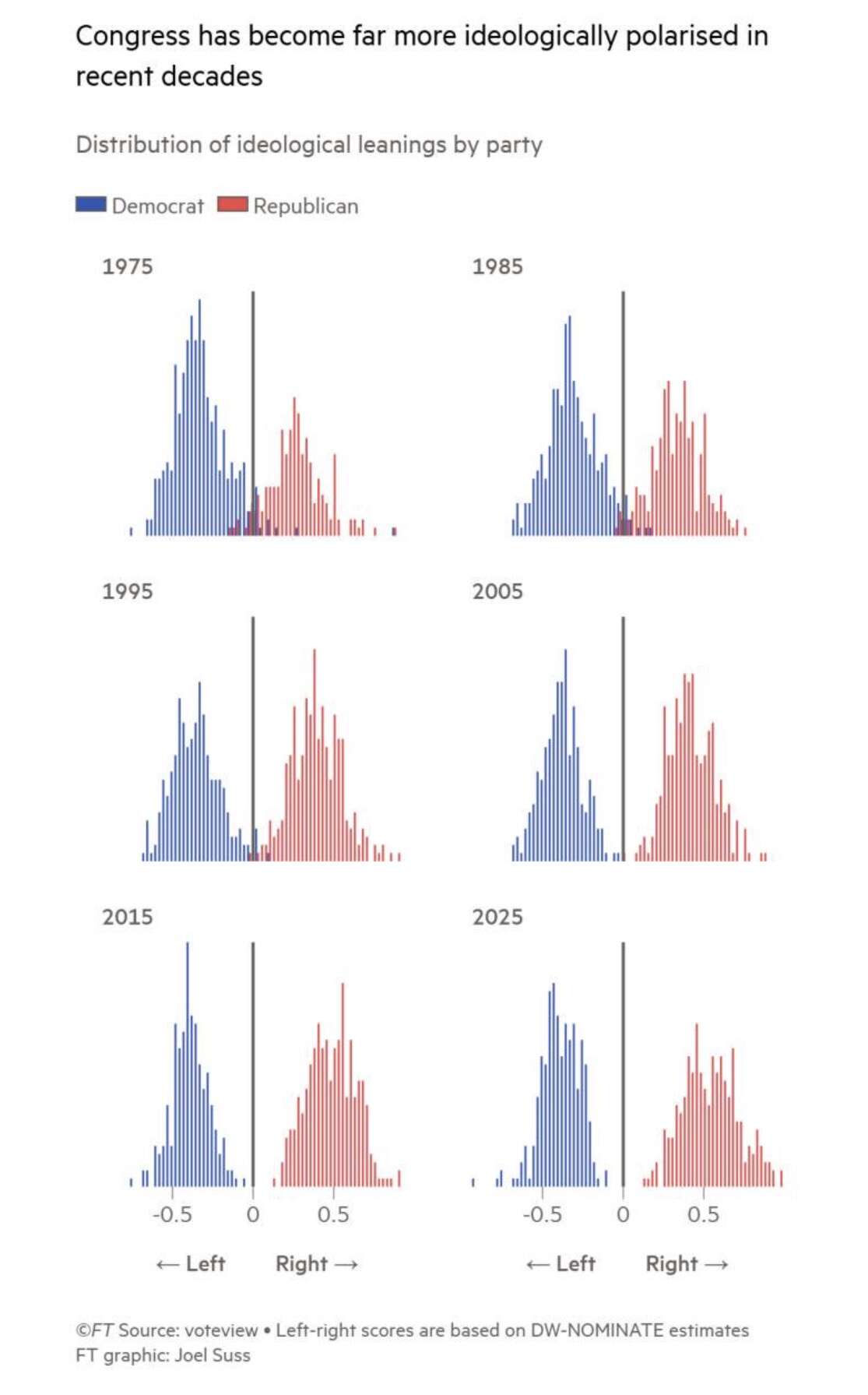
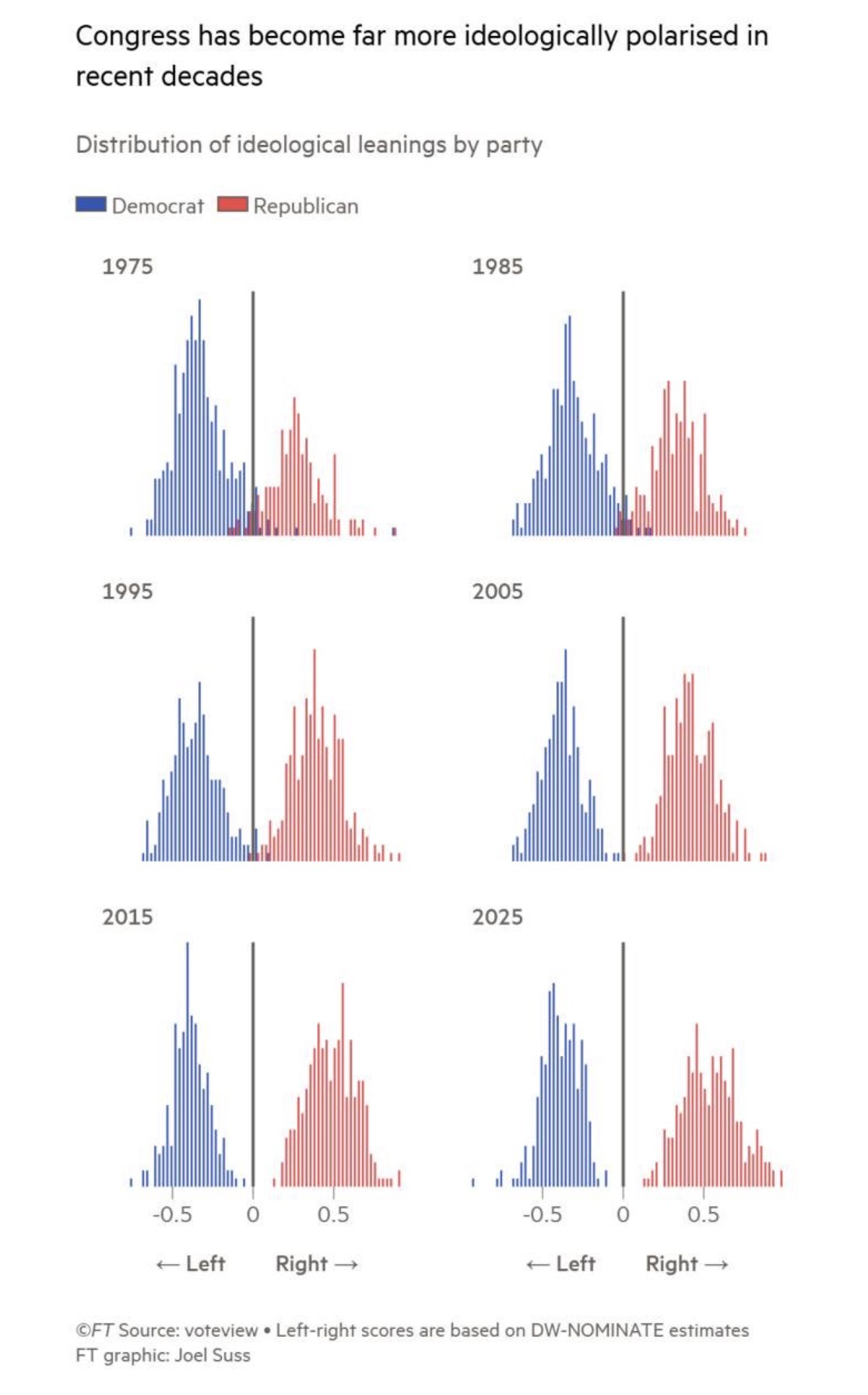
It explores political polarization — taken to extremes in the US, but increasingly visible in Europe and across the democratic world.
Much attention is given to its social dimension, yet the economic damage is equally significant. For several reasons:
It fuels political obstructionism driven by ideology rather than reason, making it nearly impossible to legislate on key issues. Decisions get endlessly postponed.
Companies risk becoming partisan, reducing investment in firms seen as being on “the other side” and complicating M&A activity.
It distorts economic performance, as outcomes depend heavily on who is expected to win power. This creates uncertainty and policy whiplash — with each new government repealing the previous one’s laws and replacing them with opposite measures.