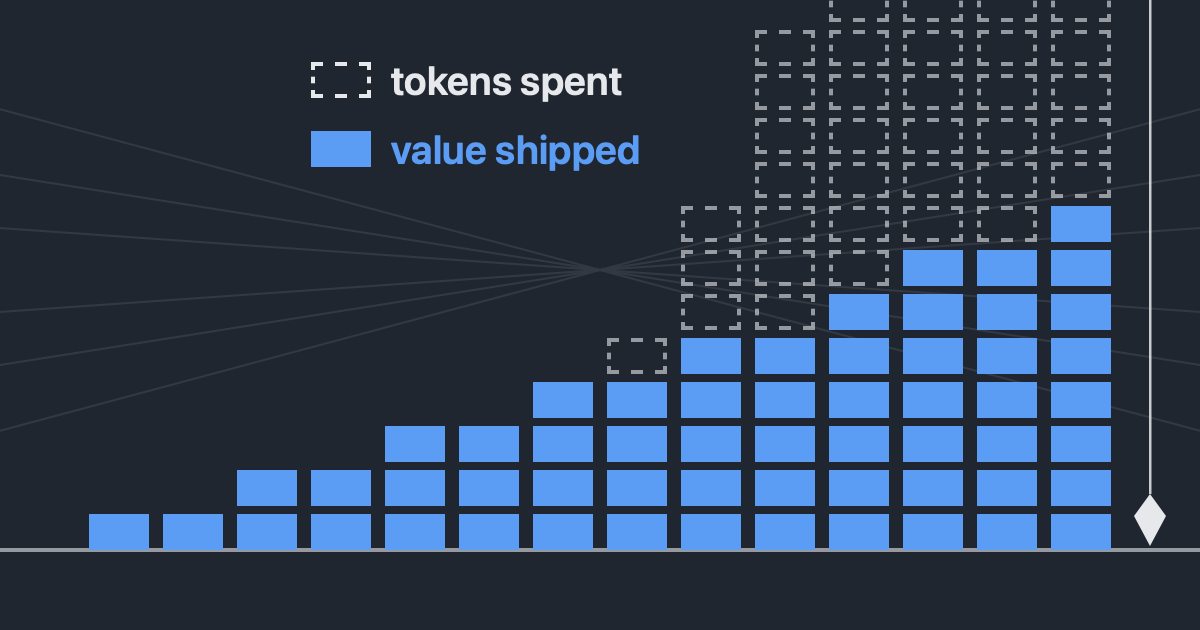
Tokens spent aren't value shipped.
As Andrej Karpathy pointed out in a recent post on X, people are split into groups by how well they understand what LLMs can do. Most people see a weak chatbot, most professionals see only a small improvement, and a small group sees an extreme change.
Within that small group, people are watching the change happen faster than they can adjust, and watching the skills they spent years learning lose value quickly. I see them coping in two ways:
- The token maxxers: This group exaggerates the progress of LLMs and lives in total denial that they are experiencing vertigo. They buy every bottle of snake oil the labs are selling so nobody calls them doomers. They have no measurement of their productivity gains, if there are any. They count tokens spent as a positive metric, think every piece of work can and should be done in a few minutes, and consider comprehension a waste of time.
- The practitioners: This group is open about how fast their way of working is changing, but they won't sacrifice taste and quality to blindly follow trends and hype. They experiment, and they share new workflows and processes with real, measured productivity gains. They care about comprehension, not because they are scared of being replaced, but because we are in a new world and they accept that their profession is going through a transformation.
Right now, it is important that we keep pushing the limits of what's possible with AI while still delivering real value to customers. The frontier labs mostly do that, but we cannot leave it to them. Innovation is a responsibility for all of us. A lot of useful work so far has come from practitioners outside the labs. Personal bots started with OpenClaw, and others followed: Hermes Agent by Nous Research, NanoClaw, and lightweight ones like PicoClaw and ZeroClaw that run on a Raspberry Pi. Important skills for aligning with agents, like "/grill-me", came from Matt Pocock and a handful of others who shared their workflows.
Eventually, I believe the curve will flatten and we will all go back to building. What will matter then is who has gained real skills with the tools we have in our hands. Remember when you were a newbie choosing your favourite IDE and learning different programming languages? It's that moment all over again. So make sure you are gaining real skills. Define your own workflow, reach out to colleagues in your industry, watch and follow people who seem to have it figured out to some extent, and do not forget to deliver real value while you are at it.
PS: Nobody knows what they are doing. Choose your own path.