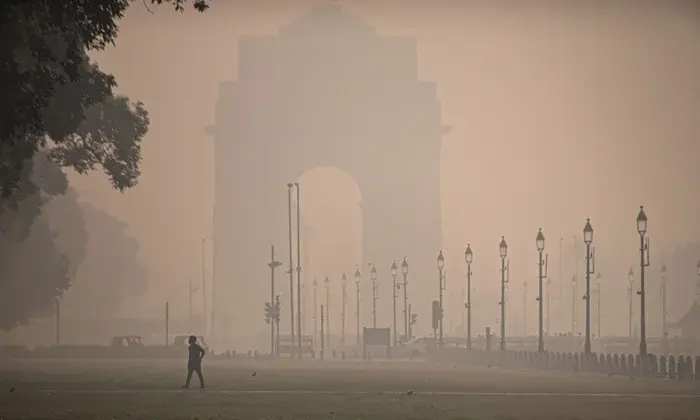
India recently overtook Japan to become the number four economy in the world. As commentators swooned, analyzed, and forecasted, I couldn’t help notice another fact, equally as momentous: the air of India’s capital city is literally poisonous. Kids can't attend school, the elderly are falling sick, and more than 34 million people are breathing toxic sludge.
This is a recurring occurrence in Delhi, and it is getting worse every winter. It doesn't get nearly as much coverage as India's economic growth, however. As we worship at the altar of optimized capital allocation and growth forecasts, I can't help but ask: who does this growth serve? If the children in your capital city can't go to school for weeks at a time, what exactly is the point of the numbers?
When issues like this began around the world a few decades ago, there were climate conferences and declarations and campaign promises. Now, there's barely a pretense of noticing. The global managerial class continues to forecast next year's returns and the government sprays water around the monitoring stations to try to reduce the readings. All while residents are protesting and crying for help.
This isn't just about India. Growth is necessary, and I think it's great that the economy is doing well. The numbers, however, should mean that the quality of life of your citizens is improving. We are living in a world where growth and ROI are being chased in a vacuum, as numbers on a screen that don't mean much out there. We live in a world where the hyperreal (numbers, charts, forecasts) is more real than reality (what we see and hear). If our current system isn't serving humanity's quality of life, who is it serving instead? The Machine.