We just launched Fizzy! It’s Kanban as it should be—a fun, simple way to make progress on anything from vacation planning to building an app. Fizzy is our first SaaS product that’s also open source! You can run it yourself and help make it better.
When we open sourced the codebase, we retained the full history so you can relive all the twists and turns of building a product. That history doesn’t capture how we work on a new product, though.
Fizzy started with a designer and programmer working closely with Jason. It remained small for months and even right before launch, it was still just two designers and four programmers.
We built Fizzy using Shape Up, but on the surface, it looked quite different. We call it new product mode.
When building something new, we optimize for optionality and speed. We didn’t do a single Fizzy betting table. Appetites rarely came up. We didn’t plan a cycle of work beyond a rough sketch. Even six weeks is too long of a commitment when you’re constantly exploring and iterating. The freedom to jump on the next big idea right away is essential.
When you’re working on an established product, you can define the boundaries of the work and be confident that there’s a shippable version within your appetite. The team commits to shipping by the end of the cycle and you commit to not pulling them into something else.
R&D is different. You’re not shipping to customers when you’re done. The goal is to prove out an idea as quickly as possible so you can try it, discuss it, change it, and sometimes, throw it away and start over.
Since the company works in cycles, there's still a natural rhythm to the work. We write kickoffs (what’s next) and heartbeats (what happened), but the kickoffs are closer to guesses than commitments. Here are some things we plan to tackle next, like onboarding, webhooks, the mobile web experience, and improving notifications.
In new product mode, we usually don’t have pitches for those yet. They haven’t been fully shaped and there aren't appetites. We might drop one because another project needed a few experiments before we nailed it. We might drop another because a better idea came up.
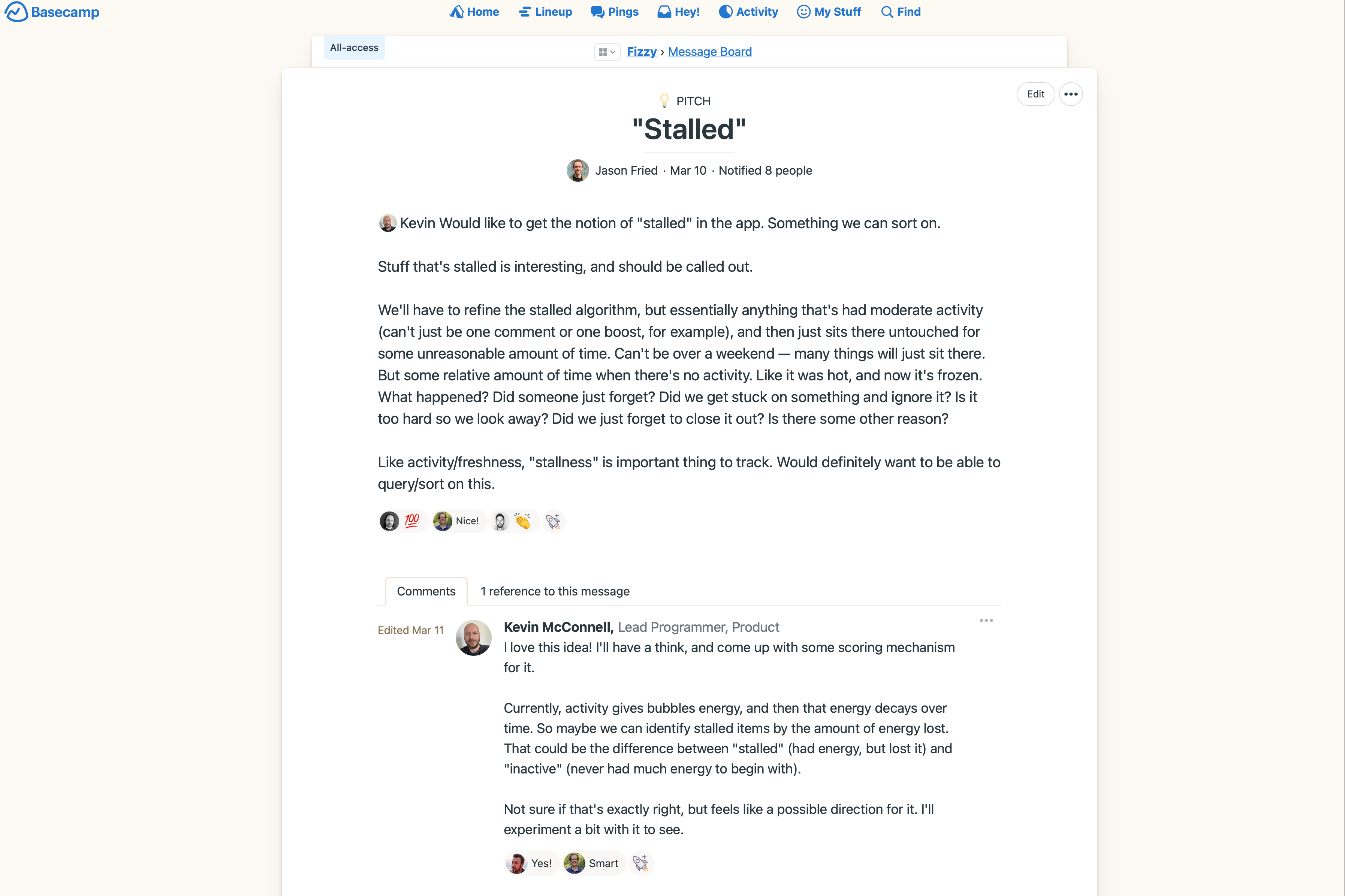
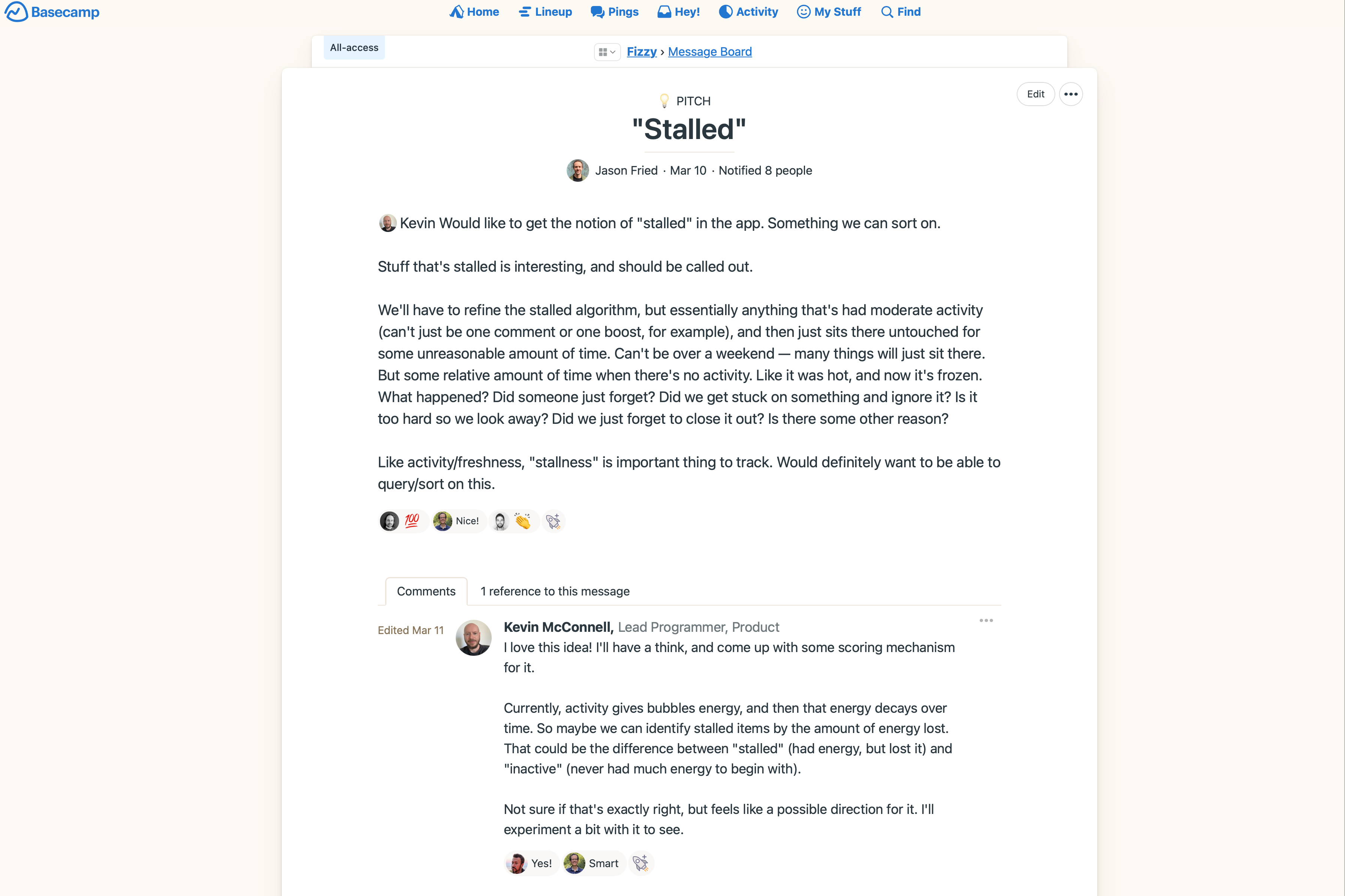
It’s still Shape Up, though. We still shaped ideas and wrote pitches, but more quickly and with fewer details. They pointed the team in the right direction, but we knew there would be questions and decisions along the way and that’s okay. Here's the entire pitch for Fizzy's "Stalled" feature.
There’s margin to figure things out as we go because in new product mode, projects aren’t fixed time, variable scope. They’re variable time, variable scope, at least formally.
This approach can go very wrong, and we see it in software all the time. The reason it works for us is that the people building new products are deeply experienced in their craft, but also in Shape Up. They have an intuitive sense for how much time something should take and how to avoid rabbit holes. For instance, Kevin built the stalled feature in two days and then moved on to something else. After two days, we could use it for real and see where it felt right and where it felt off. We made improvements a few times before launch, always based on how it worked in practice. With new products, you figure out what you want by building and using it.
We also skipped cool-downs. Cool-downs provide margin for building multiple features during a cycle and planning the next cycle of work, but they’re overkill when a small team is building something from scratch. When someone is ready to take on something new, they simply start working on the next priority. If that’s not obvious, they ask. If something isn’t ready, we’ll write up a quick pitch and they’re off and running. Many things don’t even need a pitch — it might just be a few sentences in chat. The goal is to keep the energy and momentum high. New products are rare. It should be a fun ride.
Once v1 comes into focus, it's time to pick a launch date. Deadlines force decisions. The work shifts and the standards are higher. There's a difference between dinner with your family and inviting guests over.
If you're new to Shape Up, start with an existing product and learn Shape Up’s foundations before jumping into new product mode. The amount of nuance and intuition required is challenging without the reps of building, shipping, and getting better with Shape Up over a few cycles.
We often hear from people who are curious about how to use Shape Up to build something new or highly speculative. Hopefully this helps, but if you have more questions, or lessons from your own experience, drop me a note.
And go checkout Fizzy and track 1,000 ideas, bugs, books, vacations spots, homework assignments, or anything else for free! I think you'll love it.