Hey :)
For a long time, I thought building a business on your own was the point.
For a long time, I thought building a business on your own was the point.
Freedom. Control. Doing what you want, when you want.
That’s usually why people start in the first place.
I’ve done it before. Built businesses solo. And in my current business, I’m one of four partners. If I’m honest, I resisted that for a couple of years. More than I expected to.
What’s interesting is that my view on this has completely changed.
Richard Koch put words to something I’d been circling for a while. He describes the entrepreneur not as a single individual, but as a multi-head entrepreneur — a group of people with complementary strengths, aligned ownership, and shared upside.
That framing landed for me.
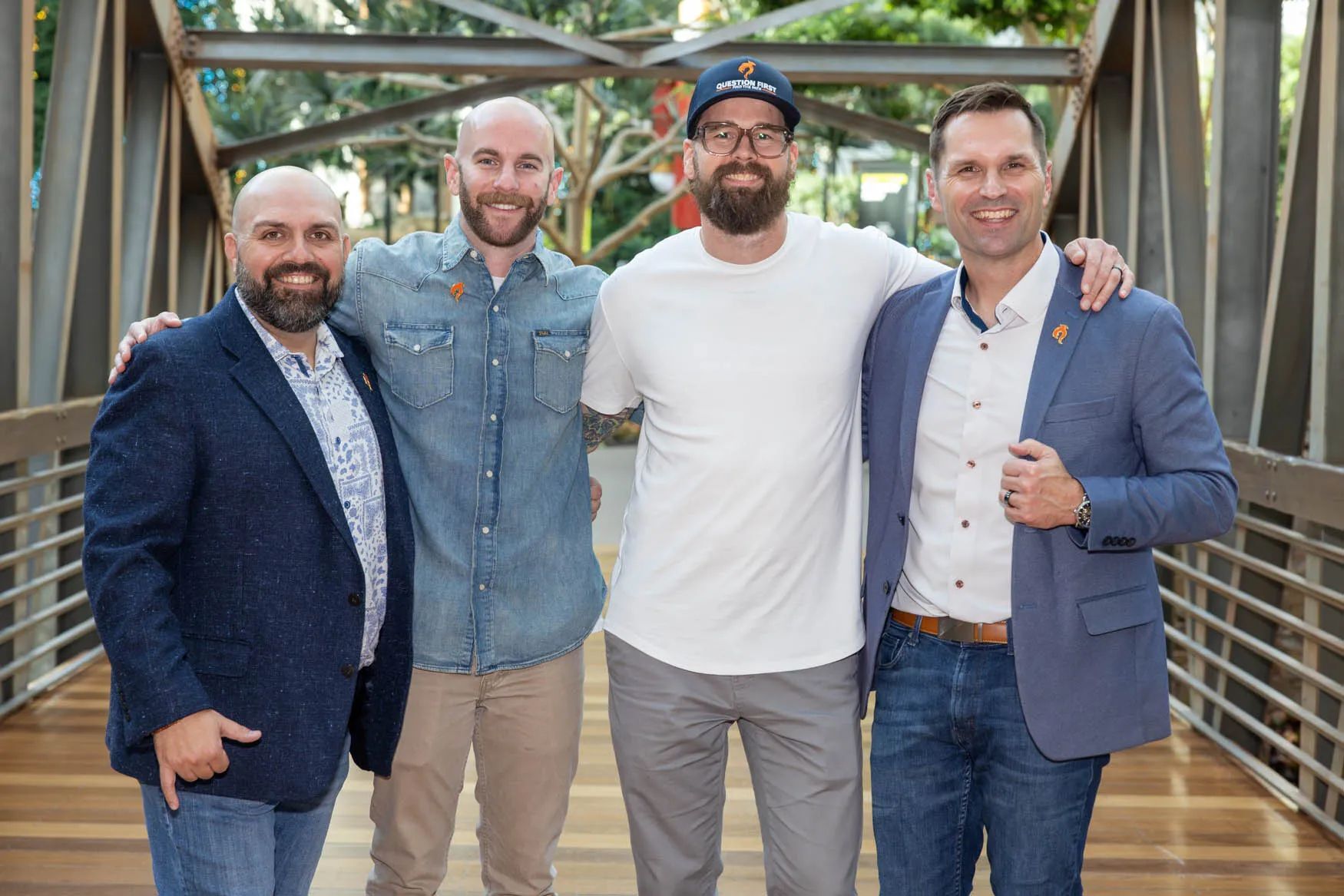
Because once you’ve experienced how difficult it is to start and run a business on your own, you start to see the leverage differently. Two, three, four well-matched partners can create something exponentially faster and more robust than one person trying to be good at everything.
Of course, it’s not automatic.
It only works if:
- Strengths are clearly understood and respected
- Ownership and incentives are aligned
- Collaboration is real, not performative
- Ideas move from the individual to ours
Those things matter. A lot.
This year, one of my personal focuses is becoming a better collaborator. And a big part of that is being ruthlessly clear on my own 20% spike — the small set of things I do exceptionally well and that genuinely move the business forward.
The upside of partnership, when it’s done well, is this: I get to do more of what I’m good at, not less.
I don’t need to carry the whole business. I don’t need to be competent at everything. I need to be excellent at a few things — and trust that others are being excellent at their few things.
So if you’re starting a business, or running one on your own just now, it’s worth at least asking the question: What would it look like to build this with other people?
Not to give up control — but to increase impact.
Not slower — but faster, with more leverage.
🗣️ 👀
Chris.