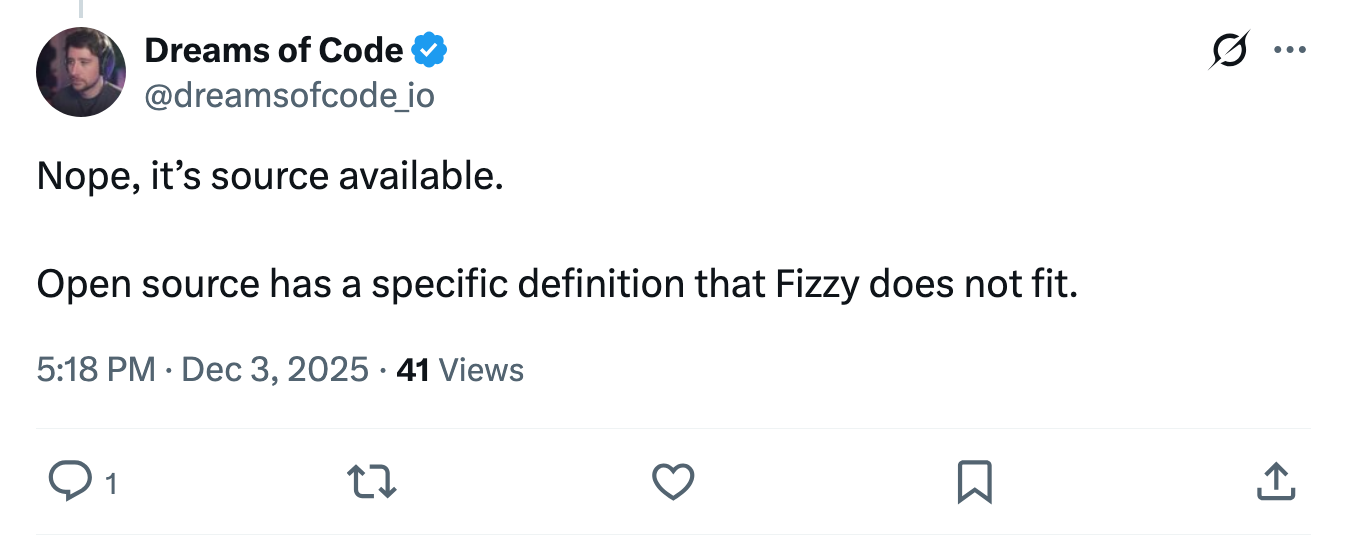
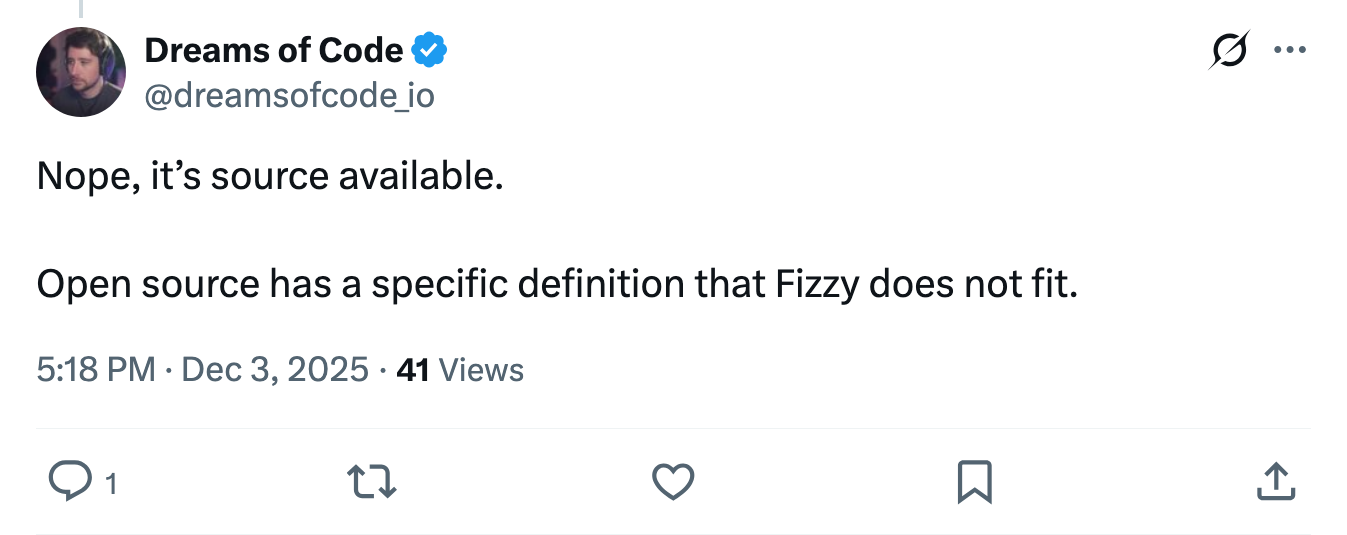
I’ve been thinking more about the Fizzy launch and the reaction around it. To me, the most interesting part is not the Kanban app itself, but the model behind it.
A lot of the discussion online jumped straight to the label. “It’s not real open source”. Sure, if your first instinct is to evaluate everything by strict licensing categories, Fizzy will not tick every box. But focusing solely on the label misses the model’s practical value and its intended use.
In practice, this looks like a pretty reasonable deal. You get full access to the code. You can run it forever, on your own hardware, with no limits. You can fix bugs, propose changes, learn from the implementation, and fork it if you must. And yes, you cannot turn around and sell the same hosted product. That seems… fine? Most companies do not want to run a Fizzy clone. They want a workflow tool that works and a codebase they can understand.
There is also something refreshing about how transparent this is. Many companies — Elastic, Redis, etc. — in the past tried to play both sides. They branded themselves as open source, then quietly added “restrictions” later. Or they built a community, waited for adoption, and then tightened the license once there was leverage. Fizzy is the opposite. 37Signals set the rules up front. No bait and switch. No ecosystem lock-in. No “surprise, we changed the license”. You know precisely what you are getting on day one.
If we zoom out, this model has upside for the whole ecosystem. It encourages companies to share real production code again. Not toy apps. Actual software that real teams can study and learn from. The industry lost a lot of that when everything moved behind SaaS walls.
Fizzy brings back the “view source” mindset for the backend. And that is valuable. Not because you want to copy it, but because reading good code makes you a better engineer.
To me, that’s the bigger story here. This is less about a Kanban tool and more about how 37Signals approaches licensing and incentives. They keep a clear commercial path. Users get transparency, portability, and a meaningful opportunity to learn from real production code.
If this becomes a trend, we all win.
— João
About João Alves
Dad. Husband. Head of Engineering @Adevinta, and building rotahog.com. My main interest is to build and grow SaaS Products and Infrastructure teams. Twitter | LinkedIn | Mastodon