Americans (won't say): Democracy is not actually on the ballot
One observation from me about the election:
People didn’t believe that “democracy was on the ballot” or that the “future of the republic was at stake”. One piece of evidence is that turnout fell in 40+ states.
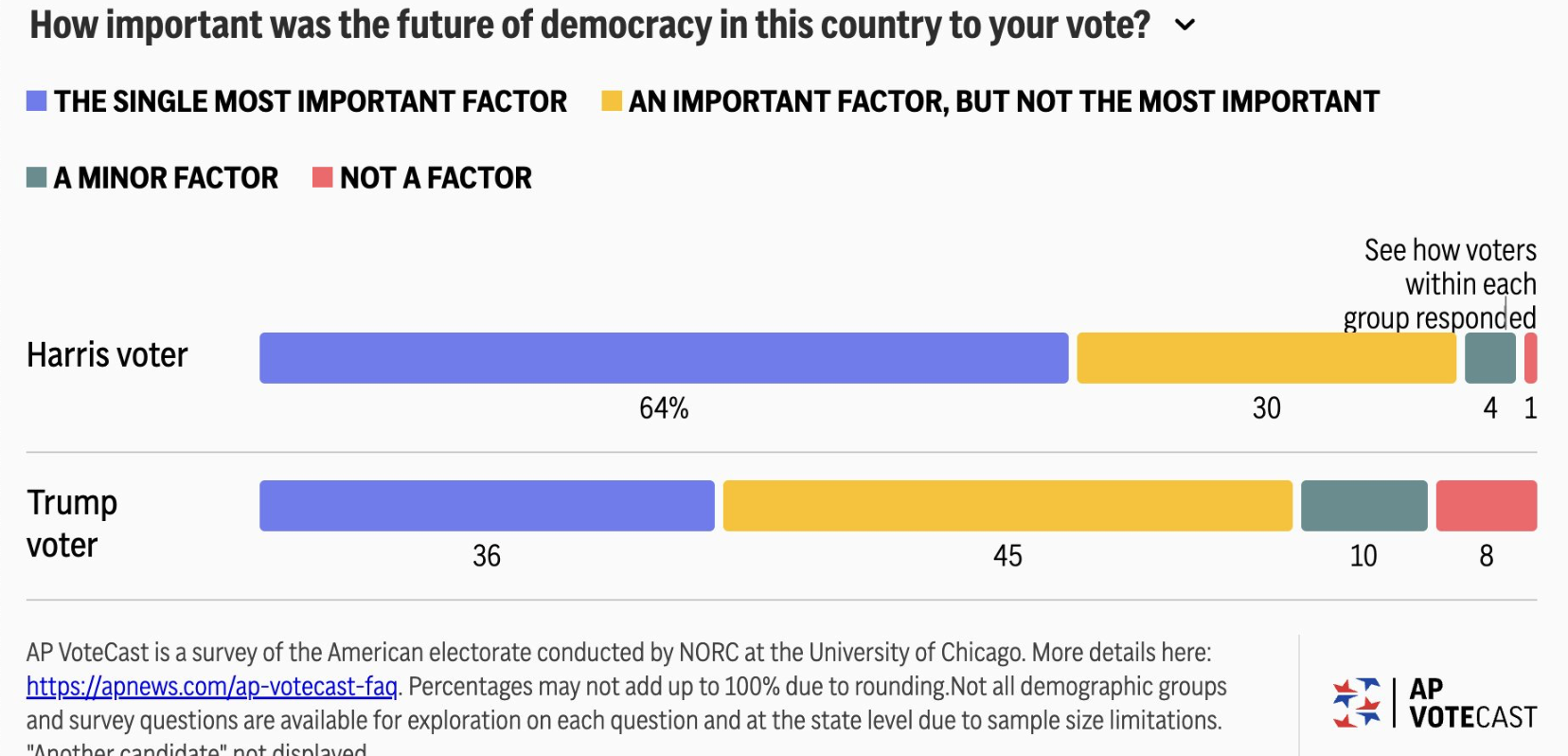
Sure, you can show me that voters told pollsters they "cared about democracy".
But the "future of democracy" was a bi-partisan concern. Could it be that certain voters view as democracy the practices and behaviors they like?
## "Who will represent me?"
Not the most comfortable deja-vu to watch how commentators are 1) lamenting that extremism won, 2) debating if a Trump vote can be even explained (and whether condemning voters while proposing an explanation is required or should be avoided for tactical reasons).
But at least soul-searching seems better than the re-runs of "that's it, now I'm really emigrating!".
It must be someone's fault, the thinking goes, given that the GOP's attention to the working class is largely symbolic. Michael Cohen, for example, writes that Vance and Trump are not credibly or genuinely pro-worker.
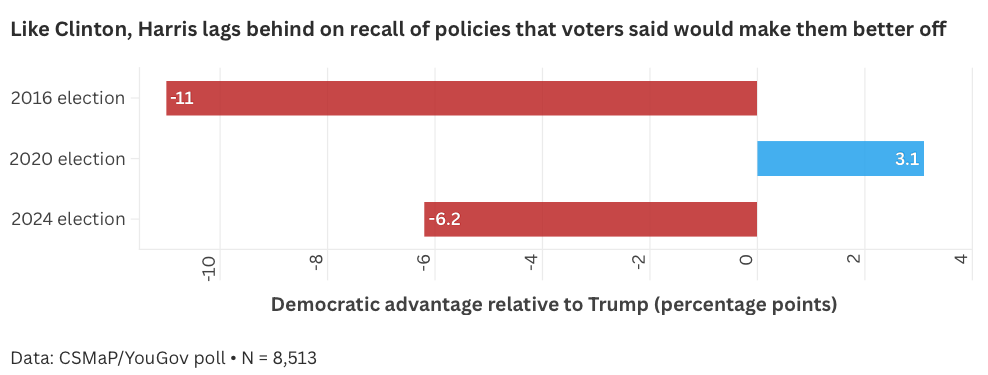
But voters' perceptions matter, and many Americans (not just Trump voters) thought they found something in the Trump program that they liked. With Jonathan Nagler and Josh Tucker we found this in 2016, and we saw this again later when we polled voters in 2024.
If you believe that Trump is unhinged, and that his supporters were mostly motivated by "feelings, fantasies, boredom, and resentment" then you'll probably say voters don't pay any attention to policies.
And it's hard to know for sure: voters may lie if they say they vote "because" of policy issues. Just as they may not be telling the truth if they are say vote to preserve democracy.
But what we can know, and can try to measure, is whether there were policy proposals that voters remembered (and liked).