A recurring - and tiring - set of arguments goes like this: fundamental economic concerns that affect people's daily lives and livelihoods - things like jobs, wages, cost of living, and basic economic security - matter to people a lot. So, if a political party or a candidate suffers an electoral loss, it must be because they neglected these economic issues.
The first part is surely true. But are the two claims causally connected? It surely depends on time and context.
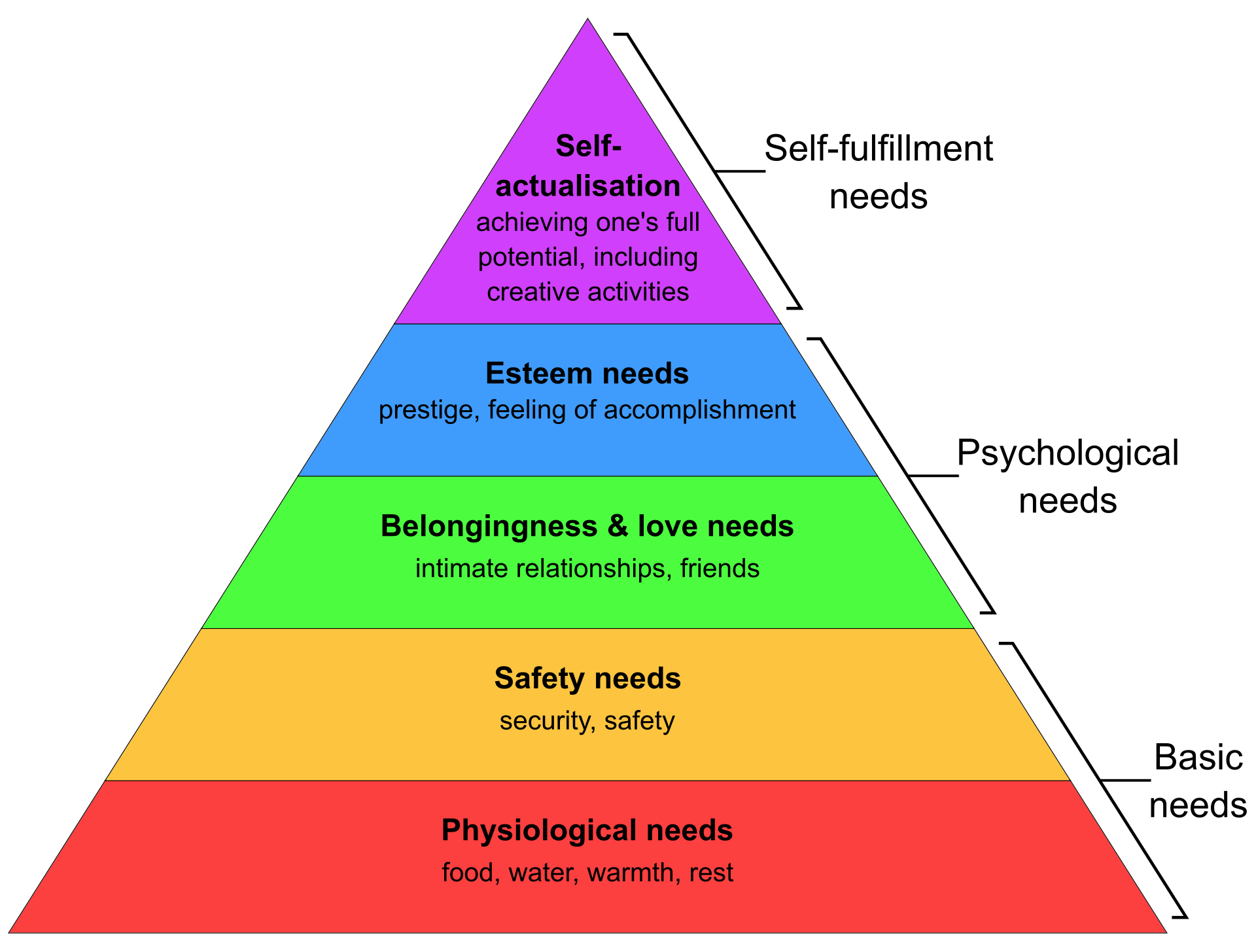
I was reading an op-ed in Dennik N which brought up, again, "bread-and-butter" issues, suggested that Democrats losing in 2024 is an obvious manifestation of how the Maslow pyramid is true and important.
To his credit, the author frames the points as "having been wrong":
> I was wrong to forget Maslow's pyramid. The way it's built, the base, the breadfruit themes, are much more powerful than the top.
The theory that you can rank human needs is intuitive, and popular, but what's the evidence? And don't we have a lot of counter-evidence?
The empirical evidence supporting its strict hierarchical structure is actually quite limited. (And a number of researchers have criticized both its Western-centric perspective and the rigid bottom-up progression it implies.)
Though we've largely moved on from pandemic retrospectives, our response to COVID remains a compelling case study in human decision-making - one too instructive to simply file away in the past.
If safety needs truly dominated all "higher" needs, we would have seen nearly universal protective measures (like mask adoption). Instead, we saw many people prioritize autonomy and identity expression over safety measures.
But social belonging and identity-preserving behaviors were supposed to be less important than "basic needs", according to the theory.
We saw (and probably should have by now learned) that psychological needs can sometimes take precedence over physical safety concerns.
Instead, we somehow keep on thinking that - when behavior of other people seems difficult to explain - then surely it must be because people were in pursuit of their "basic needs".
Perhaps the most striking challenge to Maslow's hierarchy comes from those who voluntarily risk their lives for their beliefs, as exemplified by the foreign volunteers fighting for Ukraine. These individuals deliberately place themselves in mortal danger - sacrificing the very foundation of the pyramid, physical safety - in service of higher principles. While such extraordinary courage may be rare, its very existence fundamentally contradicts the notion that human needs follow a rigid hierarchical progression from basic survival upward.